


15 Best Influencer Marketing Tools in 2026: Full Guide
The best influencer marketing tools save budget and scale results. Here's what actually works in 2026, ranked for brands serious about creator ROI.
Table of Contents
The influencer marketing software market has exploded in the last three years, and so has the noise around it. Every platform claims to be the all-in-one solution, but the reality is that the best influencer marketing stack for your brand depends on where your campaigns are breaking down. Is it finding the right creators? Managing the operational chaos of running campaigns at scale? Proving ROI to stakeholders?
This guide cuts through the clutter and ranks the 15 best influencer marketing tools available in 2026 across every major category, from discovery and outreach to analytics, affiliate tracking, paid amplification, and UGC production. Each one is evaluated on what it actually does well and which type of brand marketer will get the most from it. If you're looking for a more focused shortlist, our roundup of the best influencer marketing platforms breaks down top picks by use case.
How to Think About Your Influencer Marketing Stack
Before jumping into the list, it's worth understanding how these tools fit together. Most marketing teams don't use just one platform. They use two or three that cover different parts of the workflow:
- Discovery and vetting: finding creators who match your audience, niche, and budget
- Outreach and relationship management: contacting creators and managing ongoing partnerships
- Campaign management: briefing, content review, approvals, and timelines
- Contracts and payments: formalizing deals and processing creator compensation
- Analytics and attribution: measuring what's actually driving results
- Paid amplification: boosting creator content through paid social
- UGC and content production: scaling authentic content creation for brand-owned channels
The brands with the strongest creator programs have solved at least three of these with dedicated tooling. The ones struggling are usually managing half of these in spreadsheets and the other half through DMs.
The 15 Best Influencer Marketing Tools in 2026
With that framework in mind, here are the best influencer marketing tools to help you execute each part of the stack.
- SideShift: end-to-end campaign infrastructure (posting, contracts, payments, analytics); performance-based pay keeps quality high at volume
- Traackr: deep audience authenticity and engagement quality data; built for enterprise brands managing a defined creator roster with significant budgets
- Grin: native Shopify/WooCommerce integrations; automates gifting, affiliate tracking, and revenue attribution for DTC brands
- Brandwatch Influence: layered social intelligence on top of influencer data; tracks brand perception, share of voice, and conversation trends before and after campaigns
- Sprout Social Influencer Marketing: consolidated influencer and organic social workflow in one dashboard; best for teams already running social through Sprout
- Aspire: strong long-term ambassador relationship tools; curated creator marketplace with end-to-end workflow from brief to payment
- Upfluence: identifies creators inside your existing customer database; AI-assisted matching and automated outreach for e-commerce brands
- Modash: granular creator search and filtering; rigorous fake follower and engagement quality analysis at a competitive price point
- Later: UGC rights management and content repurposing for enterprise ambassador programs; integrates with broader scheduling and content suite
- LTK: creator network built around product recommendation and affiliate commerce; audiences arrive with shopping intent in beauty, fashion, home, and lifestyle
Want to put this into practice?
SideShift connects you with vetted UGC creators who actually deliver. Start your free trial and post your first job in under 10 minutes.
- Influential: advanced attribution modeling that connects influencer activity to brand lift, sentiment shifts, and sales impact through third-party data
- Influencity: multi-campaign workflow built for agencies managing several brand accounts simultaneously; clean client-facing reporting
- Bazaarvoice: converts high-intent product page traffic using authentic UGC and customer reviews; a conversion infrastructure tool, not a campaign platform
- Heepsy: affordable global creator discovery with demographic and engagement filters; a practical starting point for startups testing the channel
- Creator.co: self-serve marketplace where brands post briefs and creators apply; low barrier to entry for first-time influencer campaigns
Take a closer look at each: what it does well and who it's actually built for.
SideShift for high-volume UGC campaigns and scalable creator recruitment
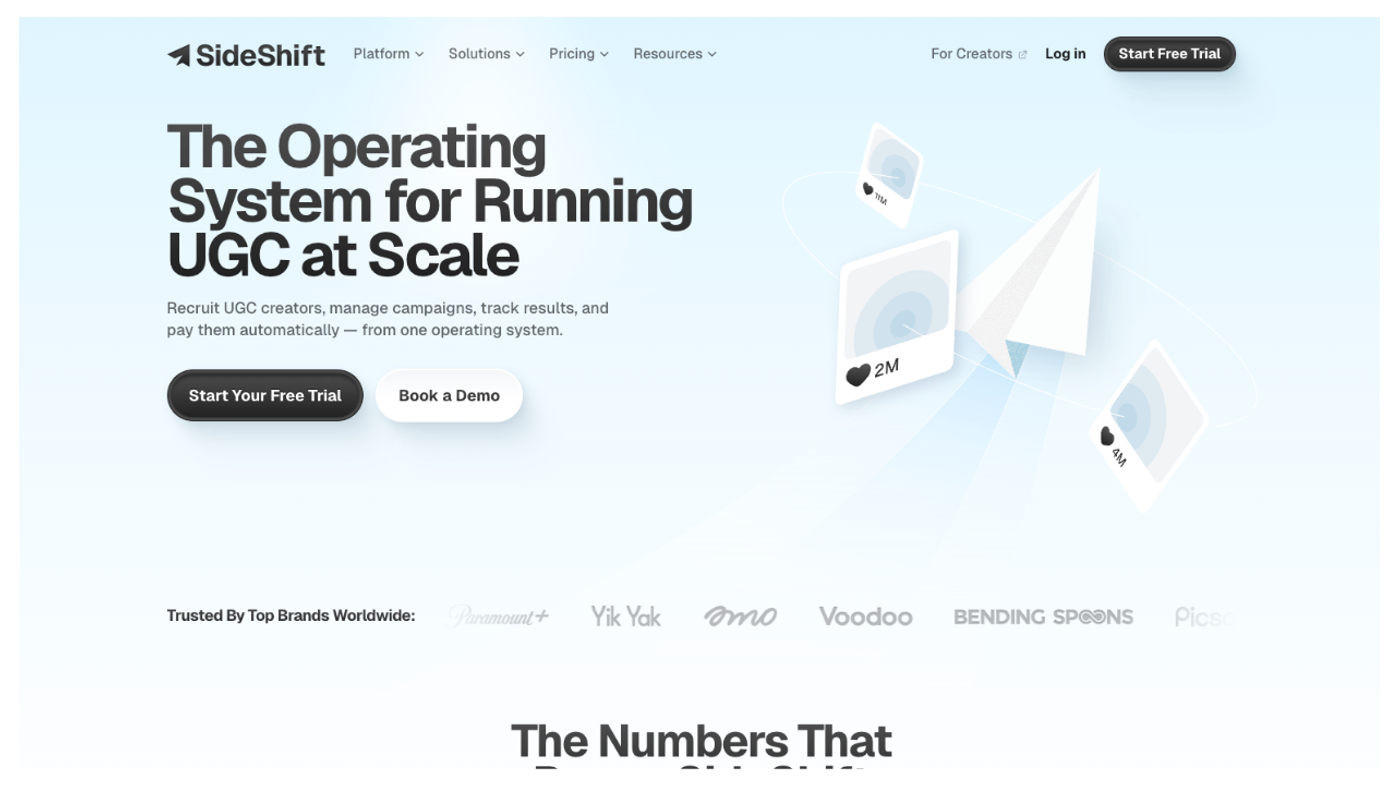
Most influencer platforms are built for managing a curated roster of 20 to 50 creators. SideShift is built for something different: brands that need dozens or even hundreds of creators producing authentic short-form content, fast.
With a network of 800,000+ vetted Gen Z creators and end-to-end campaign infrastructure covering job posting, recruitment, contracts, payments, and performance analytics, SideShift functions less like a tool and more like a content operating system.
Where most platforms make you choose between scale and quality, SideShift's vetting layer and performance-based pay structures keep content quality high even at volume. Creator compensation is flexible too, including retainer plus bonus models, CPM-based structures, and hybrid arrangements that attract serious creators while keeping brand costs tied to results.
For brands running or planning to scale TikTok, Instagram Reels, or YouTube Shorts campaigns, SideShift removes the ceiling on content output without requiring you to scale headcount proportionally. Plans start at $299/month.
2. Traackr for enterprise brands that need rigorous influencer data
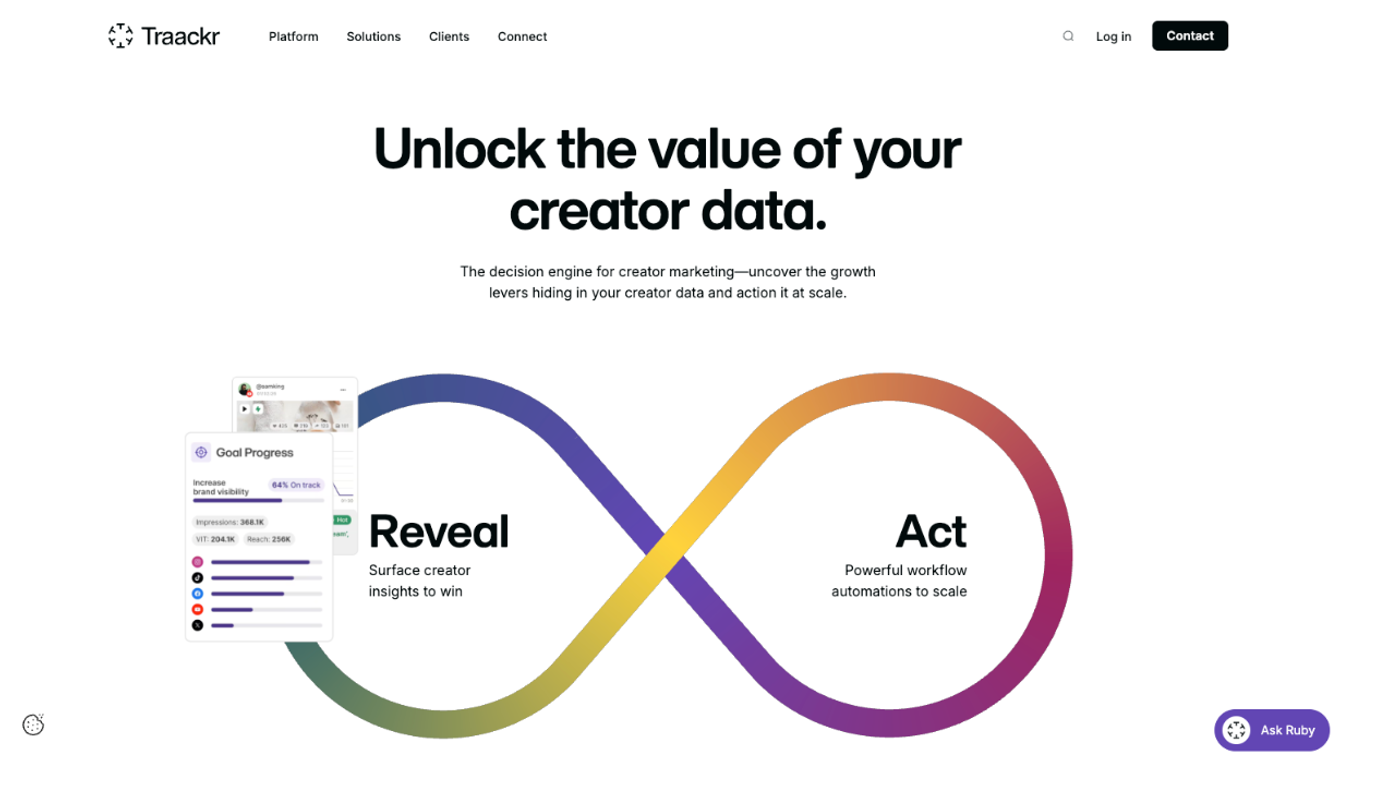
Traackr has been building its influencer data infrastructure longer than most of its competitors, and it shows. The platform's audience analytics are among the deepest available, with detailed breakdowns of follower authenticity, audience demographics, and engagement quality that go well beyond surface-level metrics. For enterprise brands where significant campaign budgets are at stake, that depth is worth the premium.
Traackr's workflow tools are built for managing a defined creator roster rather than recruiting at scale, and the price point puts it firmly in enterprise territory. If your primary pain point is identifying and vetting the right macro-influencers with confidence, Traackr earns its cost. If you need volume, it's not built for that.
3. Grin for DTC e-commerce brands looking to automate creator relationships with AI
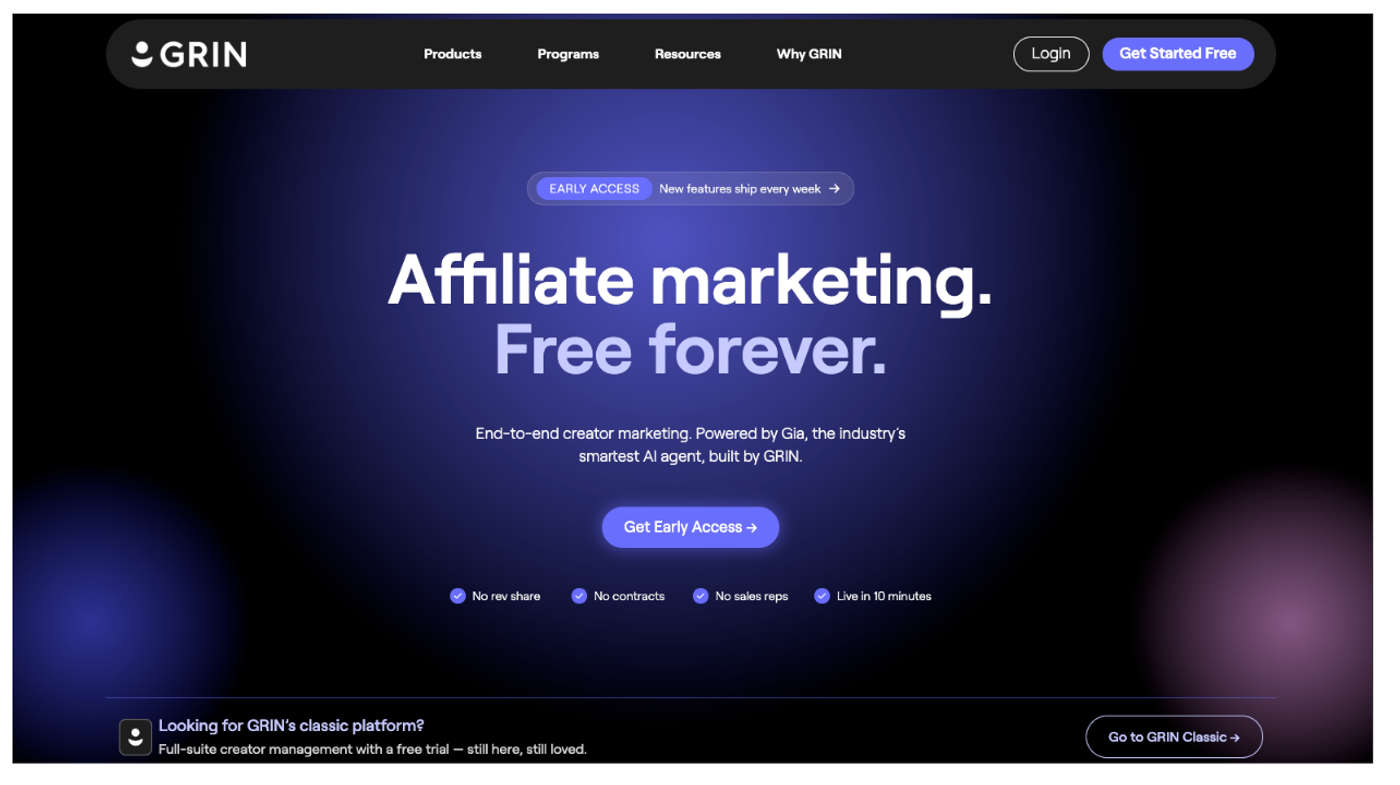
Grin's core strength is its integrations. The platform connects directly with Shopify, WooCommerce, and other e-commerce stacks, which means affiliate tracking, gifting workflows, and revenue attribution flow without the manual data export and re-import cycles that slow down most teams. For a DTC brand where influencer campaigns are a meaningful revenue channel, that integration layer is genuinely valuable.
The AI-assisted features for creator matching and outreach are improving, though brands with highly specific niche targeting should still expect to manually review recommendations. Grin is best suited for mid-to-large DTC brands with an existing creator roster looking to tighten the connection between influencer activity and actual revenue.
Want to put this into practice?
SideShift connects you with vetted UGC creators who actually deliver. Start your free trial and post your first job in under 10 minutes.
4. Brandwatch Influence for influencer decisions informed by social intelligence
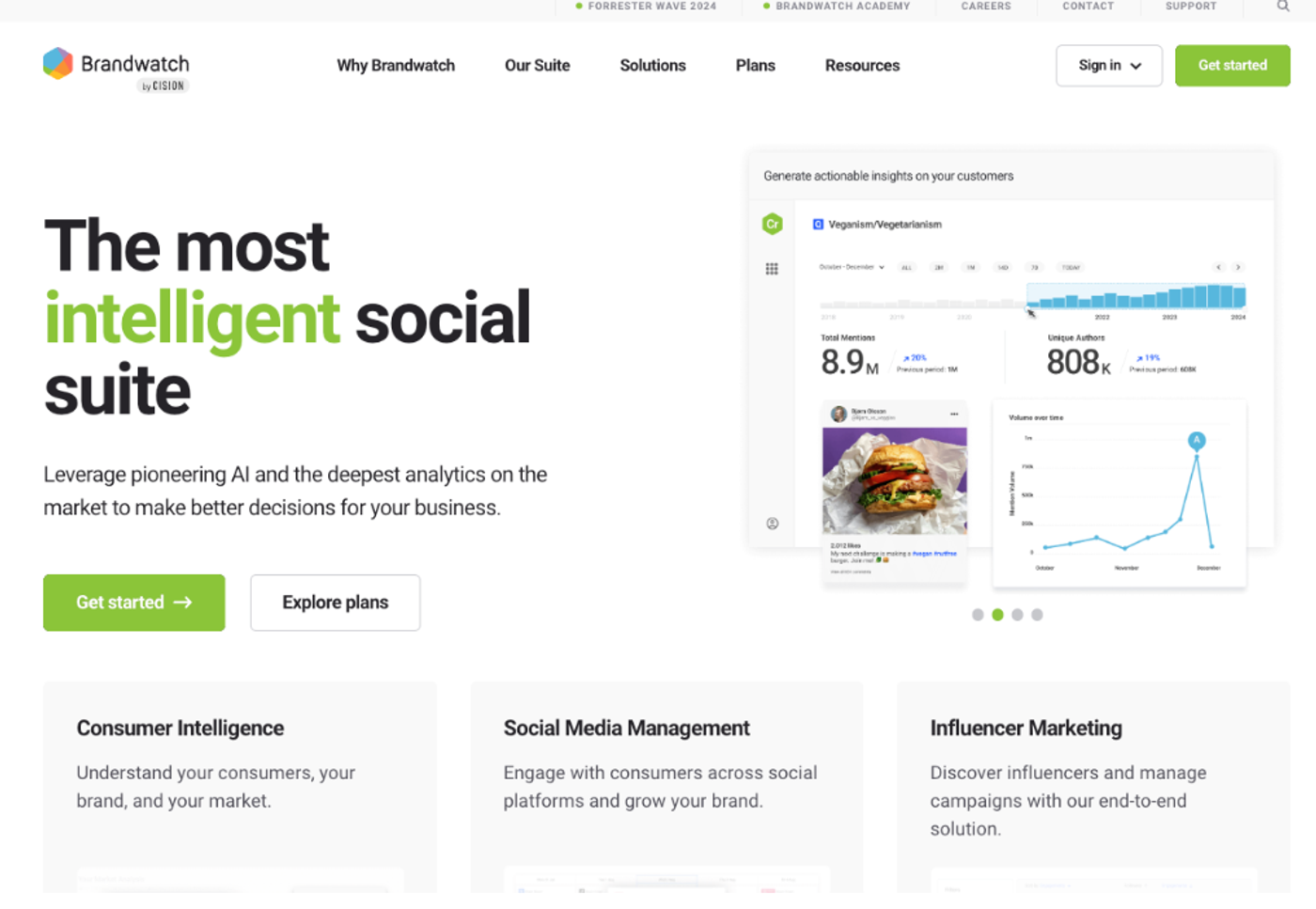
Brandwatch's influence product sits inside a broader social intelligence platform, and that context is its real differentiator. Most influencer tools tell you who is talking about your category; Brandwatch tells you what those conversations mean, who's driving them, and what share of voice looks like before and after a campaign. For brands where brand perception is as important as direct conversion, that macro view changes how you evaluate creator partnerships.
The platform is best used as an intelligence layer rather than a campaign execution tool. Teams that get the most from it typically pair it with a dedicated operational platform for the actual mechanics of running campaigns.
5. Sprout Social Influencer Marketing for managing influencer campaigns alongside organic social
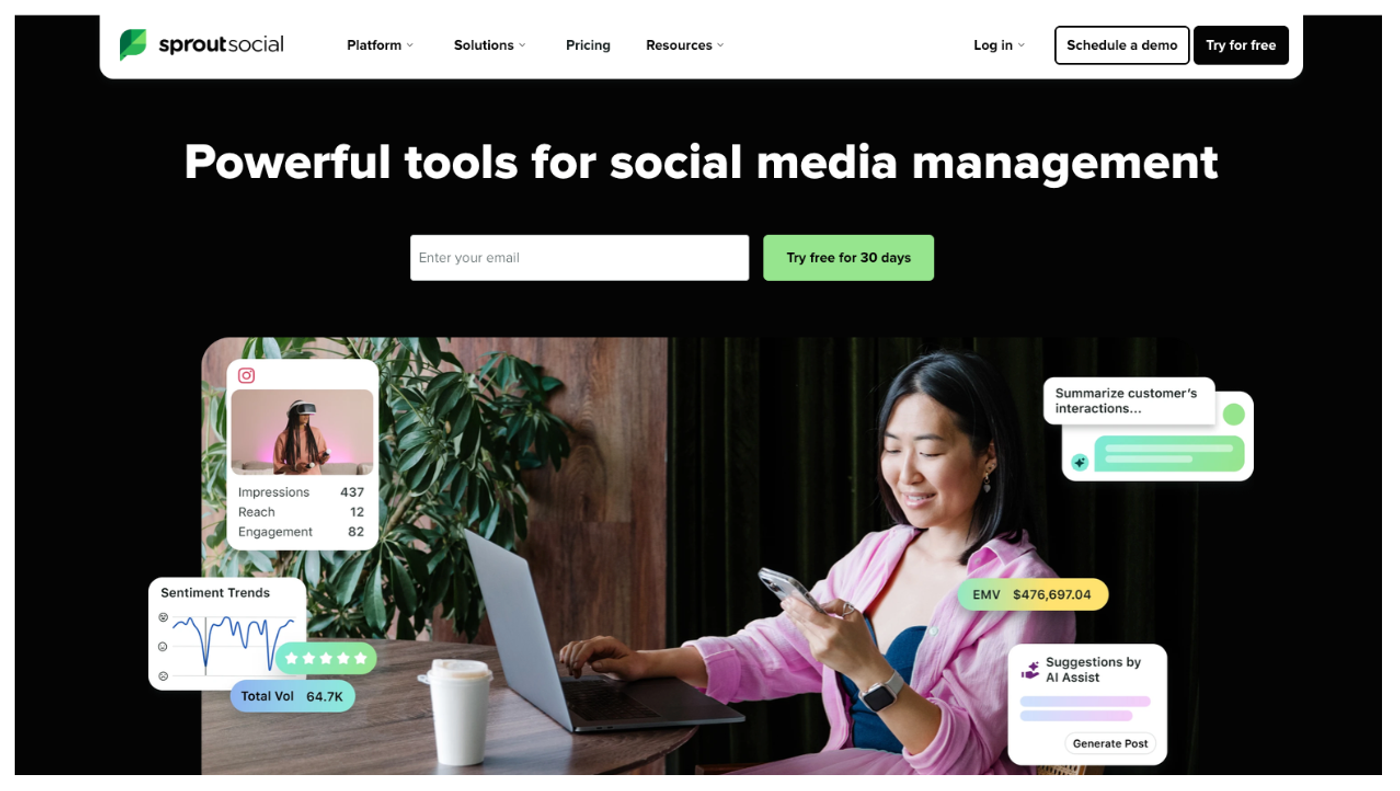
Sprout Social's influencer module makes the most sense for teams already running organic social through the platform. The workflow consolidation is real: content approvals, scheduling, influencer communications, and performance reporting all live in the same dashboard your social team is already in every day. That reduces handoff friction in a way that genuinely saves time when both functions report up to the same team.
As a standalone influencer platform evaluated purely on creator data depth or campaign management sophistication, it's mid-tier. As a consolidation play for teams managing multiple social functions, it earns consideration.
6. Aspire for mid-market brands running multi-channel influencer programs
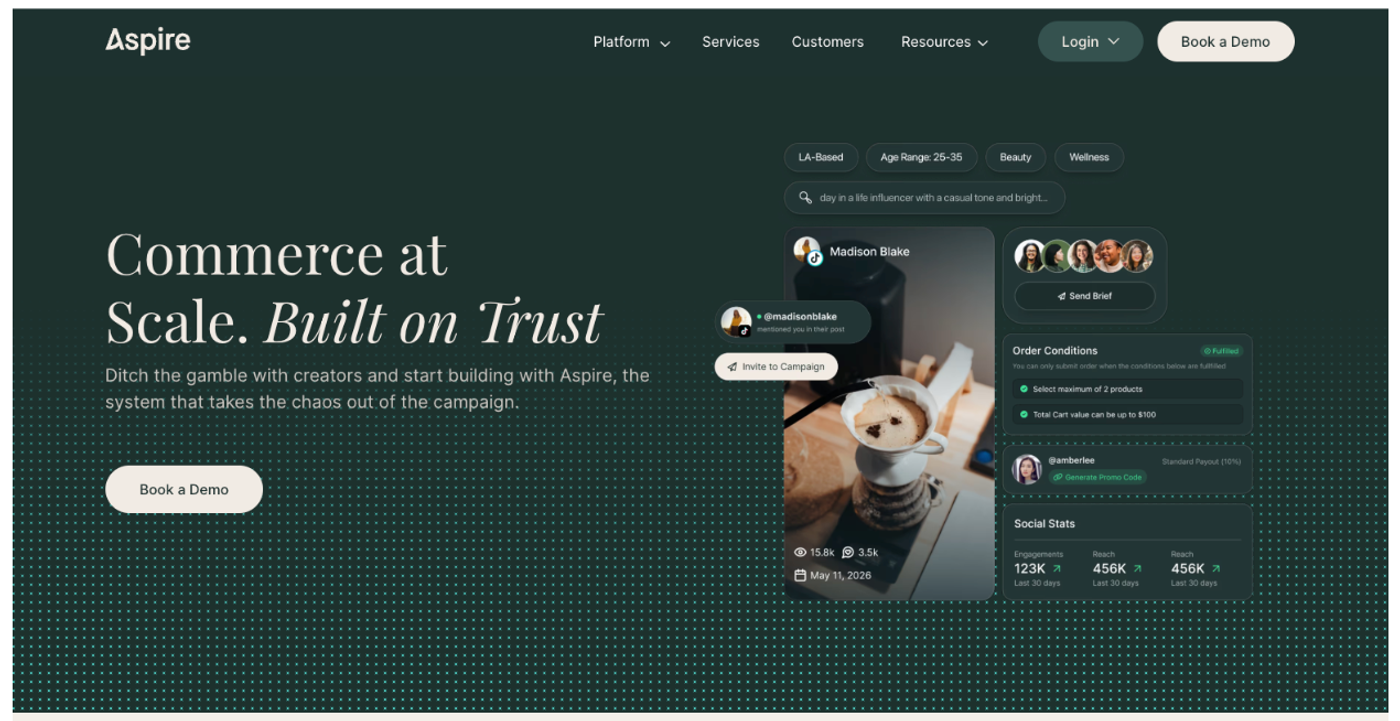
Aspire is built around the idea of the creator as a long-term brand partner rather than a transactional content vendor, and the platform reflects that philosophy. The relationship management tools are strong, the creator marketplace gives brands access to a curated pool of opted-in talent, and the campaign workflow covers briefing through payment without requiring a patchwork of other tools.
Where Aspire pulls ahead is in managing ongoing ambassador relationships across a defined roster. Where it falls short relative to platforms like SideShift is content volume. If your strategy requires fast creative iteration across dozens of creators simultaneously, Aspire's tools aren't architected for that pace.
7. Upfluence for brands that want automated campaigns and AI-assisted creator matching based on customer data
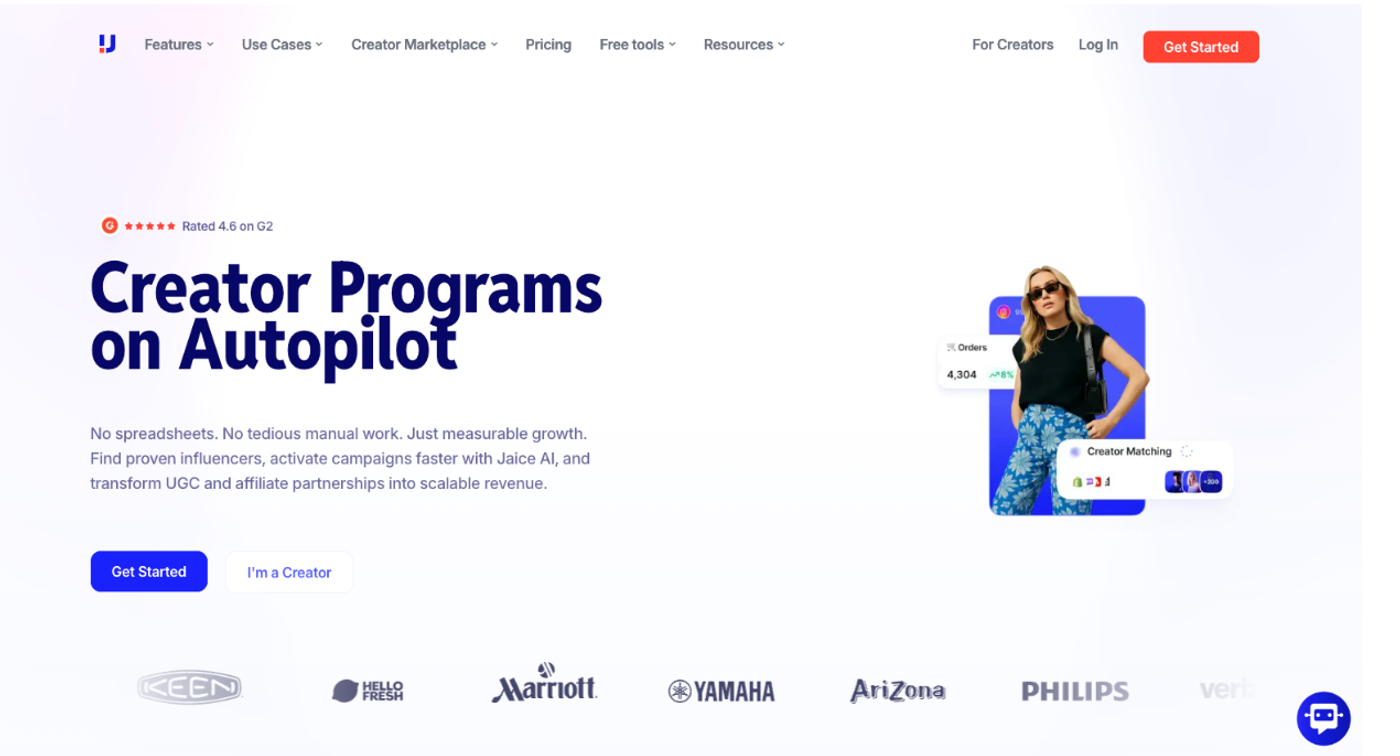
Upfluence has an unusual capability worth noting: It can analyze your existing customer database to identify buyers who are also creators. For brands with a large customer base, this makes warm influencer outreach possible at a scale that cold discovery tools can't replicate. A customer who already loves your product will almost always outperform a paid creator who doesn't, both in content authenticity and conversion rates.
The AI-assisted matching and automated outreach sequences reduce manual effort across the top of the funnel. The platform is best suited for e-commerce brands with meaningful customer data to leverage.
8. Modash for data-driven brands that prioritize audience authenticity over aesthetics
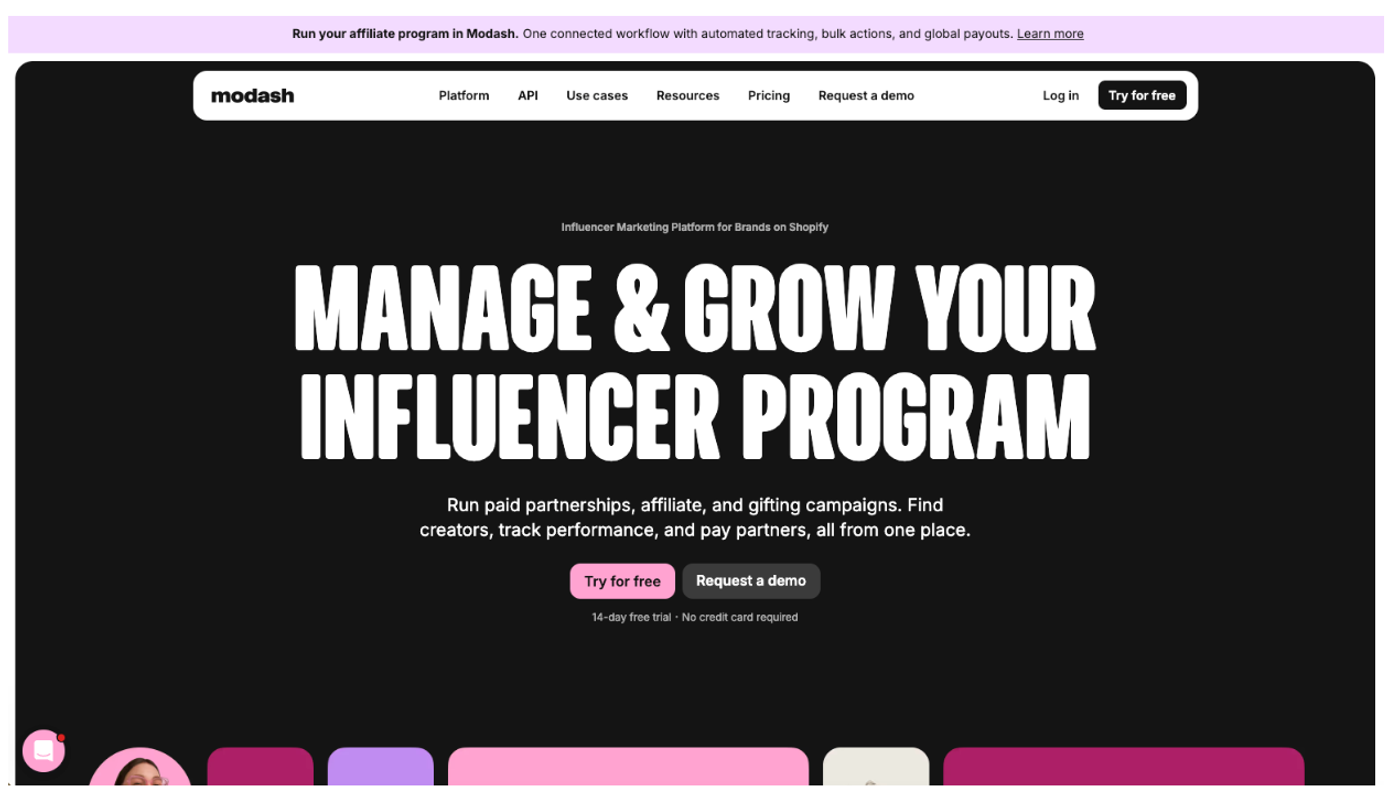
Modash indexes a massive creator database and gives brands granular search and filtering capabilities, including audience demographic filters that most platforms don't surface at the same depth. The fake follower and engagement quality analysis is among the more rigorous available at its price point, which matters for brands that want confidence before committing budget to a creator.
Want to put this into practice?
SideShift connects you with vetted UGC creators who actually deliver. Start your free trial and post your first job in under 10 minutes.
Modash is primarily a discovery and analytics tool rather than a campaign management platform, so most brands will pair it with a separate workflow tool. If fraudulent engagement or audience mismatch is a specific concern for your category, Modash is worth serious consideration.
9. Later for enterprise brands running creator advocacy programs at scale
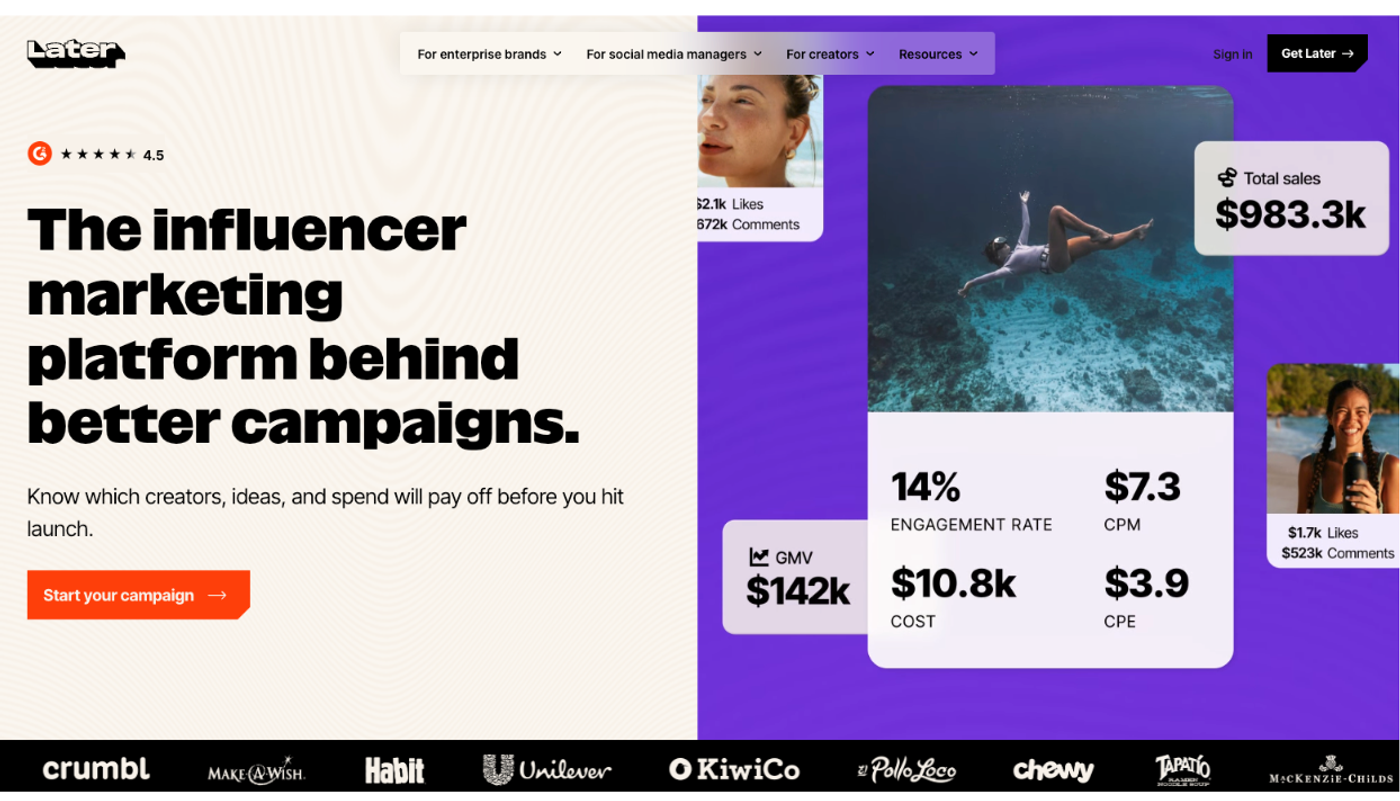
Later's influencer product is most valuable as part of its broader content management and scheduling suite. The platform's creator advocacy features are designed for enterprise brands building structured ambassador programs where creators function as an extension of the brand's own social presence rather than independent publishers.
The platform's UGC rights management and content repurposing workflows are a genuine operational advantage for brands that want to activate creator content across paid and owned channels without the manual licensing chase.
10. LTK (LikeToKnowIt) for lifestyle, fashion, beauty, and home brands targeting shopping-intent audiences
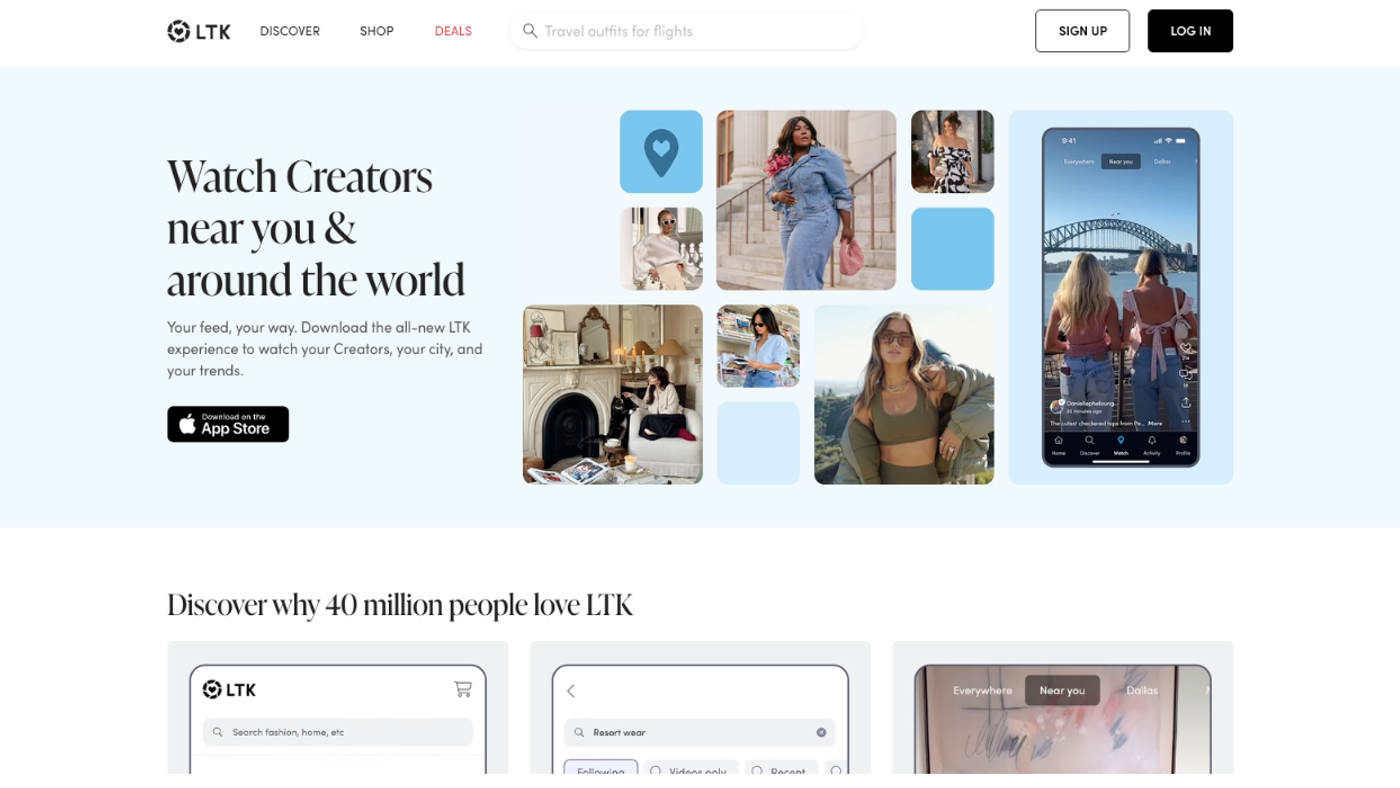
LTK operates as both a platform and a destination, and that distinction matters. The creator network on LTK is specifically built around product recommendation and affiliate commerce, which means the audiences following those creators are already in a shopping mindset. For lifestyle, fashion, beauty, and home brands, the conversion intent baked into the platform's audience behavior is a meaningful advantage over general influencer platforms.
The tradeoff is category specificity. LTK works extremely well for the right verticals like beauty & skincare, ecommerce, fashion & clothing, and CPG and has limited relevance outside them.
11. Influential for advanced attribution and business impact modeling
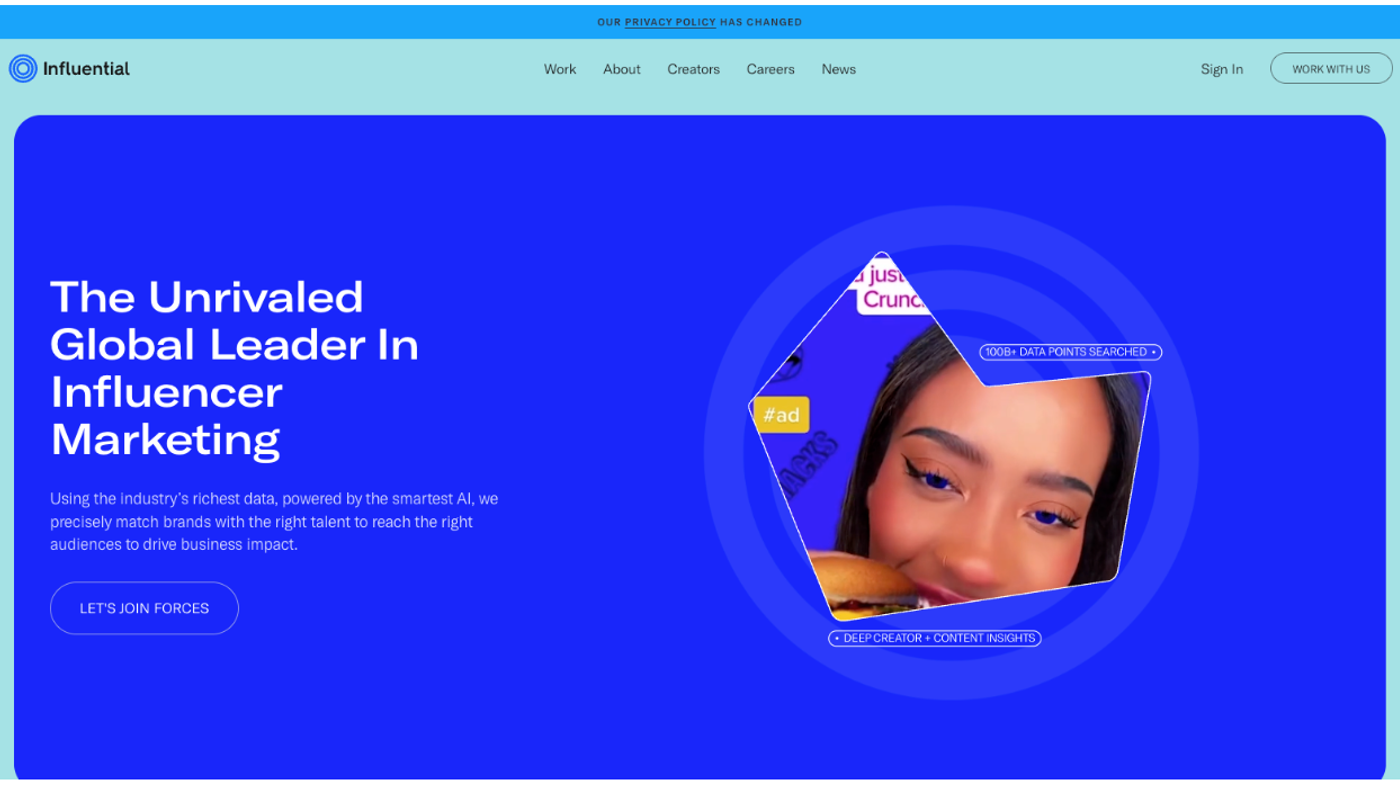
Influential has leaned into enterprise attribution harder than most competitors, with reporting frameworks that attempt to connect influencer activity to business outcomes beyond clicks and conversions, including brand lift, sentiment shifts, and sales impact measured through third-party data partnerships. For enterprise brands that need to justify large influencer budgets to C-suite stakeholders, this attribution depth is a practical necessity.
The platform's strength is measurement and modeling. The operational campaign management tools are functional but not the reason to choose it.
12. Influencity for managing multiple campaigns simultaneously
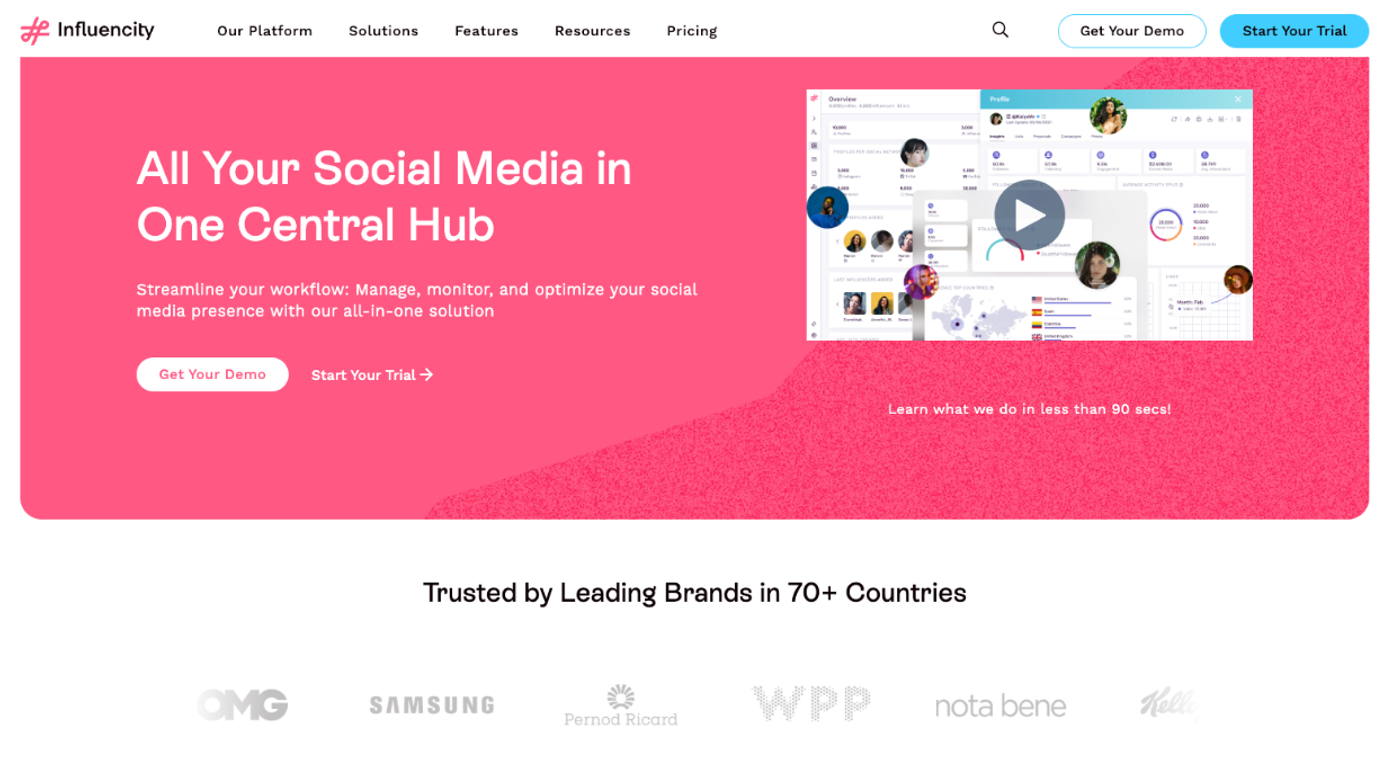
Influencity's workflow tools are built for teams running several campaigns in parallel across different brands or client accounts, making it a common choice among agencies. The campaign organization structure keeps separate programs from bleeding into each other, and the reporting is clean enough to generate client-facing outputs without significant formatting work.
For in-house brand teams running a single integrated program, the multi-campaign architecture is more infrastructure than you need. For agencies managing multiple brand accounts, it fits well.
13. Bazaarvoice for converting product page traffic through UGC and reviews
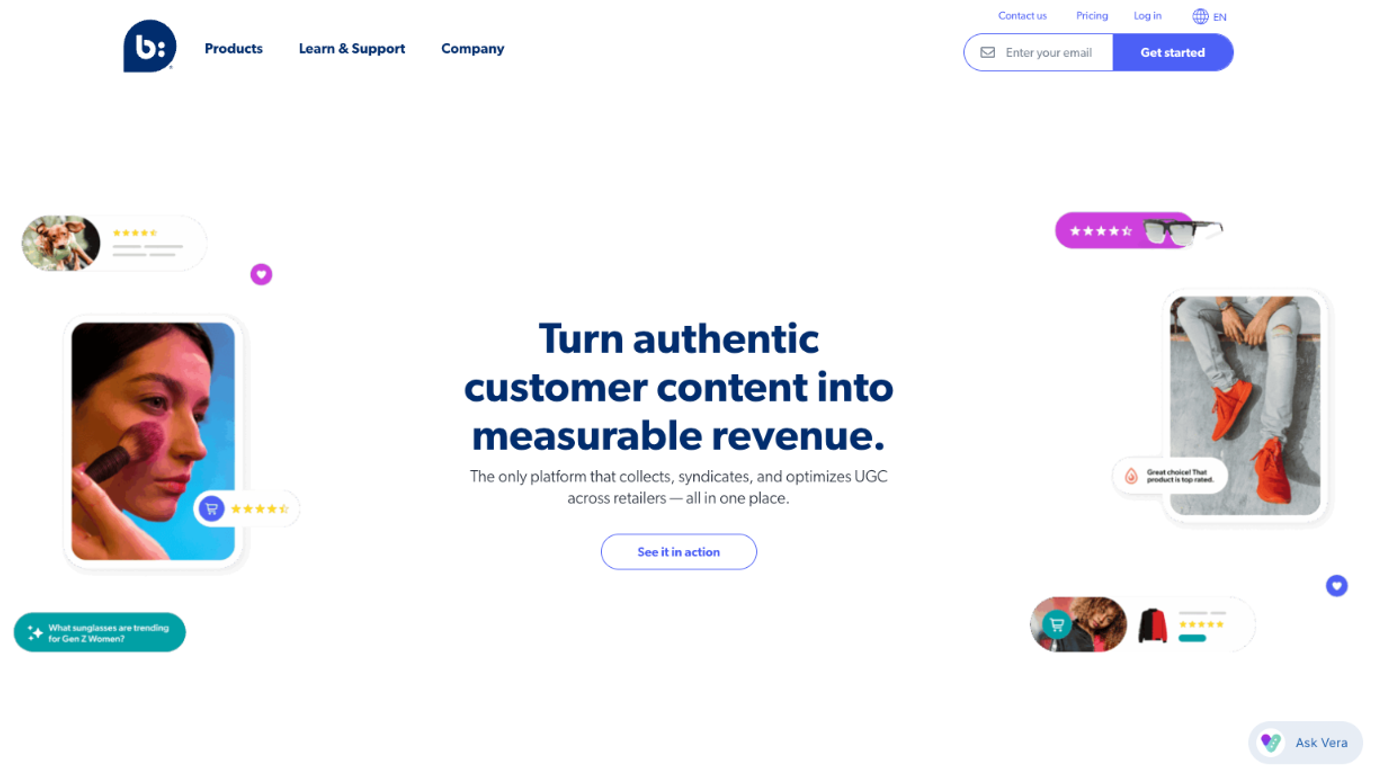
Bazaarvoice operates in a different layer of the funnel than most tools on this list. Rather than focusing on social distribution, it's focused on product page conversion, specifically getting authentic customer content and reviews in front of high-intent shoppers at the moment they're deciding whether to buy. For brands with significant e-commerce traffic, the conversion impact of social proof at the product page level is well-documented.
Want to put this into practice?
SideShift connects you with vetted UGC creators who actually deliver. Start your free trial and post your first job in under 10 minutes.
Bazaarvoice is not a campaign execution tool. It’s a conversion infrastructure tool, and it’s best understood as a complement to distribution-focused platforms rather than a replacement.
14. Heepsy for startups and smaller brands that need affordable global influencer discovery
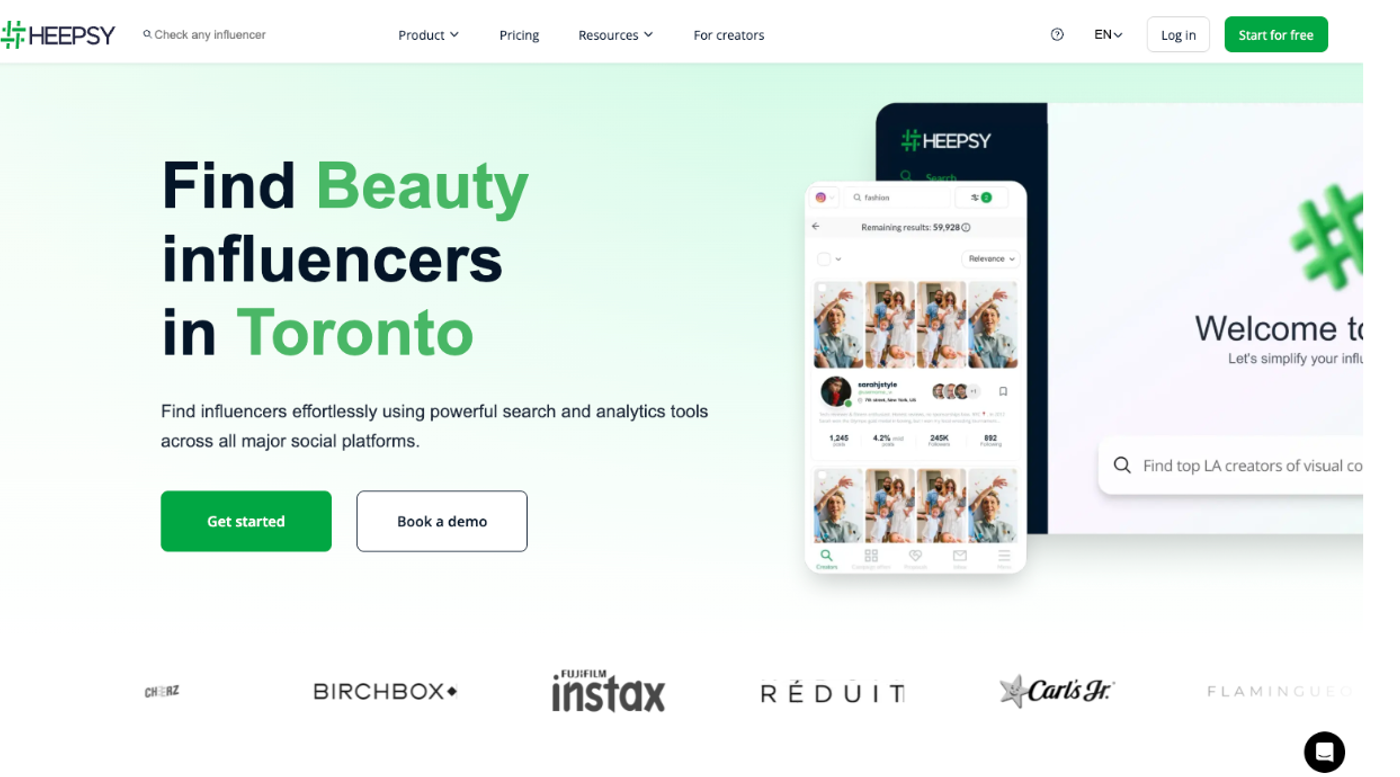
Heepsy offers search and filtering capabilities at a price point that makes influencer discovery accessible for brands that aren't ready to commit to enterprise platform costs. The database covers global creators across major platforms, and the filters include basic audience demographic and engagement quality checks.
The depth of data and the sophistication of the analytics are more limited than higher-cost alternatives, but for a startup testing influencer as a channel for the first time, Heepsy provides a functional starting point without requiring significant upfront investment.
15. Creator.co for brands running their first influencer campaigns through a self-serve marketplace
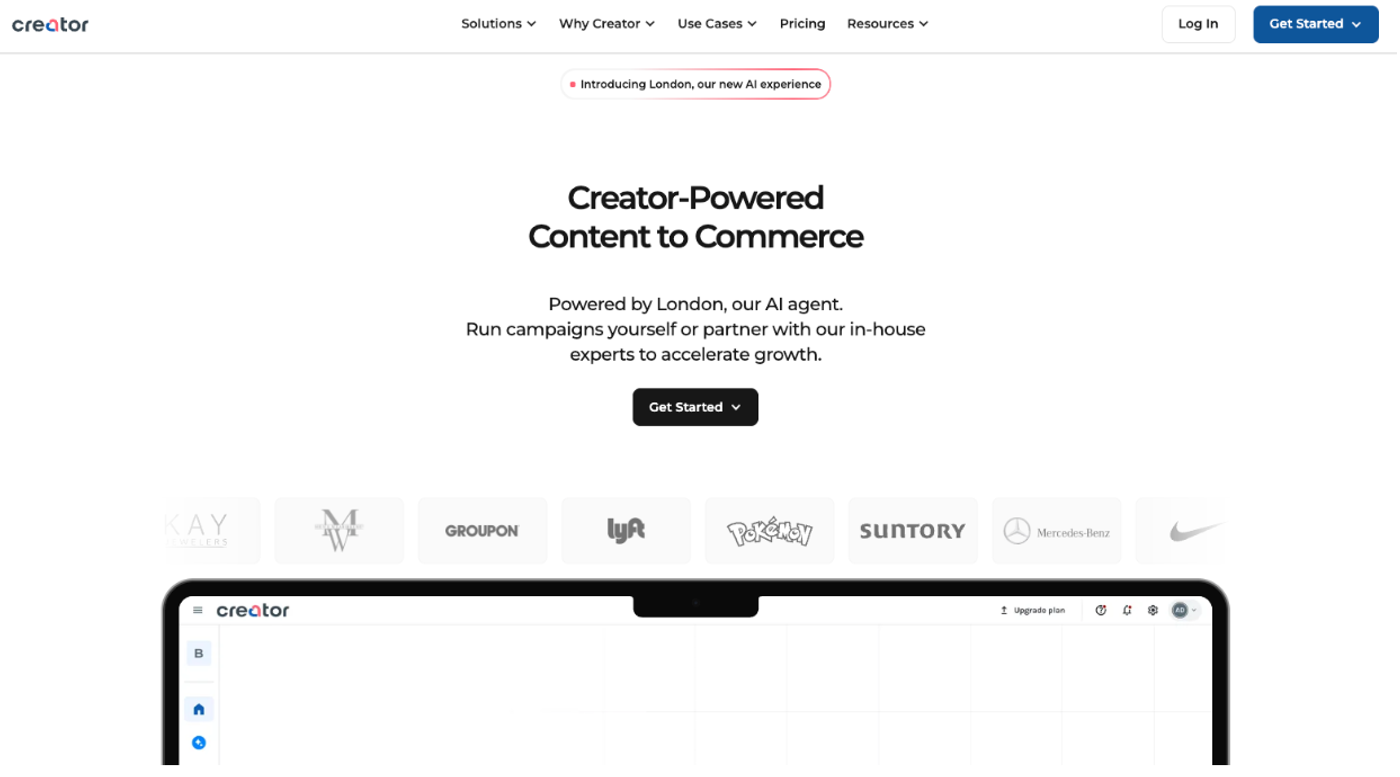
Creator.co's self-serve marketplace model lets brands post campaign briefs and receive applications from creators without requiring a managed onboarding process. The lower barrier to entry makes it a reasonable starting point for brands running their first creator campaigns who want to understand the channel before committing to a more sophisticated platform.
As campaigns mature and volume requirements grow, most brands find they need more control over creator vetting and campaign workflow than Creator.co's marketplace model provides.
Scale Your Influencer Marketing Strategy with SideShift
Across every category of influencer marketing tool, the operational foundation matters most. You can have the best analytics platform in the world, but if sourcing, contracting, and managing creators is eating your team's time, campaign volume suffers and results follow.
Photogeniq, an AI photo-generation app, came in with under 1,000 users and no content engine. In 30 days on SideShift, they drove 214M views across 1,200+ posts at a $0.10 CPM and 100x'd their user base.
GPTZero had traction with educators but needed to reach students at scale. SideShift helped them launch 600+ TikToks in under five weeks, generating 45M+ organic views and a significant lift in paid sign-ups with a repeatable content engine they still use for ongoing growth.
In both cases, the results came from removing the operational ceiling. Sourcing, contracting, and managing creators manually is where most programs stall before they reach their content goals. SideShift solves that layer with access to 800,000+ vetted creators, end-to-end campaign workflow, and performance analytics in one place.
For brands running high-volume creator content programs across TikTok, Instagram, and YouTube Shorts, that infrastructure means more content, better results, and a team that isn't buried in logistics.
FAQs
1. What is the best all-in-one influencer marketing tool for mid-market brands?
For mid-market brands that need creator sourcing, campaign management, contracts, and payments in one platform, SideShift and Aspire are the strongest options depending on campaign type. SideShift is better suited for brands prioritizing high-volume UGC content production and fast iteration. Aspire is a stronger fit for brands running multi-channel influencer programs across a defined roster of creators. The right choice depends on whether your primary need is content volume or relationship management.
Want to put this into practice?
SideShift connects you with vetted UGC creators who actually deliver. Start your free trial and post your first job in under 10 minutes.
2. How do influencer marketing tools detect fake followers and inflated engagement?
Most platforms use a combination of follower growth pattern analysis, engagement rate benchmarking against platform averages, comment quality assessment, and audience demographic consistency checks to identify suspicious accounts. Modash and Traackr offer some of the more rigorous authenticity analysis at their respective price points. Basic fake follower detection is available in most mid-tier platforms, but the depth of analysis varies significantly, and brands running significant influencer spend should prioritize platforms with detailed audience authenticity reporting.
3. What influencer marketing tools work best for TikTok campaigns specifically?
TikTok-specific capabilities vary considerably across platforms. SideShift's creator network skews heavily toward Gen Z creators producing native TikTok content, making it a strong operational fit for brands prioritizing TikTok UGC campaigns. Modash and Traackr both offer TikTok analytics with audience demographic filtering. For brands running TikTok Spark Ads specifically, the most important tool is TikTok's own Ads Manager combined with a platform that handles creator authorization and content licensing, which SideShift's contract infrastructure supports.
4. How much should a brand expect to spend on influencer marketing software?
Tool costs typically run $200 to $1,000 per month for mid-market brands, with enterprise solutions ranging from $2,000 to $10,000 or more per month. The more important calculation is cost relative to operational time saved. A platform that costs $500 per month but eliminates ten hours of manual creator sourcing and payment processing per week delivers ROI well beyond its subscription cost. SideShift's tiered pricing from $299 to $999 per month is structured to scale with campaign volume, making it accessible for brands at different stages without requiring enterprise commitment upfront.
5. Do brands need separate tools for influencer discovery and campaign management?
Not necessarily, but the platforms that do both well are fewer than the marketing materials suggest. Many discovery-focused platforms have added campaign management features that are functional but not optimized, and vice versa. Brands with straightforward campaigns often find a single all-in-one platform sufficient. Brands running high-volume or multi-channel programs frequently get better results from pairing a strong discovery and analytics tool with a dedicated campaign management and payment platform like SideShift, where the operational workflow is built specifically for scale.