
What Is Affiliate Marketing? How It Works & How To Start
Affiliate marketing pays creators commissions for driving sales through tracked links. See how it works, real examples, and how to start earning.
Table of Contents
What Is Affiliate Marketing? How It Works, Examples, and How to Start
Affiliate marketing has become one of the most accessible and scalable ways to earn income online through content creation. At its core, it is the monetization of content, turning influence, audience trust, and recommendations into measurable revenue. For creators, it offers a low-barrier entry into earning online. For brands, it has evolved into one of the most efficient growth channels available.
Unlike traditional advertising models that require significant upfront spend, affiliate marketing is built on performance. Brands only pay when a specific outcome is achieved, typically a sale, making it a low-risk, high-efficiency strategy. This shifts the dynamic from passive promotion to intentional, results-driven partnerships, where creators act as an extension of a brand’s sales engine.
Whether you are a beginner looking to monetize your content or a brand aiming to drive consistent, trackable revenue, understanding how affiliate marketing works is essential. This guide breaks down the fundamentals, shares real-world examples, and walks through exactly how to get started.
What Is Affiliate Marketing
Affiliate marketing is a performance-based marketing model where individuals or creators promote a product or service and earn a commission for every sale, click, or action generated through their unique link.
Instead of paying upfront for ads, brands only pay when results happen. That shift makes affiliate marketing attractive in a landscape where customer acquisition costs continue to rise.
For creators, it is a way to monetize content without needing their own product. For brands, it is a low-risk marketing channel that scales with performance.
How Affiliate Marketing Works
At a basic level, affiliate marketing is a performance-driven partnership between three key players: the brand, the affiliate creator, and the customer. The brand offers a product or service, the affiliate promotes it through their content or platform, and the customer completes a purchase based on that recommendation. Instead of relying solely on traditional advertising, brands tap into creators and publishers who already have established audiences and trust.
What makes affiliate marketing unique is its incentive structure. Affiliates are only paid when a specific action occurs, typically a sale, which aligns the goals of both the brand and the promoter. This creates a system where content is designed to convert, not just to reach or impress.
Step-by-Step Breakdown
1. An affiliate joins a program
A creator signs up for a brand’s affiliate program or network.
2. A unique tracking link is generated
This link tracks clicks and conversions tied to that affiliate.
3. Content is created and distributed
Affiliates promote the product through TikTok, YouTube, blogs, or Instagram.
4. Audience clicks and converts
When a user clicks the link and completes a purchase, the system records it.
5. Affiliate earns a commission
The brand pays a percentage of the sale or a fixed fee.
This model aligns incentives. Affiliates are motivated to create content that actually converts, and brands only pay for measurable results.
Affiliate Marketing Examples
Rich Loud X Go Brewing
A strong example of affiliate marketing in action is the partnership between Richard Loud and Go Brewing.
Want to put this into practice?
SideShift connects you with vetted UGC creators who actually deliver. Start your free trial and post your first job in under 10 minutes.

Richard Loud is a nano influencer in the non-alcoholic (NA) beverage space and an endurance athlete focused on promoting movement and an alcohol-free lifestyle. His content is built around running, wellness, and breaking away from traditional drinking culture, making him a natural fit for brands in the NA category.
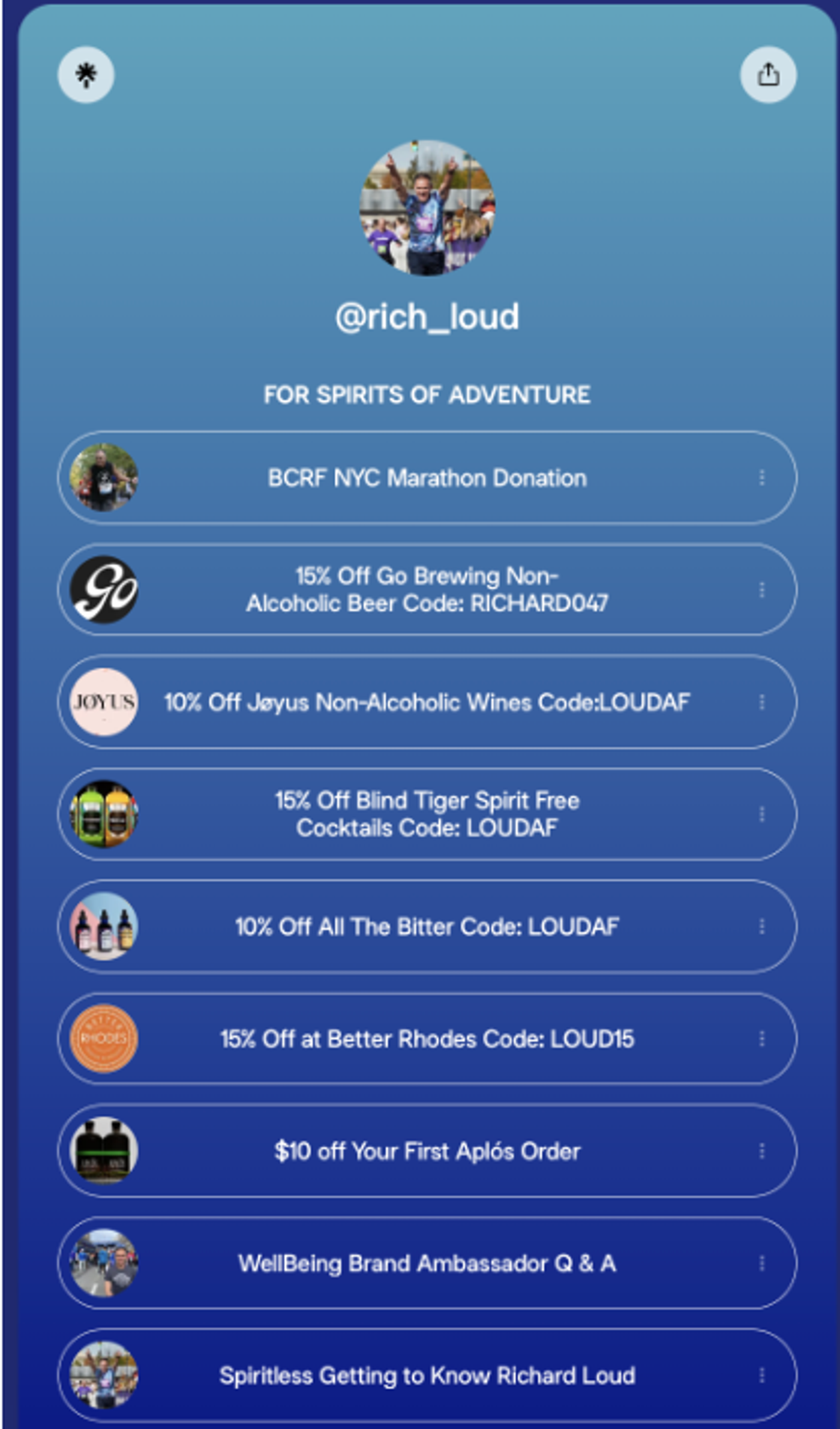
He partners with multiple brands in this space as an affiliate marketer, including:
- Go Brewing
- Joyus
- Blind Tiger
- All The Bitter
- Better Rhodes
- Aplós
- WellBeing Brewing
With Go Brewing specifically, Richard acts as both a brand ambassador and an affiliate. He promotes their products through content and provides his audience with a unique discount code: “Save 15% with code: RICHARD047”
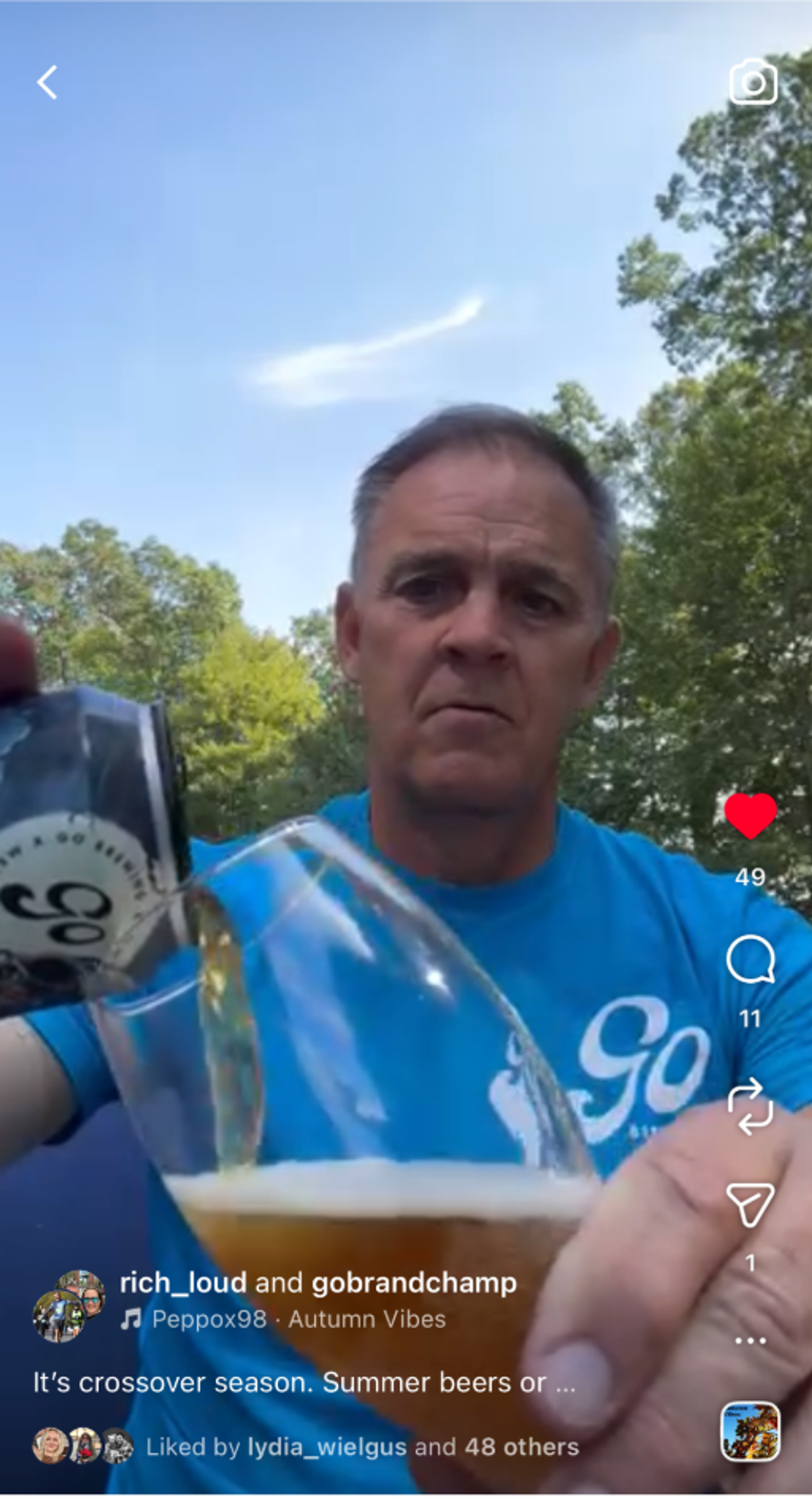
When his audience uses this code or his affiliate link (typically placed in his bio), he earns a small percentage of each purchase.
This example highlights what makes affiliate marketing effective:
- Strong niche alignment: His audience is already interested in fitness and alcohol-free living.
- Authentic positioning: The products fit naturally into his lifestyle and content.
- Clear value for the audience: The discount code provides an immediate incentive to convert.
- Performance-based earnings: He earns based on actual purchases, not just content output.
Richard Loud’s positioning as an “endurance runner on a mission to inspire movement and breaking free from alcohol, one mile at a time” reinforces trust, and that trust directly drives conversions.
This is a strong example of how creators can combine personal branding, UGC-style content, and affiliate links to generate consistent revenue while promoting products that genuinely align with their audience. It also shows that the more seamlessly and authentically you integrate product placement into your content, the better it performs. The closer the content reflects your real lifestyle and the more defined your niche and voice, the stronger your engagement and conversion potential will be.
Affiliate Marketing for Brands
For brands, affiliate marketing is a cost-efficient acquisition channel and a scalable way to turn creators into a distributed sales force. Instead of paying upfront for impressions, brands can align spend directly with revenue by rewarding performance.
The brands that see the strongest results don’t treat affiliate marketing as a passive program. They actively manage it like a growth channel, combining creator sourcing, content strategy, and performance tracking.
What high-performing brands do differently in affiliate marketing:
- Recruit creators consistentlyInstead of waiting for affiliates to apply, they proactively source creators who already align with their audience and product.
- Pair affiliate with content productionThey don’t rely on creators to “figure it out.” They guide content angles, messaging, and hooks to improve conversion rates.
- Test at volume, then optimizeMultiple creators and content variations are tested simultaneously, then scaled based on performance data.
- Focus on conversion over reachWinning brands prioritize creators who can drive action.
Affiliate marketing works best when it’s integrated into a broader creator and UGC strategy. When done right, it becomes a predictable, performance-driven growth engine.
Affiliate Marketing for Creators
For creators, affiliate marketing is one of the most accessible ways to start earning without needing brand deals, a large following, or your own product.
Want to put this into practice?
SideShift connects you with vetted UGC creators who actually deliver. Start your free trial and post your first job in under 10 minutes.
Affiliate marketing is powerful for creators because:
- It has a low barrier to entry
- You can start with a minimal audience size if your content converts.
- Multiple income streams
- Combine affiliate commissions with paid UGC and brand partnerships.
- Performance-based credibility
- Brands value creators who can prove they drive sales.
- Compounding returns
- A single high-performing video or post can generate ongoing revenue.
Affiliate Marketing vs UGC: How They Work Together
Affiliate marketing and UGC (user-generated content) are often treated as separate strategies, but in modern creator marketing, they function best as a combined system rather than competing approaches.
Affiliate marketing is focused on performance, driving measurable actions like clicks, sign-ups, and purchases through tracked links or codes. UGC, on the other hand, is focused on trust and engagement, creating authentic, relatable content that feels native to social platforms and builds credibility with audiences.
When used together, they cover both sides of the funnel: UGC creates interest and attention, while affiliate marketing converts that attention into measurable revenue. Affiliate marketing is also a way for brands to harness long-term value through partnerships with UGC creators.
Here’s how they work together in practice:
- UGC builds awareness and trust
Creators showcase products in real-life contexts, making them feel more relatable and credible than traditional ads.
- Affiliate links capture intent
Once interest is generated, affiliate links or discount codes make it easy for audiences to take action immediately.
- Performance feedback improves content
Affiliate data shows which content actually drives sales, helping brands and creators refine future UGC.
- Creators unlock dual income streams
They can earn from both content creation (UGC fees) and performance (affiliate commissions).
- Brands scale content with measurable ROI
Every piece of UGC becomes trackable, turning creative output into performance-driven marketing assets.
In practice, the most effective creator campaigns today merge affiliate marketing and UGC into one workflow. UGC provides the storytelling and authenticity, while affiliate tracking ensures that storytelling directly translates into revenue.
Grow your Affiliate Marketing Strategy with SideShift
SideShift is built for brands that want to move beyond disconnected affiliate programs and ad hoc creator deals. Instead of treating content creation, affiliate tracking, and performance analysis as separate workflows, SideShift brings everything into one unified system, from discovering creators and managing campaigns to measuring real revenue impact.
Most affiliate programs struggle to scale because they rely on manual coordination and fragmented tools. SideShift solves this by turning creator partnerships into a repeatable, performance-driven engine where content, creators, and conversions are all connected.
For brands, this means faster campaign launches, the ability to scale creator partnerships more efficiently, and clear visibility into what actually drives sales. Instead of guessing what works, teams can see which creators, content formats, and links are generating real conversions and optimize accordingly.
For creators, SideShift opens up more opportunities beyond traditional brand deals. It enables multiple earning paths by combining content creation with performance-based rewards, giving creators clearer insight into what drives results and stronger long-term relationships with brands built on measurable impact.
Want to put this into practice?
SideShift connects you with vetted UGC creators who actually deliver. Start your free trial and post your first job in under 10 minutes.
Overall, SideShift transforms affiliate marketing from a fragmented set of campaigns into a structured ecosystem where every piece of content has the potential to generate measurable growth.
Join SideShift for free today.
FAQs
1. What is affiliate marketing in simple terms?
Affiliate marketing is when you promote a product using a unique link and earn a commission when someone buys through it.
2. Do you need a large following to start affiliate marketing?
No. Many creators earn with small audiences by focusing on high-converting content rather than reach.
3. How much can beginners earn with affiliate marketing?
Earnings vary widely. Some creators make a few hundred dollars per month, while others scale into thousands depending on content performance.
4. What platforms are best for affiliate marketing?
TikTok, YouTube, and Instagram are strong for short-form content, while blogs and SEO work well for long-term passive income.
5. Can you combine affiliate marketing with UGC?
Yes, and it is one of the most effective strategies. You can get paid for creating content and also earn commissions from the sales it generates.