
What is a Digital Creator: Equipment, Skill Sets and More
Learn what a digital creator is, the essential skills and equipment needed, and how content creators build audiences and succeed in the digital space.
Table of Contents
What is a Digital Creator: Equipment, Skill Sets and More
Digital creators are the historians, storytellers, and trendsetters of the modern internet. They don’t just share content, they create experiences. From TikTok skits and Instagram carousels to podcasts, blogs, YouTube videos, newsletters, and beyond, digital creators craft content that connects, engages, and inspires audiences online. But being a digital creator isn’t just about posting pretty pictures or going viral, it’s a full-on skill set, a strategic approach, and sometimes a business in itself.
At SideShift, we work with over 500,000 Gen Z creators, and if there’s one thing we know, it’s that successful creators don’t just post, they build communities, tell stories, and collaborate with brands to monetize their creativity and make a living.
In this article, we’ll break down what a digital creator really is, explore the essential skills and equipment you need to succeed, highlight the different types of digital creators, and show you how to turn your content into income. Whether you’re just starting out or looking to level up your content game, you’ll get actionable insights and tips to navigate the ever-growing creator economy and understand how platforms like SideShift can help you scale your impact and earnings.
What Is a Digital Creator?
Digital creation comes in all shapes and forms. Some creators focus on short-form videos that ride TikTok trends, others specialize in graphic or motion design, while some excel at podcasting or blogging, sharing deep insights with niche audiences. There are also creators who focus purely on UGC (user-generated content) for brands, creating authentic marketing materials without needing a massive personal following.
A digital creator is anyone who uses digital platforms as their medium to express ideas, entertain, inform, or connect. They are strategists, storytellers, marketers, and sometimes entrepreneurs, all rolled into one. And the best part? You don’t need millions of followers to make an impact. With platforms like SideShift, even emerging creators can get paid, gain exposure, and scale their craft while producing content that matters.
What Does a Digital Creator Do?
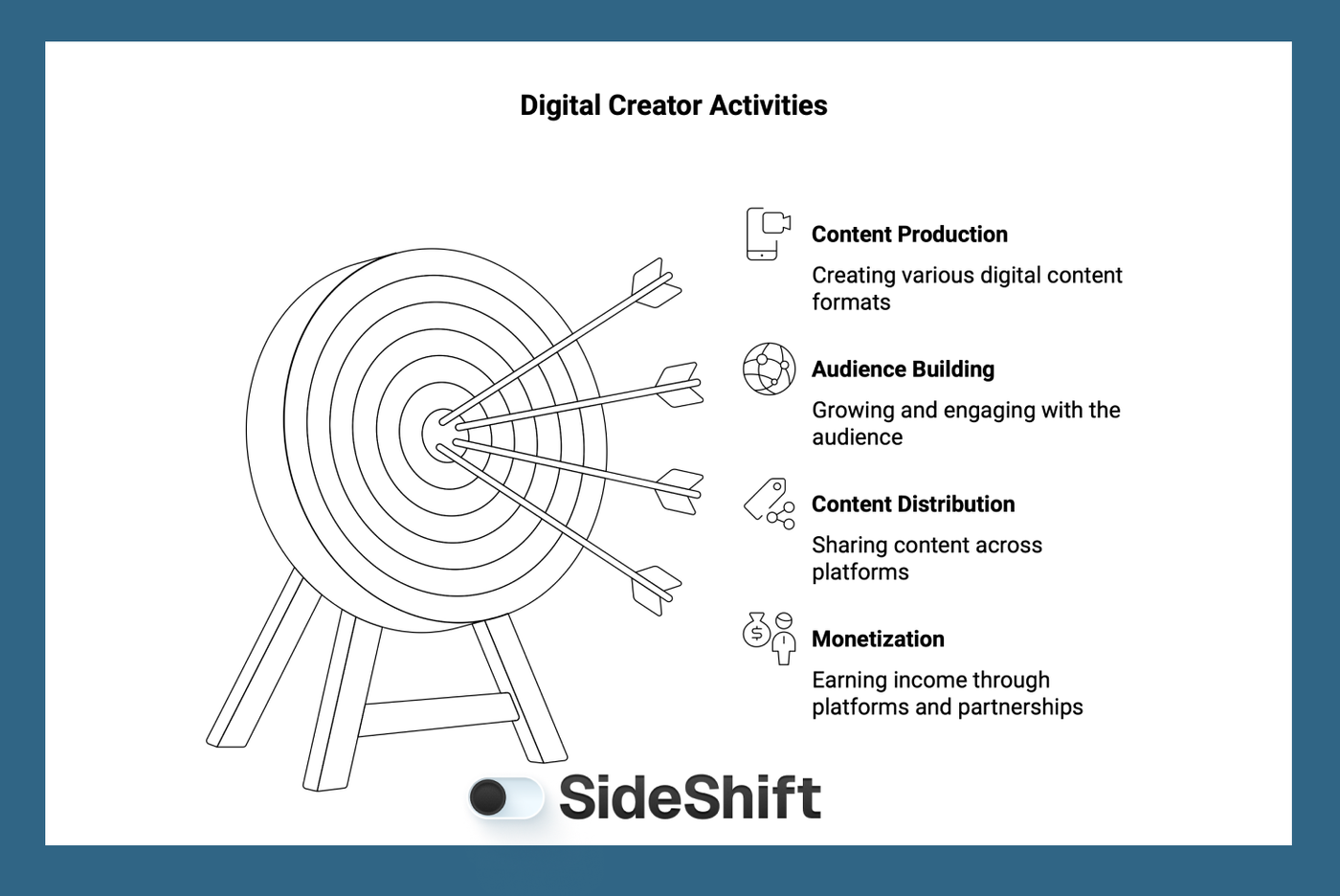
- Content production (short-form video, graphics, blogs, etc.)
- Audience building & community engagement
- Content distribution channels (TikTok, Instagram, YouTube, X, Pinterest, LinkedIn)
- Monetizing through digital platforms & brand partnerships
Digital Creator vs. Influencer: What’s the Difference?
All influencers are digital creators, but not all digital creators are influencers. Influencers on platforms like Instagram and TikTok combine video editing, photography, and a strong sense of digital creativity to build a community that trusts and engages with their content. They often monetize this community through brand partnerships, sponsorships, or product promotions.
A digital creator, on the other hand, is anyone who produces content using digital media whether that’s video editing, AI imagery, graphic design, podcasting, blogging, or streaming - the list goes on. Not every digital creator becomes an influencer with a large, engaged following. Some focus purely on creating high-quality content without the goal of building a personal brand or monetizing a community, but still earning money. There are many types of digital creators and, separately, many types of influencers, each with their own focus, skills, and opportunities.
Want to put this into practice?
SideShift connects you with vetted UGC creators who actually deliver. Start your free trial and post your first job in under 10 minutes.
Types of Digital Creators
- Video creators (YouTubers, TikTokers)
- Graphic / motion creators
- Podcasters & audio storytellers
- Bloggers & newsletter writers
- Streamers & gaming creators
- Educational creators / course producers
- UGC Creators
- Clippers
Essential Skills Every Digital Creator Needs
Many aspiring creators think you must be camera-facing to succeed. Not true. Some creators thrive behind the scenes, clipping content, designing visuals, or writing blogs.
That said, personal storytelling is powerful. Instagram accounts for founders often outperform branded accounts because audiences connect with a human subject, not logos. Willingness to show your face and tell a personal story can unlock bigger opportunities, like UGC partnerships on SideShift, which connects creators with brands needing authentic short-form content.
Core Skills
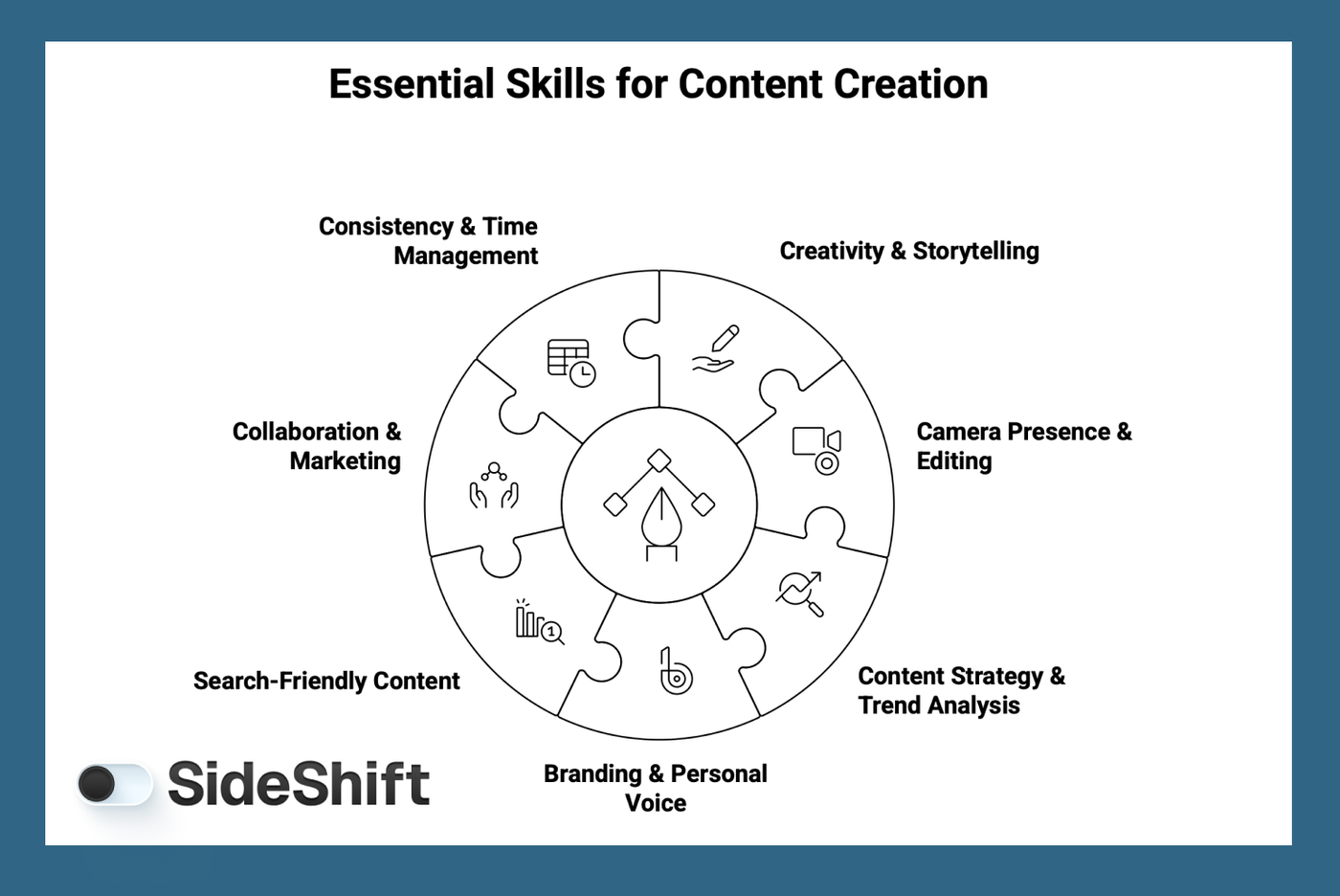
- Creativity & Storytelling: Every post should tell a story or evoke emotion.
- Camera Presence & Editing: Not just for selfies, video framing, lighting, and smooth edits matter.
- Content Strategy & Trend Analysis: Know what’s trending and how to ride the wave.
- Branding & Personal Voice: Be consistent, unique, and memorable.
- Search-Friendly Content: SEO, hashtags, and metadata aren’t optional, they’re essential.
- Collaboration & Marketing: Partnerships, cross-promotion, and networking are key.
- Consistency & Time Management: Posting irregularly is a creativity killer.
Must-Have Equipment for Social Media Digital Creators
You don’t need a full studio to start, but upgrading gear scales your content quality. If you’re looking to make the investment in yourself as a digital creator, here’s the breakdown of some different levels of equipment that could help:
Entry-Level
- Smartphone
- Ring light, tripod
- Platform native editing apps
- Freemium level editing tools
Intermediate
- 4K Camera
- USB mic / Bluetooth Lapel Mics
- Softbox lighting
- Editing software subscription (Canva, CapCut, Adobe, Final Cut, etc.)
Pro-Level
- Full camera rig + lenses
- Wireless mic + audio interface
- Multicam setup
- Studio lighting & backdrops
- High-power editing workstation
Tip: Most creators start with a smartphone and natural lighting. Consistency & creativity beats expensive gear every time.
How Digital Creators Make Money
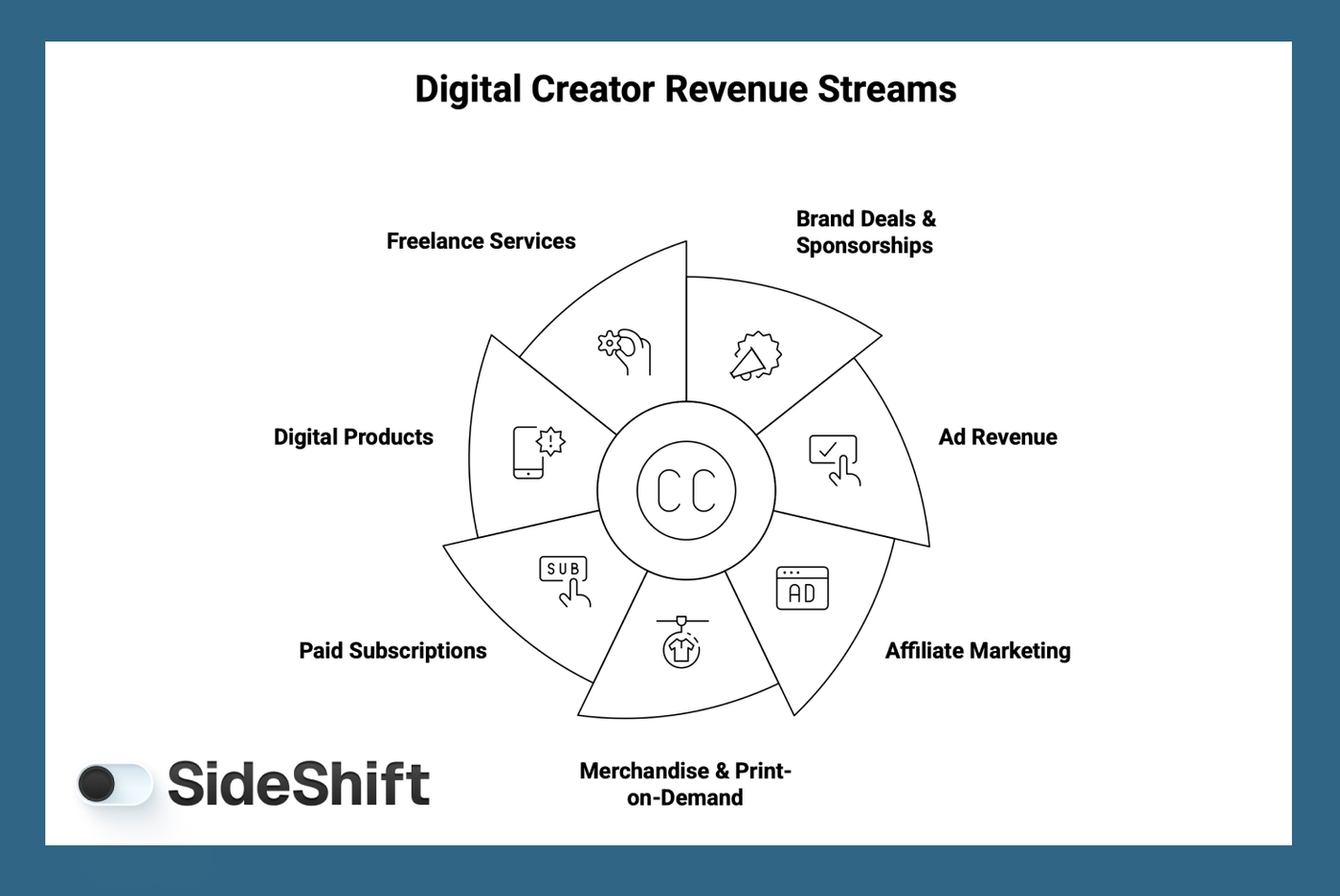
Digital creators have multiple revenue streams. Here are some of the most common:
- Brand deals & sponsorships
- Ad revenue
- Affiliate marketing
- Merchandise & print-on-demand
- Paid subscriptions (Patreon, OnlyFans, IG/YouTube subs)
- Digital products (templates, presets, courses)
- Freelance services
Platforms like SideShift help creators get paid quickly, whether you’re posting daily UGC or managing a larger content pipeline.
The Future of Digital Creators and Content Creation
The creator economy is booming, and there’s no sign of it slowing down. Digital creators are no longer just hobbyists, they’re full-time entrepreneurs, community builders, and marketing powerhouses. Brands are recognizing the value of authentic, relatable content, and creators are increasingly the go-to source for engaging audiences online.
With platforms like SideShift, brands can scale content campaigns quickly, leveraging hundreds or even thousands of creators to produce high-volume user-generated content (UGC) at scale. This approach is not only more efficient than traditional influencer marketing or paid advertising, but it also delivers more authentic results. Instead of relying on a single influencer with a large following, brands can work with a network of creators to test content, iterate fast, and optimize performance across multiple channels.
Want to put this into practice?
SideShift connects you with vetted UGC creators who actually deliver. Start your free trial and post your first job in under 10 minutes.
For creators, this represents a major opportunity. High-volume UGC campaigns allow creators of all sizes to monetize consistently without needing millions of followers. In fact, 56% of marketers report better ROI with micro and nano-influencers compared to larger ones. Even emerging creators can earn income, build portfolios, and gain exposure by producing content that brands actually value. Platforms like SideShift make it easy to manage this process from posting jobs and recruiting talent to handling contracts, payments, and analytics all in one place.
Looking ahead, digital creation will continue to evolve with technology and platform trends. AI-driven editing tools, interactive content, AR/VR experiences, and short-form video innovations are opening new doors for creators to engage audiences in immersive ways. Meanwhile, the focus on authenticity will only grow, audiences crave content that feels real, relatable, and human. Creators who can adapt, experiment, and stay ahead of trends will thrive in this fast-paced landscape.
Ultimately, the future of content creation is about scale, creativity, and efficiency. Brands that embrace high-volume, creator-driven strategies gain a competitive edge, while creators who master storytelling, community building, and multi-platform content production secure long-term opportunities in the ever-expanding creator economy. With SideShift, both sides of this ecosystem are empowered: brands get the content they need, and creators get the platforms, support, and monetization opportunities to grow their careers.
Ready to level up your content game? Join SideShift today and start creating, getting paid, and growing your audience - while helping brands scale using your authentic content.
FAQs
- How many followers do you need to make money on social media?
Monetization isn’t just about followers. With UGC and SideShift, creators with even small audiences can earn consistent revenue. - How long does it take to become a full-time creator?
It varies. If you’re basing your full-time income off of building a large following, that can be unpredictable. But some creators grow within months, while others take years. Consistency, quality, and trend awareness are critical. But you don’t have to wait for a large audience to begin making money as a creator. That’s where SideShift can help. - How do digital creators get brand partnerships?
Brand deals often come from visibility, portfolio, and platforms like SideShift that connect creators to brands in search of UGC Creators. - Are there degrees or certifications for digital creators?
No formal degree is required. Although, online courses in video editing, social media strategy, or content marketing can help accelerate growth. - Can you be a successful creator without showing your face?
Absolutely. Many creators specialize in UGC clipping, graphics, or audio storytelling and thrive without personal branding.