
TikTok Spark Ads: How to Turn UGC Into High-Performing Paid Content
How TikTok Spark Ads turn UGC into paid content that keeps engagement while scaling reach, conversions, and performance across campaigns.
Table of Contents
TikTok Spark Ads: How to Turn UGC Into High-Performing Paid Content
Authenticity wins online. And user-generated content (UGC) has become the secret weapon for brands looking to capture attention without feeling like a traditional ad. Instead of polished, scripted campaigns, audiences respond to real, relatable videos from creators and content that feels authentic and native to the platform.
This is the advantage Spark Ads bring to your social media strategy. By amplifying existing posts from creators or your own profile, Spark Ads turn organic momentum into paid growth. When paired with high-quality UGC, they increase reach, build trust, spark engagement, and transform top-performing content into scalable campaigns that deliver measurable results.
What Are TikTok Spark Ads?
Spark Ads are a native ad format on TikTok that allows brands to promote existing organic posts as paid ads. Instead of creating a separate advertisement, advertisers can amplify real posts from a creator’s account or a brand’s own profile.
Because the ad uses an actual post, it keeps the original engagement (i.e., likes, comments, shares, and profile attribution), which makes the content feel more authentic than traditional ads.
In short, Spark Ads turn organic content into scalable paid media while preserving the social proof that makes UGC effective.
Why Spark Ads Outperform Traditional Ads
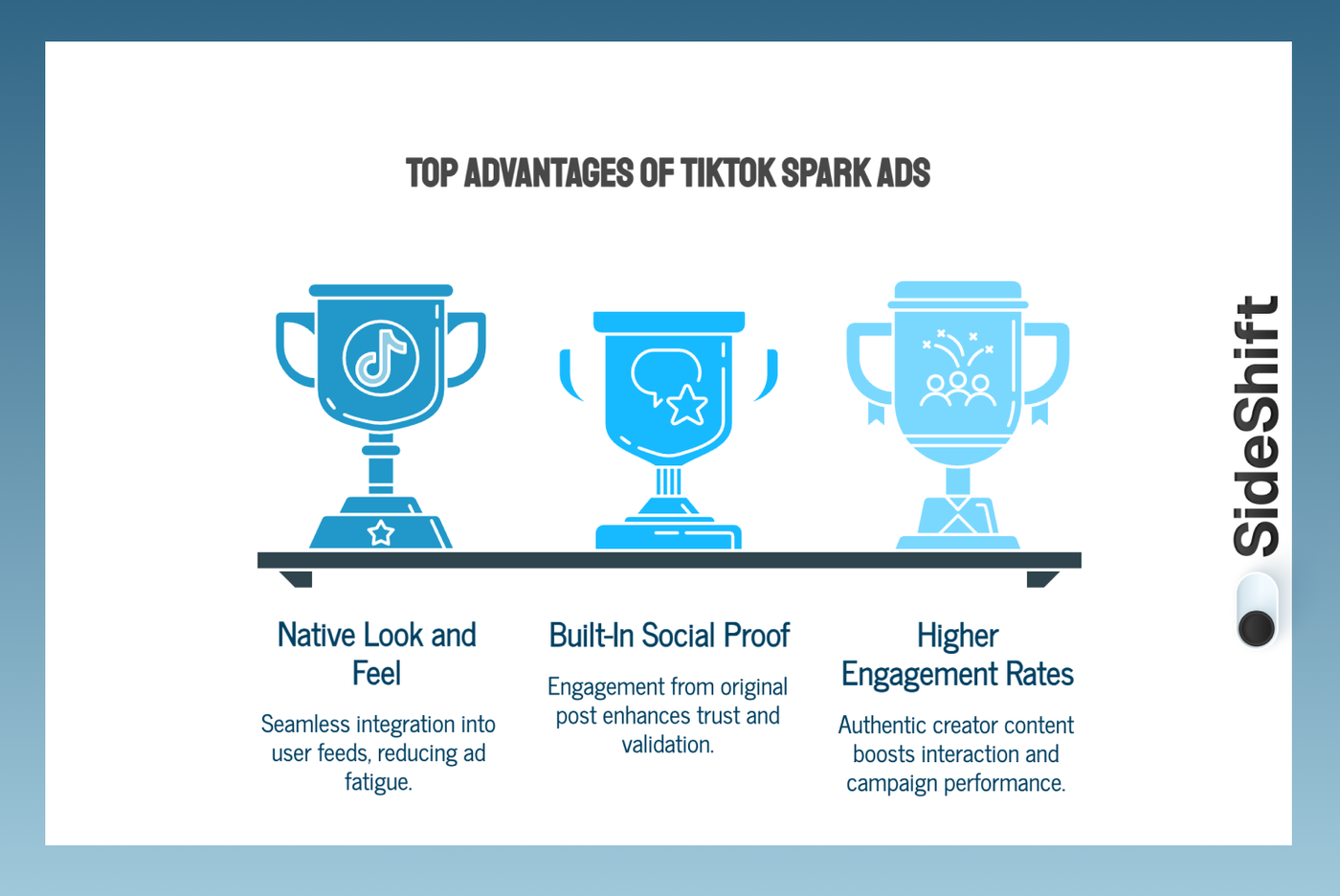
Spark Ads tend to perform better than standard ad creatives for a few key reasons:
1. Native Look and Feel
Spark Ads appear seamlessly in users’ feeds just like any other TikTok post. This reduces ad fatigue because viewers don’t immediately perceive it as an advertisement, leading to longer watch times and higher retention compared to traditional, interruptive ads.
2. Built-In Social Proof
Engagement from the original post (i.e., likes, shares, and comments) carries over to the Spark Ad. This social proof makes the content feel trustworthy and validated by real users, increasing the likelihood of interaction and conversion.
3. Higher Engagement Rates
Creator-led content is inherently more relatable and less polished than traditional ads. Users are more likely to watch, comment, and share videos that feel authentic, which directly boosts engagement metrics and campaign performance.
4. Creator Credibility
Content coming from real creators brings built-in authority. Audiences are more inclined to trust recommendations from a creator they follow than a brand account, making Spark Ads highly persuasive for both awareness and conversions.
How Do Spark Ads Work?
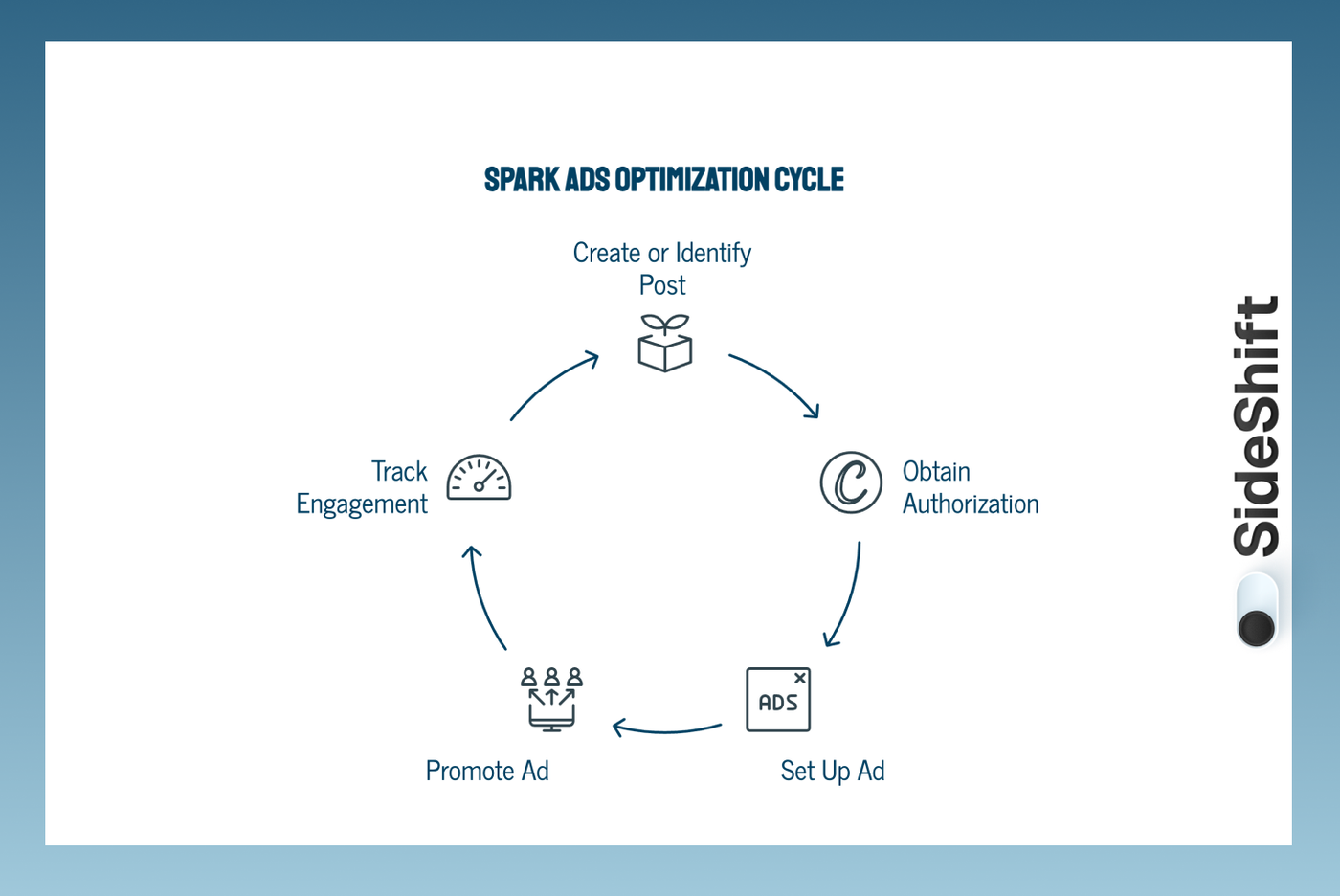
With Spark Ads, brands turn high-performing organic posts into paid campaigns without losing engagement or credibility. Here’s how to do it:
- Create or Identify a Post: A creator or brand publishes an organic post on TikTok.
- Obtain Authorization: If the post is from a creator, they provide an authorization code that lets the brand promote their content as a Spark Ad for a set duration.
- Set Up the Ad in TikTok Ads Manager: The brand selects the authorized post, adjusts targeting, and can even edit certain text elements to optimize the campaign.
- Promote the Post: TikTok distributes the Spark Ad to your target audience using the platform’s ad delivery systems.
- Track Engagement: All metrics, including likes, shares, comments, profile visits, and clicks, continue to accumulate on the original post, maximizing the long-term value of the content.
Want to put this into practice?
SideShift connects you with vetted UGC creators who actually deliver. Start your free trial and post your first job in under 10 minutes.
By leveraging posts that are already resonating organically, Spark Ads allow brands to run ads that feel native, trustworthy, and engaging, all while saving time and creative resources.
Why Investing in UGC Supports Spark Ads
User-generated content (UGC) plays a major role in the success of Spark Ads on TikTok because it aligns with how people actually consume content on the platform. Instead of feeling like traditional ads, UGC blends into the feed with authentic storytelling, product demonstrations, and creator personalities that audiences trust.
This authenticity often leads to higher watch time, stronger engagement, and better ad performance. At the same time, Spark Ads campaigns typically rely on testing multiple creatives to find what resonates most. Investing in UGC helps brands maintain a steady pipeline of fresh videos, preventing ad fatigue and making it easier to scale winning content.
By building a UGC pipeline across multiple creators, brands can identify top-performing content and use Spark Ads to amplify it, doubling down on success and maximizing the value of their UGC strategy.
UGC strengthens Spark Ads because it provides:
- Authentic, platform-native content that audiences trust
- A larger volume of creatives for testing and optimization
- Steady, fresh, and cost-efficient content that helps prevent ad fatigue
- Ads that feel more like organic posts than traditional promotions
How to Source UGC That’s Ready for Spark Ads
Not all TikTok content is optimized for paid performance. To maximize results, you need user-generated content that’s specifically designed to succeed in Spark Ads campaigns.
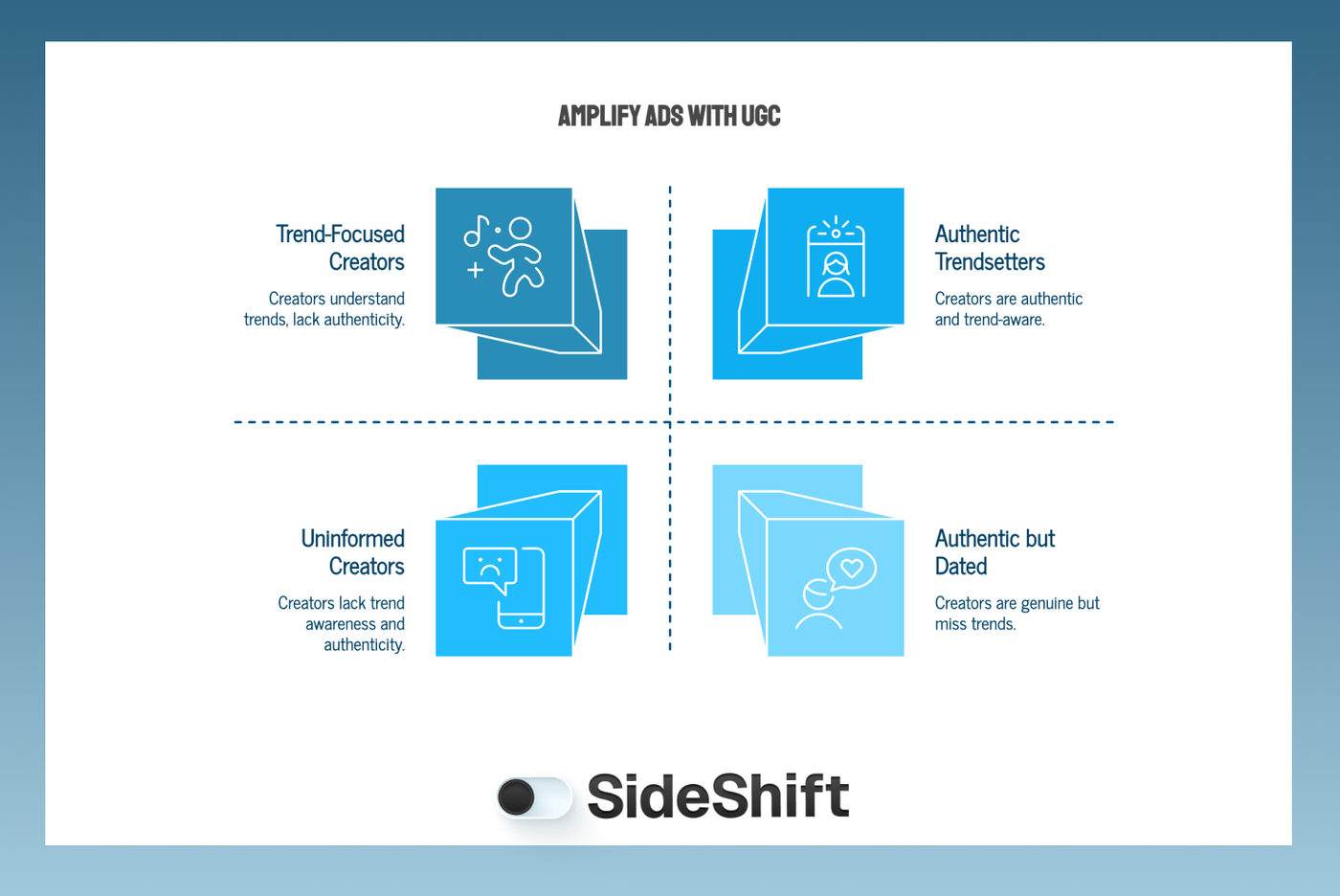
1. Work With Creators Who Understand TikTok Trends
Find creators who are familiar with hooks, storytelling, and native TikTok formats are more likely to produce high-performing videos that feel authentic.
2. Brief for Ad Performance
Provide creators with guidance for ads:
- Strong hooks in the first 3 seconds to capture attention
- Clear product demonstrations or use cases
- Natural storytelling that aligns with the brand
- Multiple variations to test which resonates best
3. Prioritize Authenticity Over Production Quality
On TikTok, raw and relatable content often outperforms highly polished ads. Keep it real and aligned with platform norms.
4. Test Multiple Creators and Angles
Spark Ads campaigns succeed through experimentation. Testing several creators, styles, and video angles ensures you identify the top-performing content.
Platforms like SideShift make it easy to find creators who produce UGC specifically built for paid campaigns, helping brands build a reliable pipeline of content for Spark Ads.
Scale Spark Ads Campaigns with UGC Using SideShift
Scaling Spark Ads successfully requires a consistent flow of creator content that’s designed to perform as paid media. SideShift helps brands source UGC from a pool of over 800,000 Gen Z creators, launch campaigns quickly, and test multiple video concepts built specifically for ads.
Instead of spending time searching for creators manually, brands can streamline creator sourcing, content production, payment, legal, licensing, and performance tracking in one place, making it easier to identify winning creatives and scale campaigns faster on TikTok.
Want to put this into practice?
SideShift connects you with vetted UGC creators who actually deliver. Start your free trial and post your first job in under 10 minutes.
Start building your Spark Ads UGC pipeline today.
FAQs
1. What’s the difference between Spark Ads and regular TikTok ads?
Spark Ads promote existing posts from creators or brand accounts, while regular ads are uploaded directly through Ads Manager without being tied to a live post.
2. Do Spark Ads perform better than standard TikTok ads?
In many cases, yes. Because Spark Ads maintain social proof and feel native to the platform, they often generate stronger engagement and conversion rates.
3. Do creators need to approve Spark Ads?
Yes. Creators must provide authorization codes that allow brands to promote their posts as ads.
4. How many UGC videos should brands test in Spark Ads campaigns?
Most high-performing campaigns test multiple creatives, often between 10–30 variations to identify winning content.
5. Can small brands run Spark Ads successfully?
Yes. Even smaller brands can scale performance if they focus on authentic UGC, clear hooks, and consistent testing.