
The Ultimate UGC Best Practices Playbook for 2026
Best practices for UGC in 2026: source authentic creators, repurpose content across channels, and measure engagement to boost conversions and reach.
Table of Contents
The Ultimate UGC Best Practices Playbook for 2026
User-generated content has quietly become the growth engine behind many of the fastest-scaling brands on social media, because people trust people more than ads.
This guide breaks down the best practices for building a scalable UGC strategy, from recruiting creators to measuring performance and turning content into a repeatable growth engine.
Setting Goals for Your UGC Strategy
The biggest mistake brands make with UGC is treating it like a one-off campaign.
High-performing teams instead treat it as an always-on content engine. Ask yourself and your team these questions to get to know your UGC goals better:
- What role should UGC play in our marketing mix? Are we looking for brand awareness, engagement, conversions, or all three?
- What social media platforms are best to reach our audience? Should we focus on TikTok, Instagram Reels, and/or YouTube Shorts?
- Are we creating UGC primarily for organic posting, paid ads, or both?
- How much content do we need per month to keep our channels and campaigns consistently active?
- What types of creators best represent our brand and resonate with our audience?
- How will we measure success? Views, engagement rate, click-through rate, conversions, or creative performance in ads?
- Do we have a system in place to continuously source new creators and fresh content?
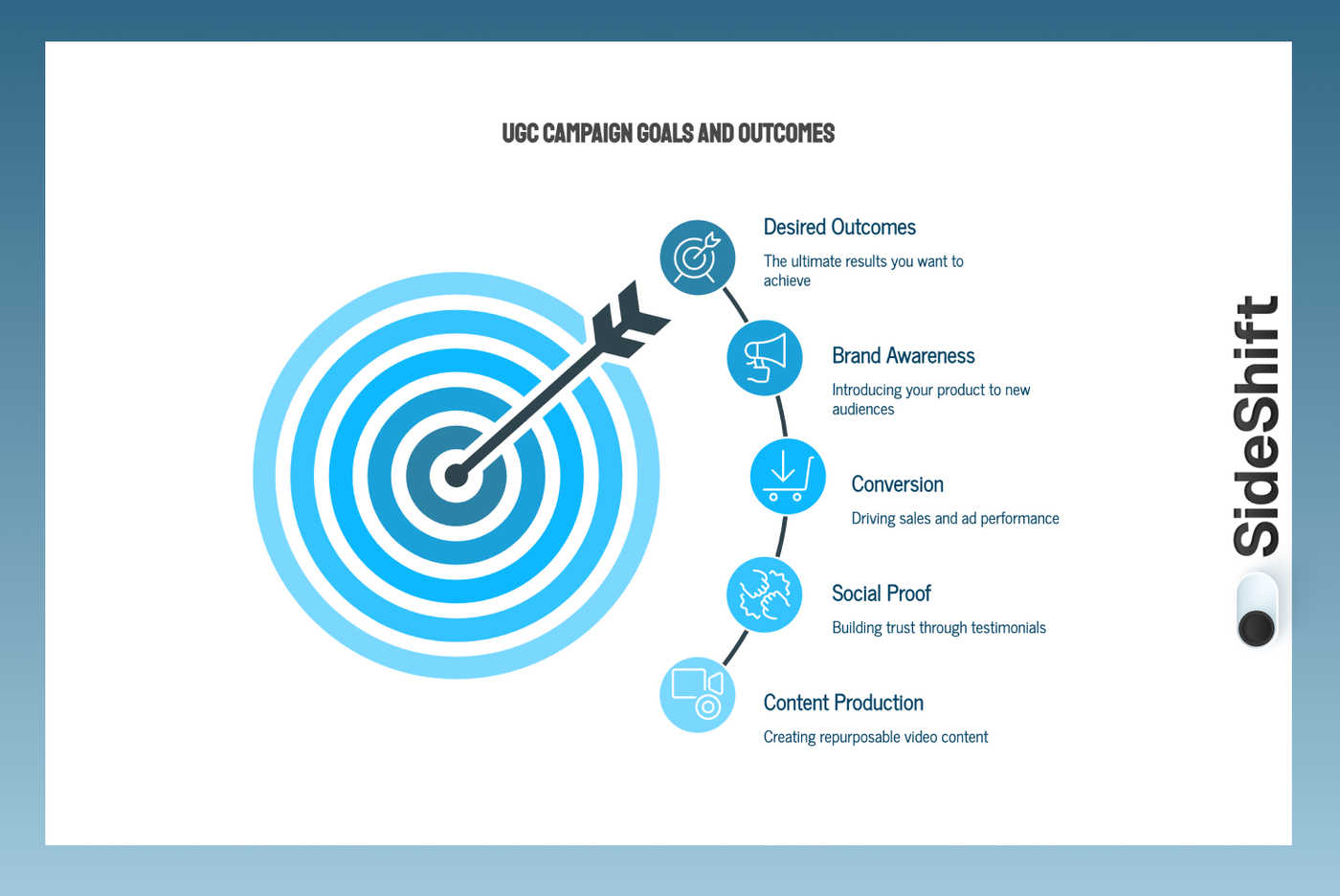
Once your team feels confident with these questions and answers, you can align your campaign goals with the outcomes you want to achieve.
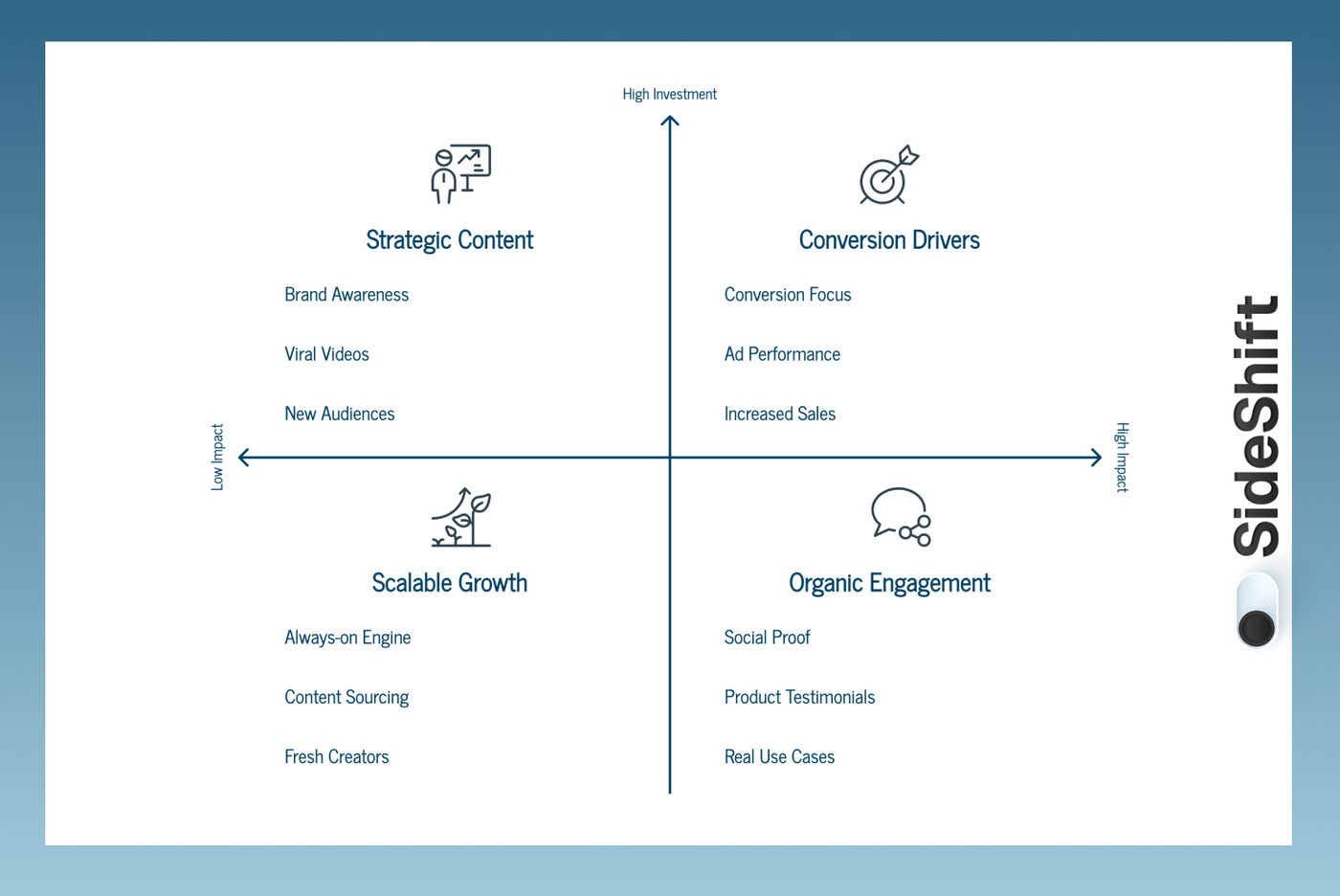
- If your goal is brand awareness, success often looks like high-reach or viral creator videos that introduce your product to new audiences.
- If your goal is conversion, you’ll typically measure success through stronger ad performance, such as higher click-through rates and increased sales.
- If the focus is on social proof, effective UGC usually comes in the form of authentic product testimonials, reviews, and real-life use cases.
- And if your goal is content production, the objective becomes building a steady stream of short-form videos that your team can repurpose across social channels, ads, and website placements.
A Sprout Social consumer survey found that 49% of consumers make regular purchases because of influencer posts and peer recommendations. User-generated content is widely perceived as more authentic than brand-produced media, which is why it performs so well for building trust and driving conversions.
When setting goals, it’s also important to think about content volume as part of your strategy. Rather than relying on a single creator, successful brands typically launch campaigns with multiple creators producing different formats, story angles, and hooks.
This volume-driven approach increases the likelihood of identifying breakout content that resonates with audiences and performs well in both organic and paid campaigns.
Identifying and Recruiting the Right Creators
The best UGC creators are not always “traditional influencers.” In fact, many high-performing UGC creators have small audiences or no audience at all. Their value lies in content quality, consistency, volume, engagement, and relatability, not just reach and follower count.
A good UGC creator for your brand will:
- Have a strong storytelling ability
Want to put this into practice?
SideShift connects you with vetted UGC creators who actually deliver. Start your free trial and post your first job in under 10 minutes.
- Be comfortable on camera
- Possess a native understanding of short-form video
- Showcase an authentic communication style
- Be aligned with brand values and vision
Short-form platforms, like TikTok, especially, are increasingly prioritizing content performance over audience size. Analysts at Hootsuite report that algorithms now distribute content based largely on engagement signals rather than follower count.
This dynamic allows brands to scale content production more cost-effectively and much faster by recruiting large pools of creators instead of a few big-ticket influencers.
Platforms like SideShift help brands connect with growing Gen Z creators and quickly launch high-conversion social media campaigns at scale.
Types of UGC That Perform in 2026
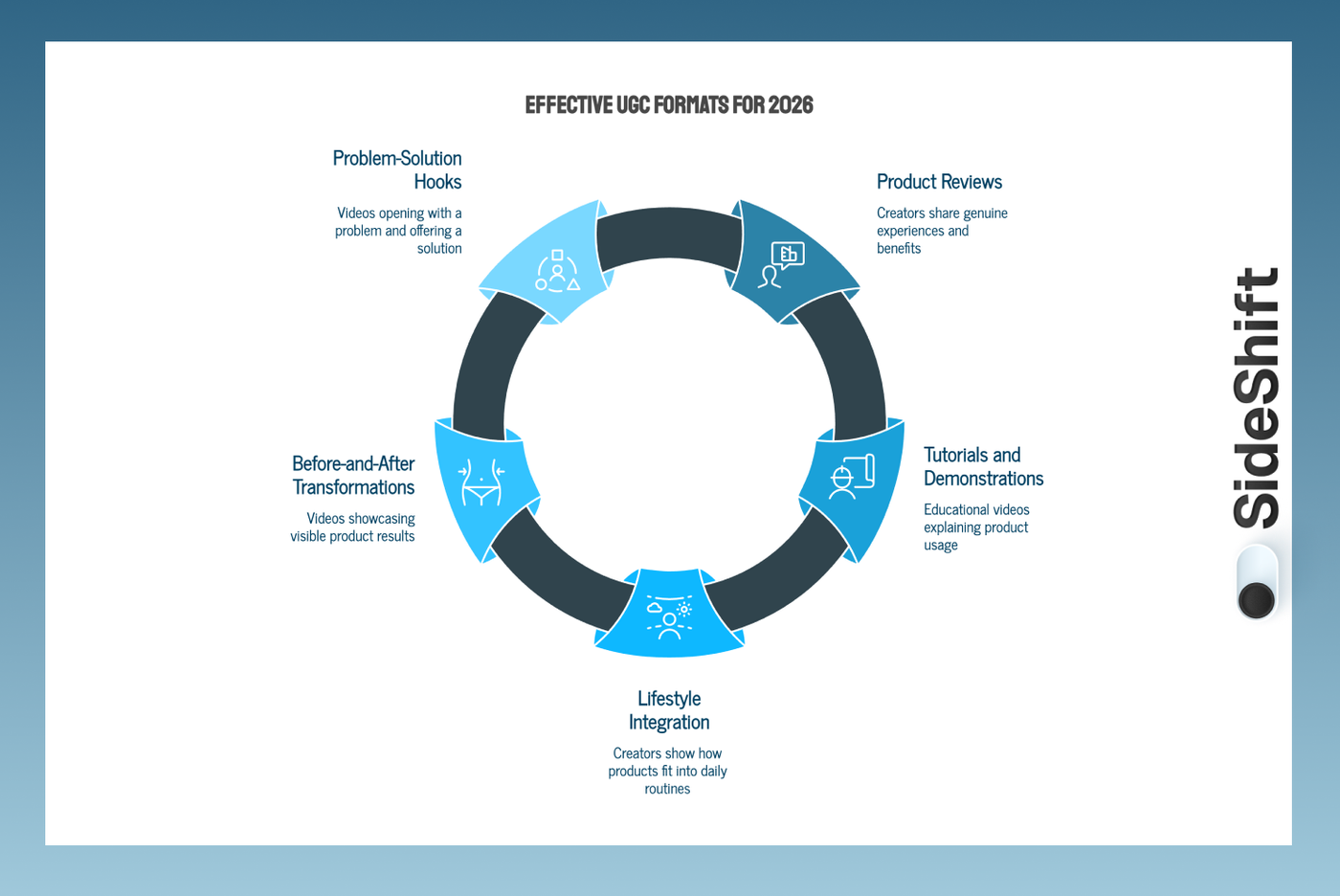
The most effective content mirrors the native storytelling style of platforms like TikTok and Instagram Reels. Here are some examples of successful UGC formats that brands can rely on most in 2026:
- Product Reviews - Creators share genuine experiences using the product and highlight benefits through personal storytelling.
- Tutorials and Demonstrations - Educational videos explaining how to use a product often generate strong watch times and save.
- Lifestyle Integration - Creators show how a product fits naturally into daily routines, making the content feel less like advertising.
- Before-and-After Transformations - Popular in beauty, wellness, and fitness industries, these videos showcase visible product results.
- Problem-Solution Hooks - These videos open with a relatable problem and introduce the product as the solution.
Creating a UGC Creative Brief That Drives Results
A strong creative brief ensures that creators understand the campaign while still leaving room for authentic storytelling.
Key elements of a UGC brief
- Campaign objective - What result should the content drive?
- Product messaging - Key benefits or talking points creators should highlight.
- Audience insights - Who the content is meant to reach.
- Content format - Video length, platform, and style guidelines.
- Creative inspiration - Examples of successful videos or trends.
The most effective briefs set clear guardrails without scripting the creator. The goal is to give collaborators enough direction while still allowing them to speak from an authentic place, because that’s what resonates most with audiences.
Be clear about the campaign goals, but avoid being overly prescriptive about how the creator should execute the content. Creators tend to perform best when they communicate in their natural voice rather than reading pre-written lines, which helps the content feel more genuine and engaging.
Legal and Compliance Considerations
When working with user-generated content, brands are collaborating with independent creators, which means it’s essential to have clear agreements around content rights, usage, and disclosure. Without proper guidance, UGC can expose your brand to a range of legal risks.
UGC Legal Risks to Be Aware Of:
- Copyright Issues: Most UGC is automatically protected by copyright, so creators retain ownership unless they explicitly grant usage rights. Using content without permission can result in copyright claims, fines, or legal action. Always make sure to get explicit permission from the content owner to use their photos, videos, and text for any brand initiatives.
- Privacy Concerns: Even with the creator’s consent, content featuring other individuals may violate their privacy or publicity rights if they haven’t agreed to be included.
Want to put this into practice?
SideShift connects you with vetted UGC creators who actually deliver. Start your free trial and post your first job in under 10 minutes.
- Misrepresentation: Editing, cropping, or changing the context of UGC can misrepresent the creator’s intent or harm their reputation, potentially leading to legal challenges.
- Trademark Infringement: If UGC contains logos, brand names, or other intellectual property from third parties, using it without authorization can trigger trademark claims.
- Defamation Risks: Content that makes unverified statements or negative claims about people, products, or companies could result in defamation liability.
To protect your brand, always obtain written permissions, clearly outline how content can be used, and ensure that creators disclose sponsorships or brand partnerships in compliance with advertising regulations.
By managing your UGC campaigns on SideShift, you can secure permissions, handle payments, and maintain compliance all in one place. This ensures your brand leverages authentic creator content confidently and minimizes the risk of legal or licensing issues.
Amplifying UGC Across Channels
One piece of UGC should never be used only once in a strong UGC strategy. High-performing brands distribute creator content across multiple marketing touchpoints.
UGC can be repurposed on:
- Paid social ads
- TikTok and Instagram brand accounts
- Website landing pages
- Product detail pages
- Email marketing
- Retargeting campaigns
Cross-distribution of UGC content can dramatically improve ROI. Instead of investing in expensive studio production, brands can leverage authentic creator content across the entire marketing funnel at a fraction of the cost.
Measuring, Optimizing, and Scaling UGC
Data is what turns a marketing strategy into a growth engine, and user-generated content is no exception. When launching a UGC campaign, it’s essential to define clear KPIs to understand what’s performing well and where adjustments are needed.
Metrics to Monitor:
- Engagement rate
- Video completion rate
- Click-through rate
- Cost per acquisition
- Conversion rate
The objective is to uncover patterns in your top-performing content, such as:
- Hooks that capture attention and stop the scroll
- Creator personalities that resonate with your audience
- Storytelling structures that drive engagement
- Product demonstrations that clearly show value
Once these patterns are identified, brands can scale the content formats and creator approaches that deliver the best results.
This iterative process is commonly known as achieving Content Market Fit (CMF). CMF is the point at which your UGC consistently drives impact and can be scaled confidently.
Build your UGC Strategy with SideShift
SideShift was built around the idea that creative volume drives growth. On SideShift, brands can connect with over 800,000 growing content creators, post creator jobs, recruit applicants, manage multiple campaigns simultaneously, send contracts, pay creators, and track real-time performance analytics all in one place.
Instead of relying on a single influencer, brands can run campaigns with dozens or even hundreds of creators producing content simultaneously. With SideShift, you can scale your content army efficiently, creating a system where both brands and UGC creators win together.
Join SideShift for free today.
FAQs
1. What is the best platform for sourcing UGC in 2026?
The most efficient approach is using a dedicated creator marketplace that allows brands to recruit multiple creators quickly. Platforms like SideShift enable brands to post jobs, manage creator applicants, and run campaigns without manual outreach.
Want to put this into practice?
SideShift connects you with vetted UGC creators who actually deliver. Start your free trial and post your first job in under 10 minutes.
2. How do I ensure UGC aligns with my brand voice?
Provide clear creative briefs and recruit creators whose natural communication style matches your brand identity. Setting guidelines while allowing creative freedom typically produces the most authentic content.
3. Can small businesses benefit from UGC campaigns?
Yes. UGC campaigns are often more affordable than traditional production because creators produce content themselves. Even a small creator team can generate dozens of marketing assets for ads and social media.
4. What legal permissions are needed to use UGC?
Brands typically need written content licensing agreements with creators, outlining how the content can be used, where it may be distributed, and how long the usage rights last.
5. How do paid and organic UGC campaigns differ?
Organic UGC focuses on creators posting content naturally on social platforms to build engagement and social proof. Paid UGC involves brands using creator content in advertising campaigns to scale reach and conversions.