
Suggestive Selling: What it is & 9 Proven Techniques
Increase revenue with suggestive selling. Use 10 proven techniques to upsell, cross-sell, and boost average order value without feeling pushy.
Table of Contents
Suggestive Selling: What it is & 9 Proven Techniques
Suggestive selling is a sales strategy where businesses recommend complementary products, upgrades, or add-ons based on a customer’s initial purchase. The goal is to increase total transaction value while enhancing the overall shopping experience through smart personalization.
Suggestive selling requires an understanding of customer purchase behavior to anticipate what someone needs next, and making that decision simple and seamless.
Below, we’ll break down 10 proven suggestive selling techniques you can apply across ecommerce, retail, and creator-led campaigns to increase average order value and drive stronger conversion results.
What is Suggestive Selling?
Suggestive selling is a sales technique where you recommend additional, complementary, or upgraded products based on a customer’s current purchase or browsing behavior.
Some examples of suggestive sales techniques in ecommerce that you may have seen on a checkout page include:
- “You may also like”
- “Customers also bought”
- “Upgrade to premium”
- “Add this before checkout”
Suggestive selling overlaps with key strategies like:
- Upselling vs. cross-selling
- Personalized product recommendations
- Sales conversion techniques
- Retail sales best practices
HubSpot reports that the odds of closing a sale with an existing customer are 60-70%, compared to just 5-20% with a new customer. The smarter strategy is to focus on monetizing the traffic you already have. Retain and upsell to customers who are already qualified and in the purchasing phase, rather than constantly chasing new ones.
Upselling vs Cross-Selling: What’s the Difference?
Suggestive selling is the umbrella strategy, and upselling and cross-selling are two of its most effective tactics.
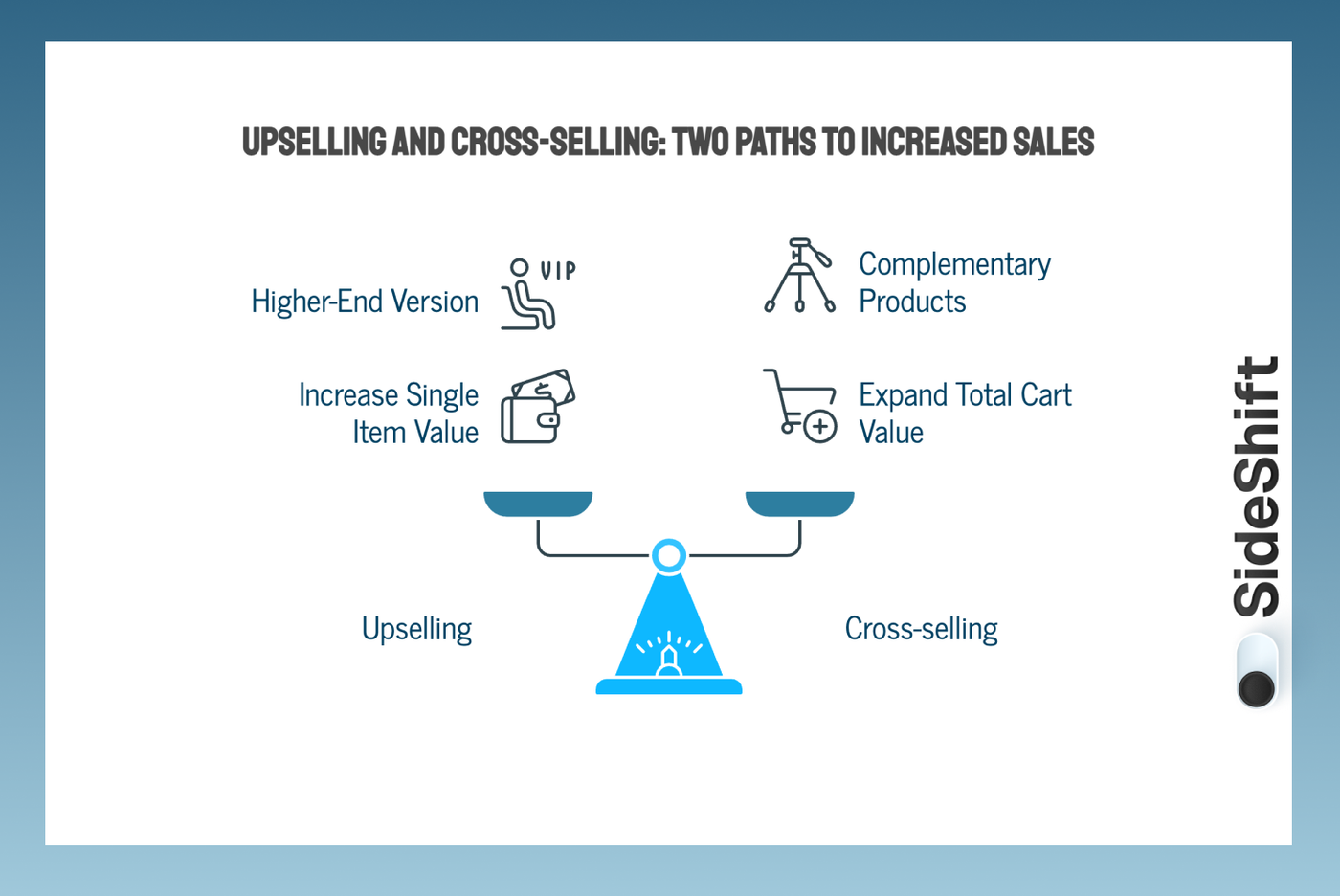
Upselling encourages a customer to purchase a higher-end version of the same product.
- Example: Upgrading from a basic to a premium subscription.
Cross-selling recommends complementary products or add-ons.
- Example: Adding a tripod with your camera.
Both strategies leverage sales psychology to increase average order value (AOV). Upselling focuses on increasing the value of a single item, while cross-selling expands the total cart with relevant add-ons.
Suggestions that feel random or forced come across as pushy, while helpful, personalized recommendations convert. This is the core of suggestive selling.
Why Suggestive Selling Works (Sales Psychology 101)
Suggestive selling works because it leverages fundamental principles of human decision-making:
- Anchoring bias: Presenting a premium option makes the standard choice feel like a smart deal.
- Social proof: Labels like “most popular choice” signal that others trust the product.
- Convenience bias: Reducing decision fatigue makes it easier for customers to say “yes.”
- FOMO: Limited-time offers or bundles create urgency that drives action.
Research from Barilliance shows that contextual product recommendations can drive significant revenue, accounting for up to 31% of ecommerce sales. In a study of 300 customers, the average site saw 12% of total sales directly attributed to recommended products.
9 Proven Suggestive Selling Techniques
1. Bundle Products Intentionally
Product bundles are one of the highest-converting cross-selling strategies. Instead of listing items individually, package them together. For example, a “Healthy Hair Starter Kit” instead of just shampoo and conditioner.
Why it works:
- Increases perceived value
- Reduces decision fatigue
- Boosts average order value (AOV) instantly
Want to put this into practice?
SideShift connects you with vetted UGC creators who actually deliver. Start your free trial and post your first job in under 10 minutes.
Pro tip: Use UGC videos to show the full routine in action. When creators demonstrate how the bundle works, customers mentally commit to purchasing the entire set.
2. Tiered Pricing (The Goldilocks Effect)
Offer three options: Basic, Pro, and Premium. Most customers naturally choose the middle option, making it feel like the smart choice.
This classic upselling technique leverages anchoring bias, where the premium tier makes the mid-tier more appealing. Brands on SideShift often see higher plan upgrades when UGC creators clearly explain feature differences in short-form content.
3. Checkout Upsell Strategy
The checkout page is prime real estate for suggestive selling. Simple add-ons like “frequently bought together” items, low-cost impulse products, or protection plans can significantly increase AOV.
Example: A $9.99 add-on for an $89 product feels easy to accept. Keep it frictionless with one click, and avoid disruptive pop-ups.
4. Personalized Product Recommendations
Generic suggestions don’t convert. Dynamic, behavior-based recommendations based on browsing history, past purchases, or cart contents perform far better.
Pro tip: Align creator content with these recommendations. Let creators naturally integrate add-ons into videos or posts to make them feel authentic.
5. Use Social Proof Inside Recommendations
Labels like “Most Popular,” “Trending This Week,” or “Creator Favorite” give customers confidence. When multiple creators highlight the same product, social proof amplifies conversion and makes upgrades feel more desirable. This is why UGC is such a powerful tool.
When real creators showcase products in authentic ways, it not only validates the item but also inspires potential buyers to trust the recommendation. By integrating social proof into product recommendations through badges, user ratings, or creator endorsements, brands can subtly guide purchase decisions, increase engagement, and boost overall conversion rates.
The combination of authentic voices and visible popularity makes shoppers feel confident that they’re making a choice others already love.
6. Post-Purchase Upselling
Many brands stop selling after checkout, but this is a missed opportunity. Post-purchase offers like upgrades, refill reminders, complementary products or discounts off your next purchase can be delivered through email or SMS sequences.
This works because existing customers are easier and cheaper to convert. Pair post-purchase messages with UGC retargeting content to reinforce usage and increase repeat purchases.
7. Limited-Time Add-Ons
Scarcity drives action. Examples include “Add this now and save 20%” or “Available only with today’s order.” Using limited-time offers should be done sparingly to maintain trust and value. When done authentically, they encourage faster decisions without feeling pushy.
8. Smart Cart Thresholds
Incentivize higher spend by offering perks tied to cart value, like free shipping at $75 or a free gift at $100. Customers often add items to hit the threshold, boosting AOV.
This leverages goal-gradient psychology, where people are more motivated when a reward feels just within reach.
9. Data-Driven Iteration
The most effective suggestive selling strategies are tested, not guessed. Track metrics like:
- Attach rate
- Upsell acceptance rate
- AOV lift
- Post-purchase conversion
High-volume UGC campaigns accelerate testing. Instead of relying on one message, try multiple angles simultaneously to see what resonates and drives real revenue.
Want to put this into practice?
SideShift connects you with vetted UGC creators who actually deliver. Start your free trial and post your first job in under 10 minutes.
How Suggestive Selling Impacts Average Order Value
Customers respond to recommendations when they feel personal, informed, inspired, and confident in their choices. High-quality content, particularly from creators who demonstrate products in authentic contexts, makes add-ons and upgrades feel less like a sales pitch and more like a helpful suggestion. This is the same principle that powers UGC and influencer marketing: authenticity drives trust, and trust drives conversions.
That’s where SideShift becomes part of the equation. By connecting brands with a network of creators producing short-form, authentic content, SideShift gives suggestive selling real momentum. Creators can showcase bundles, complementary products, or premium upgrades in ways that feel natural, turning product recommendations into moments of persuasion that scale.
Sell More With SideShift
Build a high-volume creator strategy, amplify your product recommendations, and increase average order value with content that actually converts.
Start your free trial on SideShift today.
FAQs
1. What is suggestive selling in ecommerce?
Suggestive selling is a strategy where brands recommend additional, complementary, or upgraded products based on a customer’s browsing or purchase behavior. In ecommerce, it drives higher average order value (AOV) by presenting offers that feel helpful rather than pushy, like product bundles, checkout add-ons, or post-purchase recommendations.
2. What’s the difference between upselling and cross-selling?
Upselling encourages customers to buy a higher-end version of the product they’re already considering. Cross-selling recommends complementary products or add-ons. Both techniques fall under suggestive selling, and when done correctly, they increase AOV by offering relevant, timely options that enhance the customer experience.
3. How can suggestive selling increase average order value?
Suggestive selling increases AOV by strategically guiding customers toward relevant upgrades and add-ons. Examples include:
- Product bundles that feel like a better value
- Tiered pricing with clear middle or premium options
- Checkout add-ons and limited-time offers
- Post-purchase upsells and refill reminders
When paired with authentic content, such as creator demonstrations, these recommendations feel natural and persuasive, driving higher conversion rates.
4. Do personalized product recommendations really improve conversions?
Absolutely. Recommendations tailored to browsing behavior, past purchases, or cart contents consistently outperform generic promotions. High-volume UGC content amplifies this effect by showing products in real-life contexts, making the suggestions feel credible and relatable.
5. What are the most effective suggestive selling techniques for online stores?
Some of the top strategies include:
- Product Bundling: Offer complementary items together to increase perceived value.
- Tiered Pricing: Present Basic, Pro, and Premium options to leverage anchoring bias.
- Checkout Upsells: Add low-friction, relevant add-ons at checkout.
- Post-Purchase Offers: Encourage upgrades, refills, or complementary products via email or SMS.
UGC-Led Recommendations: Let creators showcase products naturally in videos or social posts, driving authentic conversions.