
UGC for Agencies: Scale Creator Campaigns Efficiently
UGC for agencies helps scale creator campaigns across multiple clients, streamlining content production, performance tracking, and campaign management.
Table of Contents
UGC for Agencies: How to Scale Creator Campaigns for Multiple Clients
Agencies managing multiple clients face the challenge of producing high-quality, authentic content at scale while keeping track of dozens or even hundreds of creators across multiple campaigns and multiple clients. Traditional processes like spreadsheets, manual messaging, and scattered performance reports slow teams down, create errors, and make it nearly impossible to show clients real ROI.
Instead of juggling dozens of tools, agencies can recruit, onboard, and manage creators all in one platform. UGC campaigns become measurable, repeatable, and scalable on UGC management platforms like SideShift. With SideShift integrated into your agency workflow, you can see which creators are delivering engagement, which formats convert, and which campaigns generate revenue for your clients, all in real time.
Why Agencies Should Invest in UGC
User-generated content isn’t just a passing trend; it’s a proven strategy that drives measurable results for agencies and their clients. Unlike traditional influencer campaigns or highly produced branded content, UGC feels authentic and relatable, helping brands connect with audiences in a way that drives engagement, trust, and conversions.
For agencies managing multiple clients, the ability to scale campaigns efficiently without sacrificing quality is critical. By leveraging UGC, agencies can build large volumes of content, test creative approaches across audiences, and iterate quickly based on performance data.
Investing in UGC also allows agencies to provide clients with actionable insights, showing exactly which creators, content formats, and messaging are generating engagement and driving sales.
With tools like SideShift, agencies can track metrics in real time at both the creator and campaign level, streamline communication, and simplify logistics like contracts and payments. This combination of efficiency, transparency, and performance makes UGC an indispensable component of modern agency marketing services.
Key benefits for agencies include:
- Scalability - Dozens of creators can produce content simultaneously, generating a high volume of assets for multiple clients.
- Authenticity - UGC resonates better with audiences because it feels genuine and native to social feeds.
- Performance insights - Track engagement, conversions, and revenue at both the creator and campaign level.
- Cost efficiency - Micro- and nano-influencers often deliver higher ROI than celebrity endorsements, making campaigns more budget-friendly.
Challenges in Scaling UGC Campaigns for Agencies
While user-generated content offers enormous potential, managing it across multiple clients introduces unique operational challenges. Agencies often struggle with creator management overload, as recruiting, vetting, and communicating with dozens of creators per client can become a full-time task. Content approval can also create bottlenecks.
Tracking performance across campaigns adds another layer of complexity. With multiple clients and dozens of creators, measuring ROI and engagement without centralized analytics is nearly impossible. In addition, maintaining consistent quality across hundreds of creators demands clear guidelines and active monitoring, or campaigns risk producing content that feels disjointed or off-brand.
These challenges highlight why traditional spreadsheets and fragmented tools aren’t enough for agencies scaling UGC. To manage high-volume campaigns efficiently, agencies need a platform built specifically for multi-client, creator-driven campaigns, one that centralizes recruitment, communication, approvals, and analytics in a single system.
Want to put this into practice?
SideShift connects you with vetted UGC creators who actually deliver. Start your free trial and post your first job in under 10 minutes.
Key challenges include:
- Creator management overload - Recruiting, vetting, and communicating with dozens of creators per client is time-intensive.
- Content approval bottlenecks - Ensuring every client approves content without slowing production is difficult without automation.
- Performance tracking complexity - Measuring ROI across multiple campaigns and clients requires centralized analytics.
- Inconsistent quality - Maintaining brand standards across hundreds of creators demands consistent guidelines and monitoring.
How Agencies Can Scale UGC Campaigns
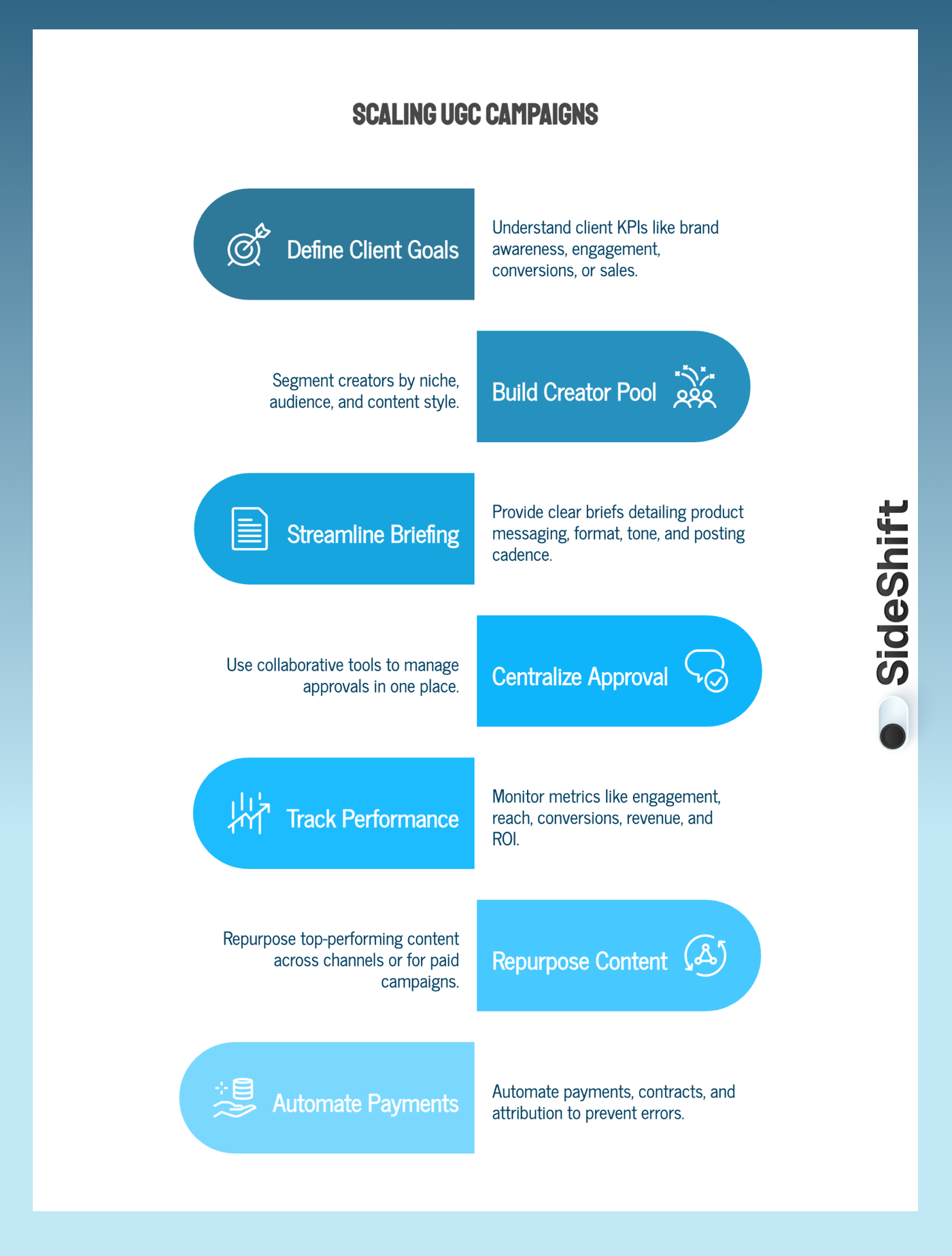
Scaling UGC for multiple clients requires a combination of strategy, structure, and technology. Agencies can adopt the following approach:
1. Define Client Goals Clearly
Each client may have different KPIs like brand awareness, engagement, conversions, or sales. Understanding these objectives upfront ensures creators produce content that aligns with client expectations.
2. Build a Creator Pool for Each Client
Segment creators by niche, audience, and content style. Micro- and nano-influencers often provide the highest engagement rates and ROI, particularly for niche brands.
3. Streamline Campaign Briefing
Provide creators with clear briefs detailing product messaging, format, tone, and posting cadence. This reduces back-and-forth and accelerates production timelines.
4. Centralize Content Approval and Feedback
Use collaborative tools or platforms that allow agencies to manage approvals in one place. This ensures clients see content before it goes live while keeping campaigns on schedule.
5. Track Performance in Real Time
Performance dashboards are crucial. Agencies should monitor metrics like engagement, reach, conversions, revenue, and ROI at both the creator and campaign level. Real-time insights allow teams to double down on high-performing content and optimize underperforming assets.
6. Repurpose High-Performing Content
UGC campaigns generate dozens of assets per client. Repurposing top-performing content across channels or for paid campaigns saves time and maximizes ROI.
7. Automate Payments and Contracts
When managing multiple clients and creators, automating payments, contracts, and attribution prevents errors and frees agency teams to focus on strategy and client relationships.
Centralizing Creator Campaigns with UGC Platforms
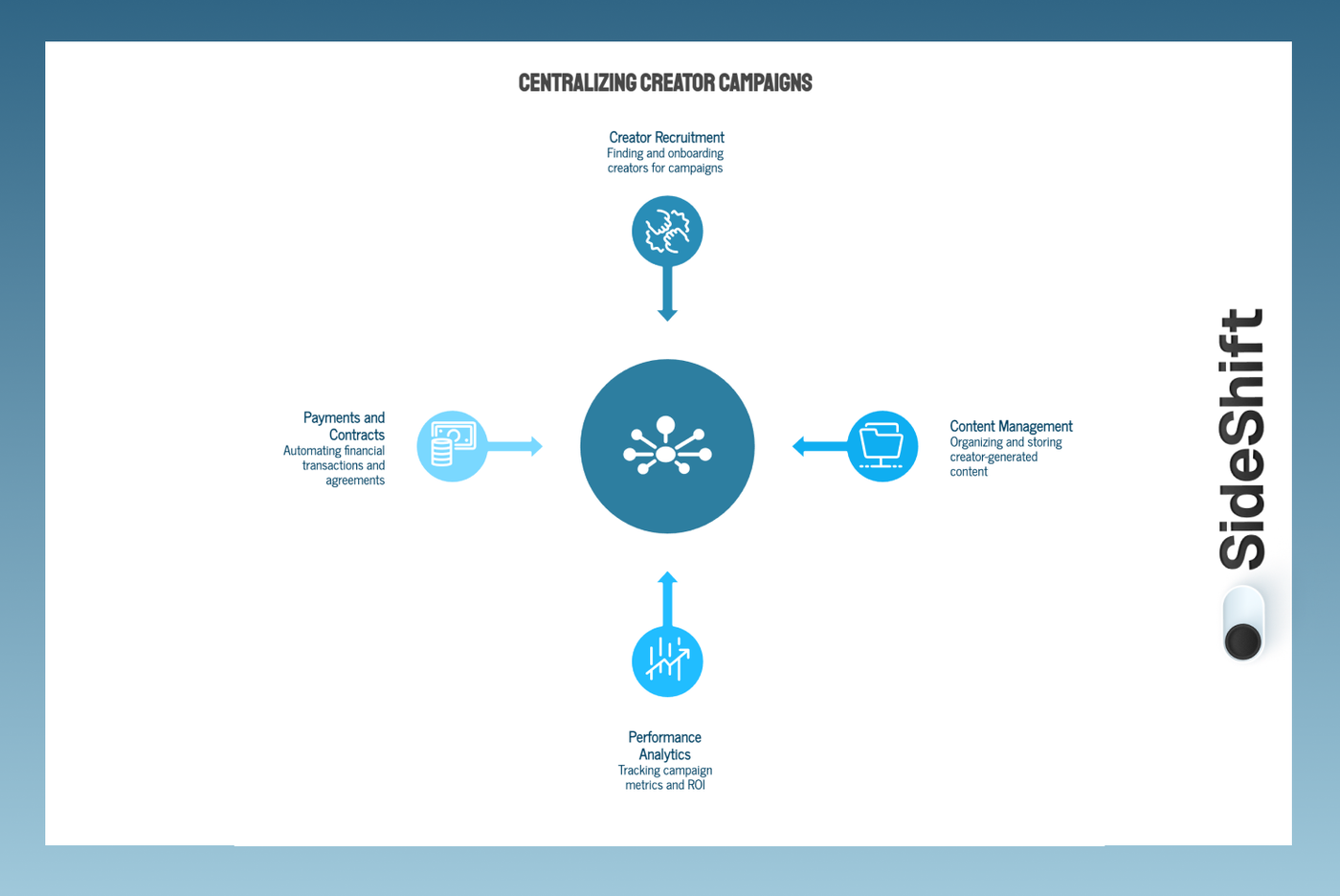
Platforms like SideShift are purpose-built to solve these scaling challenges for anyone using UGC as a marketing growth strategy. SideShift combines creator recruitment, content management, performance analytics, and payments into a single platform, making it easier to manage high-volume campaigns across multiple clients.
Some key advantages for agencies include:
- Real-time dashboards: Track engagement, conversions, and ROI at both the creator and campaign level.
- Bulk creator management: Recruit, organize, and communicate with dozens of creators simultaneously.
- Performance benchmarking: Compare campaigns across clients to identify what strategies are most effective.
- Automated payments and contracts: Simplify the operational side of campaigns while maintaining security and compliance.
By centralizing all campaign functions, agencies can focus on strategy, creativity, and client success rather than administrative bottlenecks.
Best Practices for Agency UGC Campaigns
To ensure multi-client UGC campaigns succeed, agencies should follow these best practices:
- Use Consistent Tracking Methods - UTMs, affiliate links, or unique discount codes ensure accurate performance attribution.
- Combine Qualitative and Quantitative Insights - Engagement metrics show what resonates, while conversions and revenue demonstrate what actually drives results.
- Monitor Campaigns in Real Time - Weekly or live dashboards allow teams to iterate quickly and optimize ROI.
Want to put this into practice?
SideShift connects you with vetted UGC creators who actually deliver. Start your free trial and post your first job in under 10 minutes.
- Benchmark Across Clients and Creators - Compare formats, audiences, and creative approaches to find winning combinations.
Example Agency Workflow with SideShift
Agencies can scale UGC campaigns efficiently by following a structured workflow on SideShift. This example workflow reduces manual tasks, minimizes errors, and allows agencies to scale campaigns across multiple clients without sacrificing quality:
- Post Campaign Briefs - Specify goals, tone, and deliverables for each client to ensure clarity and alignment.
- Recruit Relevant Creators - Filter SideShift’s network by niche, audience, and engagement to find the best-fit creators.
- Approve Content in Platform - Provide feedback and manage approvals without losing visibility or slowing production.
- Track Performance in Real-Time Dashboards - Measure creator-level and campaign-level results to understand ROI instantly.
- Pay Creators Automatically - Simplify payments and attribute conversions for full transparency.
- Analyze and Repurpose Content - Distribute top-performing content across client channels to maximize impact.
With SideShift, agencies can turn high-volume UGC into a repeatable, measurable growth engine for every client.
Scale UGC for Multiple Clients on SideShift
Managing multi-client UGC campaigns doesn’t have to be chaotic. SideShift simplifies the entire process from recruiting creators, tracking real-time performance, managing approvals, and automating payments. Turn your agency into a high-performing UGC engine delivering consistent results for every client.
Join SideShift for free today and start scaling creator campaigns like a pro.
FAQs
1. What is UGC for agencies?
UGC for agencies refers to managing user-generated content campaigns for multiple clients, using creators to produce authentic social media content that drives engagement and conversions.
2. How can agencies measure UGC campaign success?
Success is measured using metrics like engagement rate, reach, conversions, revenue, and ROI. Real-time dashboards at the creator and campaign level provide actionable insights.
3. Can micro-creators outperform influencers in agency campaigns?
Yes. Micro-creators often have higher engagement rates and more niche audiences, leading to better conversion rates and ROI for specific client campaigns.
4. How does SideShift help agencies scale campaigns?
SideShift centralizes creator recruitment, content management, performance tracking, and payments, allowing agencies to manage high-volume campaigns for multiple clients efficiently.
5. What types of brands benefit most from agency-managed UGC?
Brands with high-volume social content needs, multiple product lines, or frequent campaigns benefit most, as agencies can deliver consistent, scalable, and measurable results.