
Multi-Platform UGC: Repurpose Content Across Social Channels
Repurpose UGC across TikTok, Instagram, and YouTube efficiently. Adapt formats, captions, and hooks to maximize engagement and ROI across platforms.

Table of Contents
Multi-Platform UGC: How to Repurpose Creator Content Across TikTok, Instagram & YouTube
The most effective brands treat every piece of content as an asset that can be adapted, distributed, and tested across multiple channels. Instead of relying on one post to perform, they maximize reach by repurposing creator content across TikTok, Instagram, and YouTube.
This guide breaks down how to turn one piece of UGC into a multi-platform growth engine. You will learn how to adapt content for each platform, maintain performance while repurposing, and build systems that scale distribution without sacrificing quality. Whether you are running a few campaigns or managing high-volume creator output, these strategies will help you get more value from every piece of content you produce.
What Is Multi-Platform UGC?
Multi-platform UGC refers to taking a single piece of creator content and adapting it for distribution across multiple social platforms. Instead of producing entirely new content for TikTok, Instagram, and YouTube, brands reuse core creative assets while optimizing them for each platform’s format, audience behavior, and algorithm.
At its core, this approach turns one video into multiple opportunities for reach, engagement, and conversion. A single strong concept can be reformatted, trimmed, captioned differently, or slightly re-edited to perform natively on each platform. This allows brands to increase output without increasing UGC production costs at the same rate.
Why Repurposing Creator Content Helps
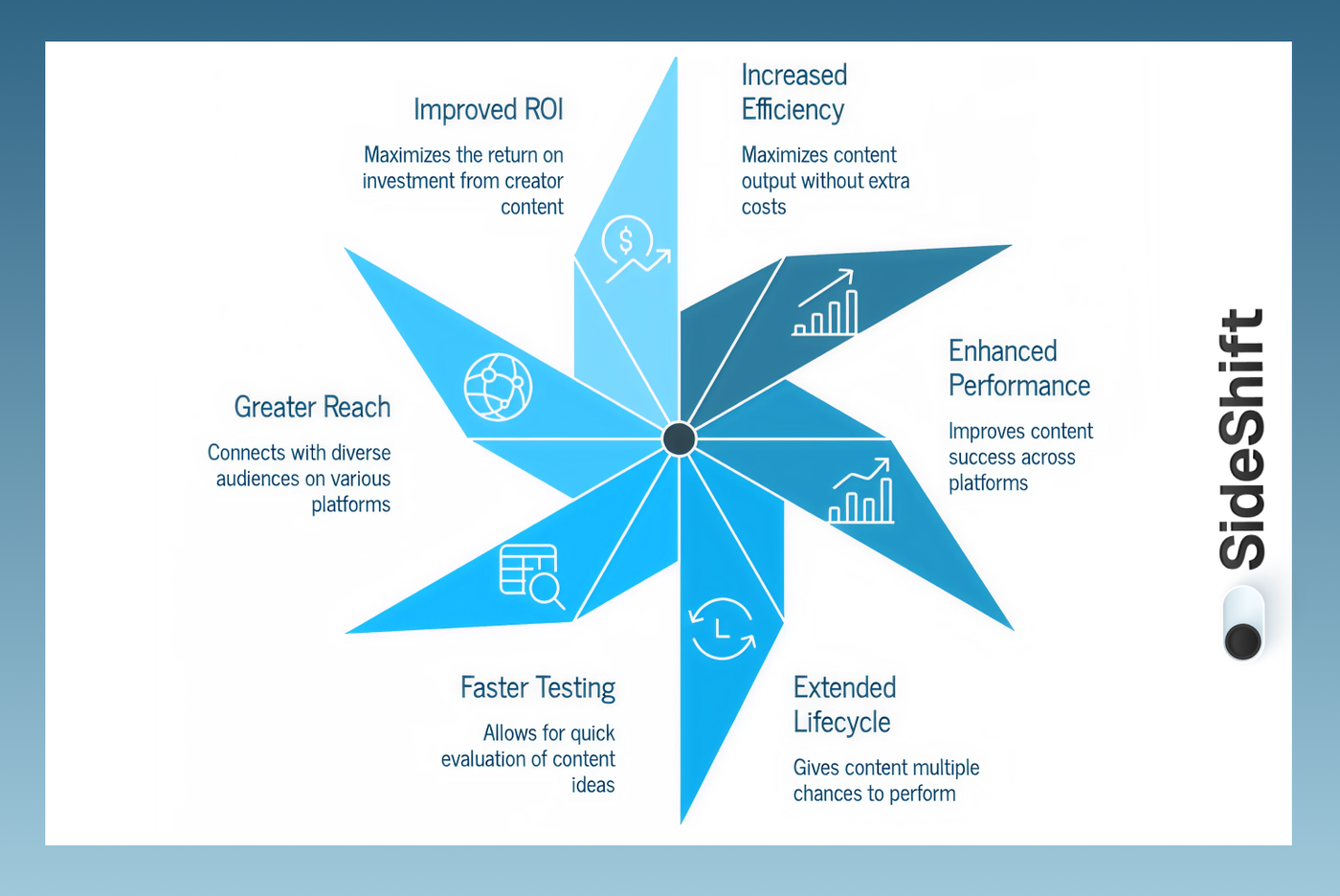
Repurposing content improves efficiency while increasing the chances of performance. Not every video will succeed on the first platform it is posted on, but that does not mean the concept itself is weak. Distribution plays a major role in content success, and different platforms surface content in different ways.
By repurposing UGC, brands extend the lifecycle of each asset and give it multiple chances to perform. This approach also supports faster testing, since one idea can generate several variations across platforms.
Key benefits of repurposing include:
- Increased content output without additional creator costs
- More data from each piece of content
- Greater reach across different audiences
- Faster identification of winning concepts
- Improved ROI from each creator deliverable
Platform-Specific UGC Requirements
Each platform has its own content style, pacing, and user expectations. Content that performs well on TikTok may feel out of place on Instagram or YouTube if it is not adjusted. Understanding these differences is critical when repurposing UGC. Small changes in formatting, captions, or structure can significantly impact performance.
UGC Performance on TikTok
TikTok is built around speed, volume, and discovery. Content is pushed to new audiences based on performance signals rather than follower count, which makes the first few seconds critical. Strong TikTok UGC immediately captures attention with a clear hook, often using curiosity, relatability, or a bold statement to stop the scroll.
The platform favors content that feels native and unscripted. Overly polished videos can underperform because they resemble ads rather than organic content. Creators who speak directly to the camera, use trending sounds, and lean into casual delivery tend to perform better.
Key characteristics of high-performing TikTok UGC:
- Hooks that create immediate curiosity or tension
Want to put this into practice?
SideShift connects you with vetted UGC creators who actually deliver. Start your free trial and post your first job in under 10 minutes.
- Fast pacing with quick cuts and minimal dead space
- Use of trends, sounds, and cultural references
- Conversational, relatable tone
- Content that feels spontaneous rather than produced
UGC Performance on Instagram Reels
Instagram Reels still rewards short-form video, but the content standard is slightly more refined. Visual quality and brand alignment matter more here, especially for consumer brands that rely on strong aesthetics. While content should still feel native, there is more room for intentional composition, lighting, and editing.
Reels also perform well when they fit into a broader brand identity. This means creators should balance authenticity with a level of polish that aligns with how the brand typically shows up on Instagram.
Key characteristics of high-performing Instagram Reels:
- Clean visuals with good lighting and framing
- Cohesive color tones and brand consistency
- Lifestyle-driven storytelling that showcases the product naturally
- Slightly more structured editing compared to TikTok
- Content that blends into a curated feed while still feeling organic
UGC Performance on YouTube Shorts
YouTube Shorts sits between entertainment and education. While it shares similarities with TikTok in format, the audience often expects slightly more context and structure. Content that performs well usually delivers a clear idea from start to finish, with a defined beginning, middle, and end.
Retention is especially important on Shorts. Videos that keep viewers watching through completion are more likely to be distributed. This makes clarity and pacing essential, with less reliance on chaotic editing and more focus on delivering value quickly.
Key characteristics of high-performing YouTube Shorts:
- Clear storytelling with a defined structure
- Strong retention across the full video
- Informative or value-driven messaging
- Slightly slower pacing with intentional flow
- Content that answers a question, demonstrates a product, or teaches something quickly
How to Adapt UGC for Each Platform
Repurposing content across platforms effectively requires more than reposting the same video. The goal is to maintain the core idea while adjusting execution to fit each platform.
Start by identifying the strongest element of the content, whether that is the hook, the message, or the format. Then modify the surrounding elements to match platform behavior.
Key adaptation strategies:
- Adjust hooks to match platform pacing and trends
- Modify captions and on-screen text for each audience
- Trim or extend video length depending on retention patterns
- Reframe the call to action based on platform intent
- Test multiple variations of the same video
For example, a TikTok video with a fast hook and casual tone might be slightly refined for Instagram, while the YouTube version could include clearer structure and context.
Best Practices for Multi-Platform UGC
Building a repeatable system for repurposing content helps maintain quality while scaling output. The most effective teams treat repurposing as part of the content creation process, not an afterthought.
Consistency and iteration are key. Instead of relying on one version of a video, brands should test variations and refine based on performance.
Best practices to follow:
- Create with repurposing in mind from the start
- Keep raw footage for future edits and variations
- Develop multiple hooks for the same video
Want to put this into practice?
SideShift connects you with vetted UGC creators who actually deliver. Start your free trial and post your first job in under 10 minutes.
- Maintain brand consistency across platforms
- Test and iterate continuously
Over time, this approach leads to a library of adaptable content that can be reused and optimized repeatedly.
Tracking Performance Across Platforms
To understand what works, brands need to track performance across all platforms where content is distributed. Each platform offers different metrics, so it is important to focus on signals that indicate real impact.
Rather than looking at vanity metrics alone, focus on indicators that reflect engagement, retention, and conversion.
Key metrics to monitor:
- View count and reach
- Watch time and retention rate
- Engagement (likes, comments, shares)
- Click-through rate and conversions
- Cost per result or ROI
Comparing performance across platforms helps identify where certain types of content perform best and where adjustments are needed.
Tools & Strategies to Streamline Multi-Platform UGC
As content volume increases, managing repurposing manually becomes inefficient. Streamlined workflows and tools help teams maintain consistency while scaling output.
Centralizing branded content and performance data allows for faster decision-making and better collaboration between teams.
Effective strategies include:
- Using a centralized content library
- Standardizing editing templates for each platform
- Automating publishing workflows
- Tracking creator performance across campaigns
- Organizing content by format, hook, or theme
These systems reduce friction and make it easier to scale multi-platform distribution without sacrificing quality.
Scale Multi-Platform UGC with SideShift
Repurposing content is most effective when paired with high-volume creator output. The more content you produce, the more opportunities you have to test, adapt, and scale across platforms.
SideShift enables brands to build this system by connecting them with a large network of creators and providing the infrastructure to manage high-volume UGC campaigns efficiently. Instead of producing a few pieces of content and stretching them thin, brands can generate a steady flow of UGC and repurpose top performers across channels.
This creates a feedback loop where content is continuously tested, optimized, and redistributed for maximum impact.
Join SideShift for free today.
FAQs
1. How do I repurpose TikTok content for Instagram and YouTube?
Start by adjusting the hook, captions, and pacing to match each platform. Keep the core idea the same, but tailor the presentation for different audiences and formats.
2. Can I use the same UGC content on all platforms without changes?
You can, but performance is usually stronger when content is slightly adapted for each platform’s style and user behavior.
3. How often should I post repurposed UGC on each platform?
Consistency matters more than volume. Many brands aim for daily or near-daily posting, using repurposed content to maintain a steady flow.
4. What metrics indicate successful cross-platform UGC?
Focus on retention, engagement, and conversions rather than just views. These metrics provide a clearer picture of performance.
5. Are there legal considerations when repurposing creator content?
Yes. Ensure you have proper usage rights, clear contracts, and permission to reuse content across platforms before repurposing.