
Meta Partnership Ads: Brand Guide to Creator Whitelisting
Run high-performing Meta Partnership Ads by whitelisting creators, gaining access to their accounts, and scaling trusted, conversion-driven content.
Table of Contents
Meta Partnership Ads: The Brand's Guide to Creator Whitelisting
Meta Partnership Ads have quickly become one of the most effective ways to scale UGC into paid performance. Instead of running ads from a brand account, marketers are now leveraging creator identities to drive stronger engagement, lower CPMs, and higher conversion rates.
At SideShift, we’ve seen brands unlock entirely new levels of performance simply by shifting how their ads are distributed. The creative often stays the same. The difference is who it comes from. When ads run through real creators, they feel native to the feed, which changes how users interact with them.
This guide breaks down how Meta Partnership Ads work, how creator whitelisting fits into the process, and how to build a system that helps turn creator content into a scalable paid growth channel.
What Are Meta Partnership Ads?
Meta Partnership Ads are a type of ad format that allows brands to run paid campaigns through a creator’s account while maintaining control over targeting, budget, and optimization inside Meta Ads Manager.
This creates a hybrid model where the brand handles performance marketing, but the ad appears as if it is coming directly from the creator. That shift in delivery has a major impact on how the content is perceived.
From a user perspective, the ad feels more like organic content. From a brand perspective, it allows for full control over scaling and optimization without relying on creators to manage ads themselves.
What is Whitelisting?
Whitelisting is the process of getting permission from a creator to run ads through their social media account. This access allows brands to use the creator’s handle, identity, and content within paid campaigns.
Instead of boosting posts or asking creators to run ads themselves, brands gain backend access to deploy and manage campaigns directly.
Whitelisting typically includes:
- Permission to run ads from the creator’s account
- Access to use their content in paid placements
- Control over targeting, budget, and optimization
- The ability to test multiple variations of the same content
This setup bridges the gap between influencer content and performance marketing.
How Creator Whitelisting Works
The whitelisting process is straightforward, but execution matters. Small setup mistakes can limit performance or delay campaigns.
At a high level, creators grant access through Meta’s partnership tools, allowing brands to connect their ad account to the creator’s profile. Once approved, brands can run UGC ads using that identity.
Step-by-step breakdown:
- Creator grants advertising permissions through Meta Business tools
- Brand connects the creator account inside Ads Manager
- Content is uploaded or selected for ad use
- Campaigns are launched using the creator’s handle
- Performance is tracked and optimized like any other paid campaign
Once access is granted, brands can reuse and scale content without repeatedly asking for approval, which makes this model highly efficient.
Meta Partnership Ad Examples
Meta Partnership Ads have quickly become a growing force within paid social media marketing, especially as brands shift toward more native, creator-led strategies. Instead of relying on traditional brand ads, companies are investing in creator whitelisting to blend performance marketing with authentic content. The result is a more scalable and efficient way to test creative, reach new audiences, and drive conversions.
Want to put this into practice?
SideShift connects you with vetted UGC creators who actually deliver. Start your free trial and post your first job in under 10 minutes.
The following examples highlight how different brands are using Meta Partnership Ads in practice, with a focus on creative UGC strategy, creator selection, and how they structure campaigns for performance.
CYKLAR
Cyklar is a skincare brand co-founded by creator Claudia Sulewski, and their Meta Partnership Ads strategy reflects a strong understanding of both creator trust and content volume. The brand consistently runs whitelisted ads across a wide mix of creators, ranging from recognizable personalities to everyday UGC creators with smaller followings.
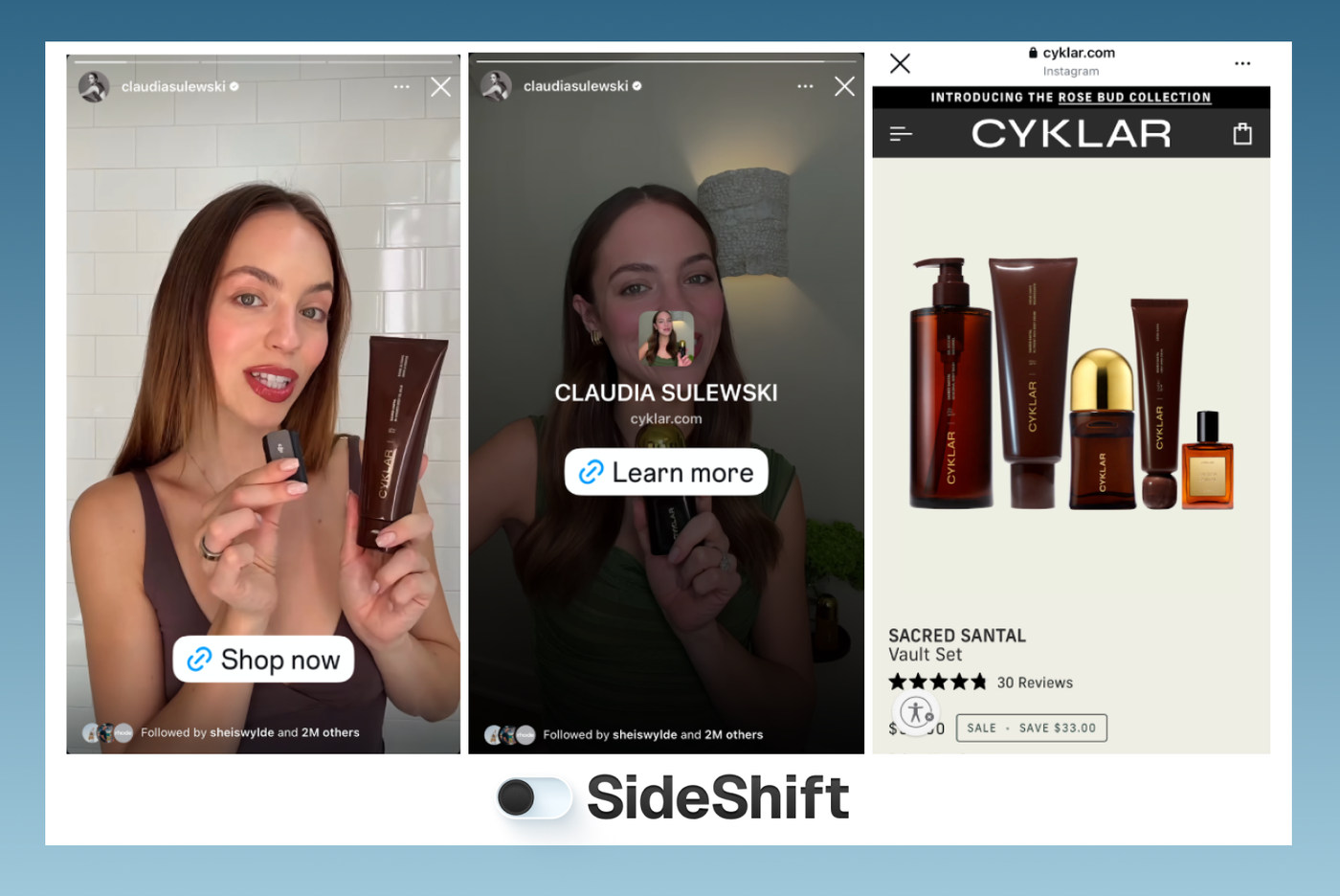
What stands out is their commitment to variation. Instead of relying on one or two high-budget creatives, Cyklar invests in multiple content styles, hooks, and creators at the same time. This helps reduce ad fatigue while increasing the chances of finding high-performing assets.
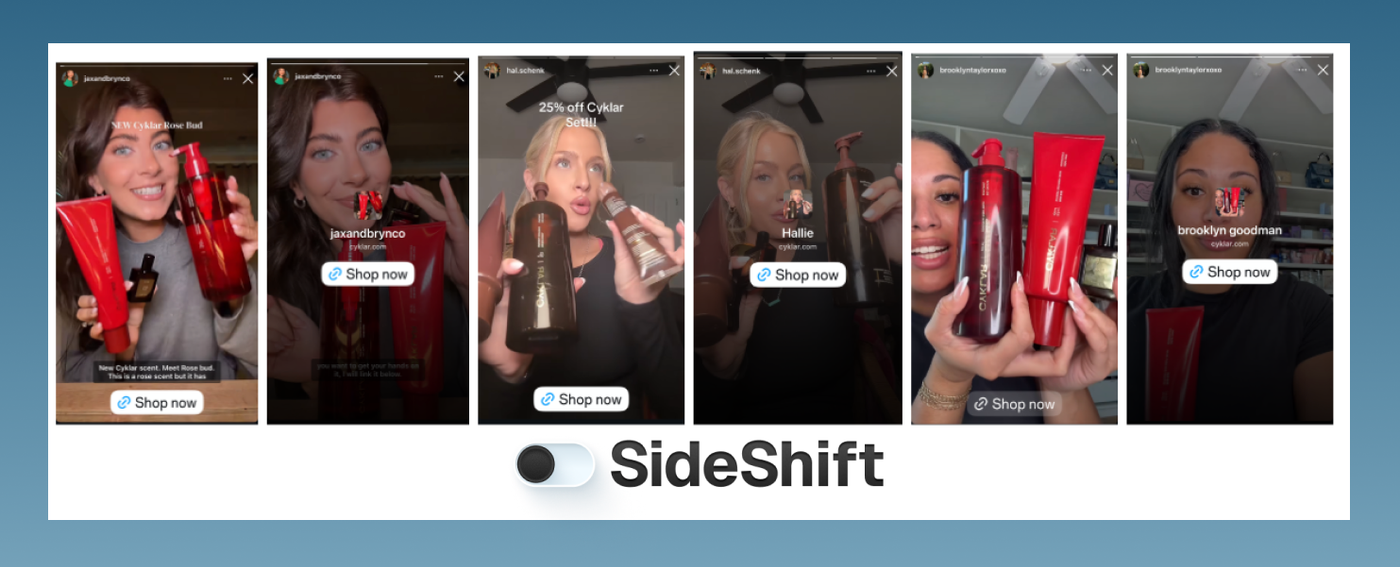
They also layer in incentives like limited-time discounts, which align well with creator-led messaging. When paired with Claudia’s personal brand, this creates a dual advantage. There is built-in trust from her audience while still benefiting from scalable UGC across a broader creator base.
JOLIE
Jolie, a wellness-focused shower filter brand, uses Meta Partnership Ads to turn everyday routines into compelling ad content.
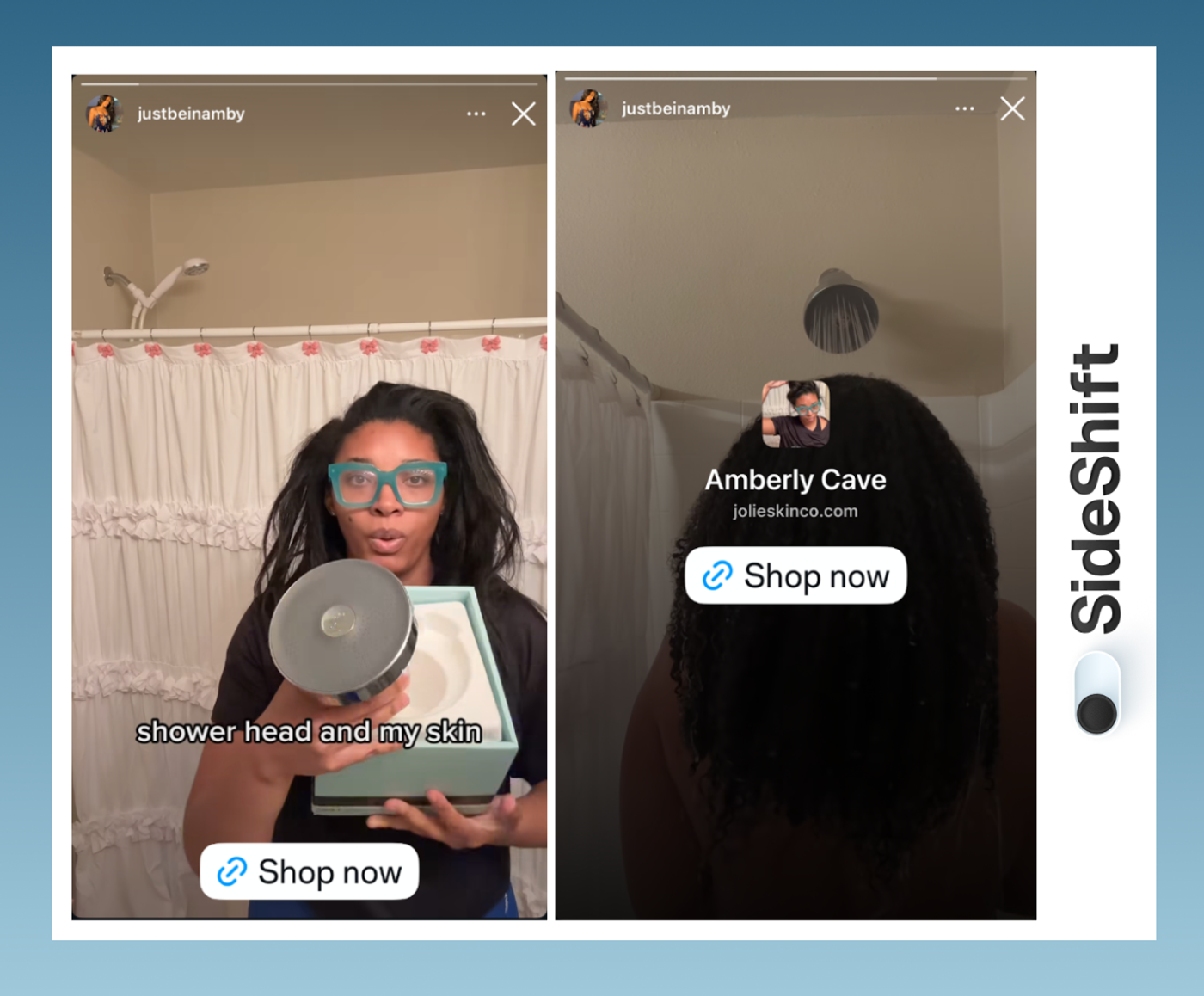
The effectiveness comes from consistency in messaging paired with diversity in creators. Multiple creators communicate similar benefits in their own voice, which reinforces the product’s value without making the content feel repetitive.
This approach works especially well for products that require education. By distributing that education across many creators, Jolie builds familiarity and trust at scale while maintaining a native, user-first feel.
HUNGRY ROOT
Hungryroot, a food and grocery delivery brand, takes a content-first approach by repurposing “what I eat in a day” style videos from their network of UGC creators and influencers, turning them into paid ads through whitelisting.
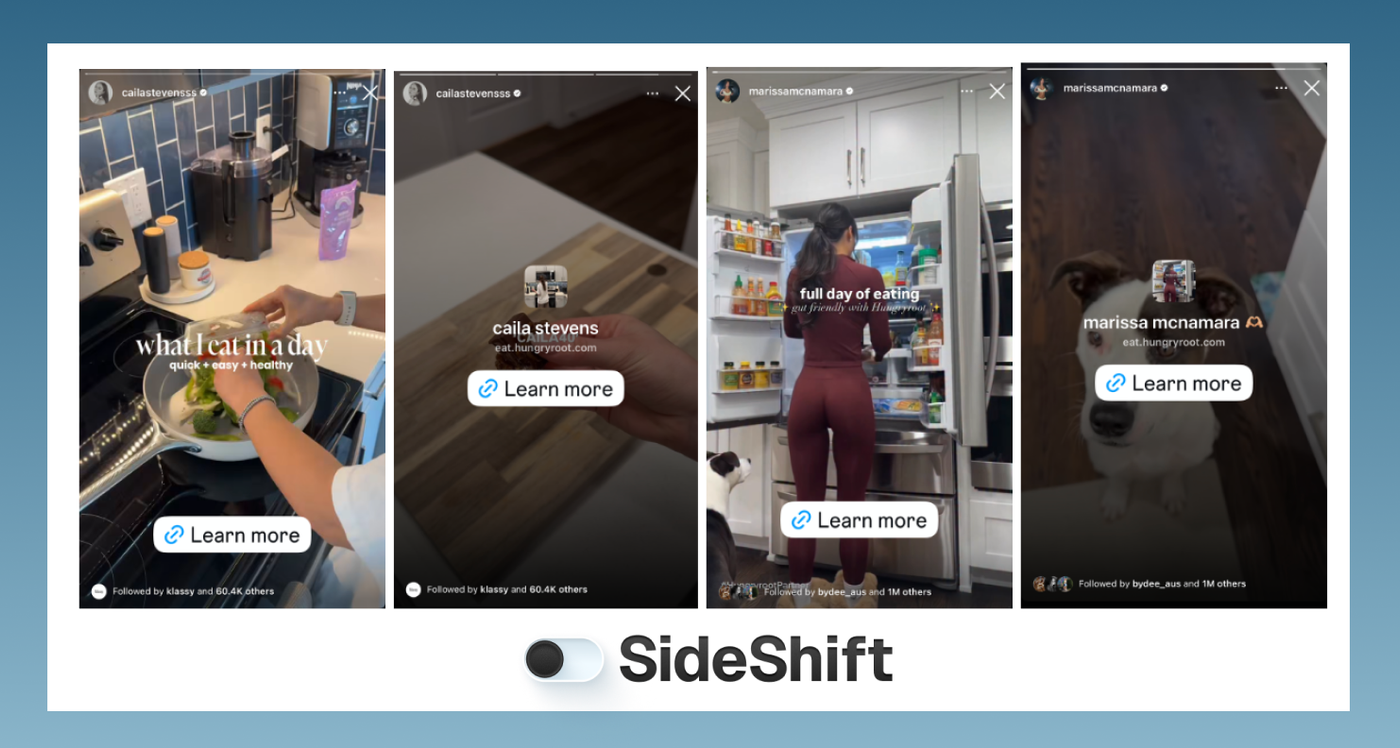
This format performs well because it mirrors how users already consume content on platforms like Instagram and TikTok. Instead of pushing a direct ad, Hungryroot integrates the product into a broader lifestyle narrative. Viewers are not just seeing the product. They are seeing how it fits into a daily routine.
By running these videos as Partnership Ads, Hungryroot extends the lifespan of organic content while scaling distribution. This allows them to continuously test new creators and formats without needing to reinvent their core concept.
CREATE
Create is a supplement brand in the creatine space that blends UGC with higher-profile creator partnerships to strengthen performance. Their Meta Partnership Ads strategy includes both everyday creators and recognizable athletes, including Olympic gold medalist Shawn Johnson.
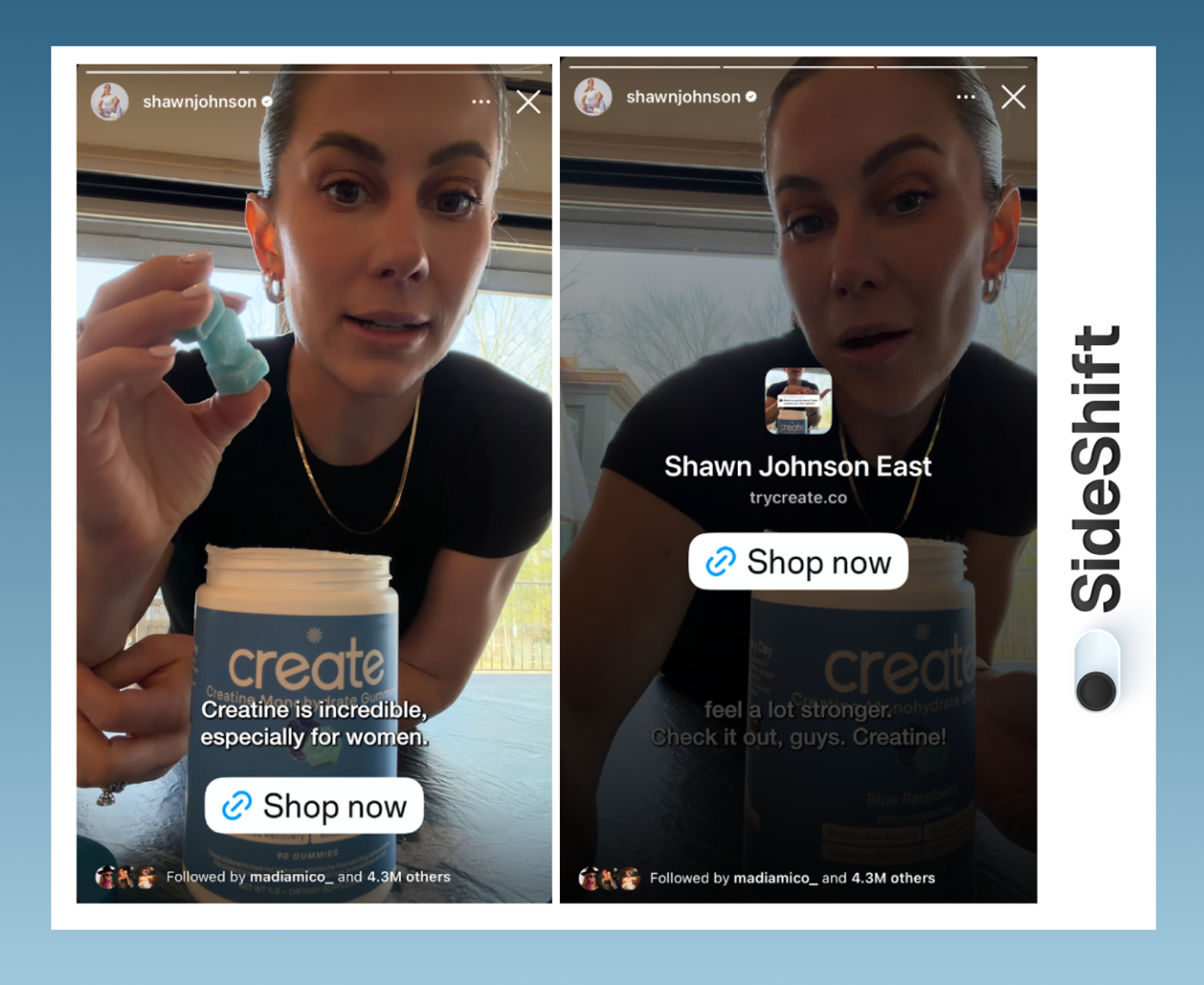
This mix allows them to capture attention at multiple levels. The athlete-driven content provides immediate credibility and scroll-stopping power, while UGC from smaller creators keeps the content relatable and native to the feed.
From a performance perspective, this layered approach helps balance trust, reach, and scalability. It also allows the brand to test which type of creator drives stronger conversion, then allocate budget accordingly.
Want to put this into practice?
SideShift connects you with vetted UGC creators who actually deliver. Start your free trial and post your first job in under 10 minutes.
FACTOR
Factor, a ready-to-eat meal delivery service, uses Meta Partnership Ads to drive acquisition through clear, offer-driven messaging. Their whitelisted ads often highlight promotions for first-time customers, making the content highly conversion-focused.
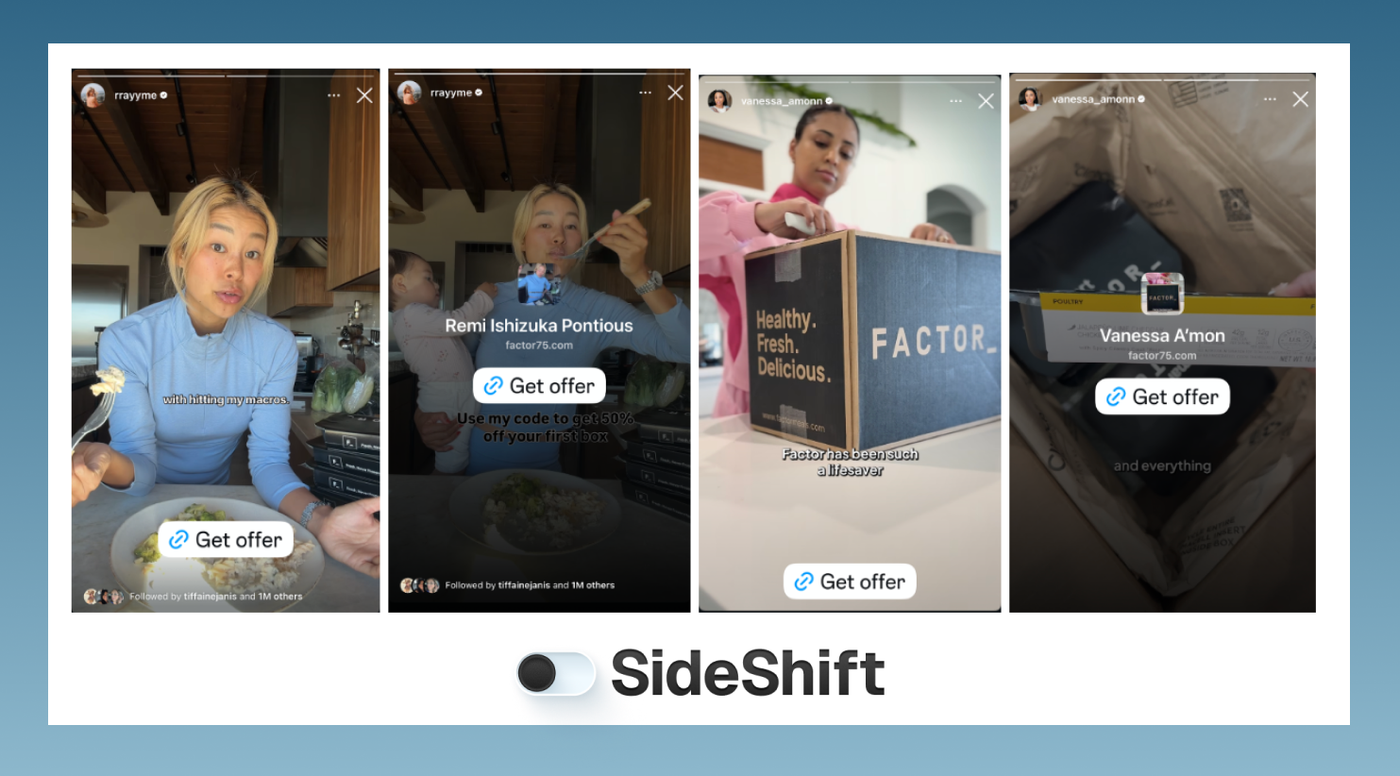
Creators typically showcase the meals in real-life settings, emphasizing convenience, quality, and time savings. This framing aligns well with the target audience, which is often looking for practical solutions rather than aspirational content.
By pairing strong offers with creator-led storytelling, Factor creates ads that feel both persuasive and authentic. The whitelisting model allows them to scale these creatives quickly while maintaining a consistent flow of new variations to test.
Why Brands Should Use Creator Whitelisting
The primary advantage of creator whitelisting comes down to performance. Ads that look and feel native consistently outperform traditional brand-led ads. Nearly 70% of consumers avoid traditional advertising entirely, preferring instead to listen to people they can relate to or experts they trust.
Users trust people more than brands, especially in feed-based environments like Instagram and Facebook. When content appears to come from a creator, it blends into the platform instead of interrupting the experience.
This leads to measurable improvements across key metrics.
Common performance benefits include:
- Higher click-through rates
- Lower cost per acquisition
- Improved engagement rates
- Better ad fatigue resistance
- More scalable creative testing
Whitelisting also gives brands more control. Instead of relying on creators to post and boost content, marketing teams can test, iterate, and scale campaigns in real time.
Setting Up Meta Partnership Ads
Getting started with Meta Partnership Ads requires alignment between the brand and the creator, along with proper setup inside Meta’s ad system.
The process is not complex, but it does require coordination and clear communication upfront.
Key setup steps:
- Ensure the creator has a professional account eligible for partnerships
- Request advertising permissions through Meta Business Manager
- Connect the creator account to your ad account
- Upload or select approved content
- Build campaigns inside Ads Manager using the creator identity
Common setup mistakes to avoid:
- Not securing full usage rights for paid ads
- Using content that was not designed for paid performance
- Failing to align on messaging before launching
- Overlooking platform-specific formatting
Getting these details right early prevents friction when scaling campaigns later.
Best Practices for Meta Partnership Ads
Running successful Partnership Ads requires more than access. The structure of your campaigns and the quality of your creative both play a major role in performance.
High-performing brands treat creator ads as part of a larger system rather than isolated campaigns.
Creative best practices:
- Use strong hooks within the first few seconds
- Keep content native and conversational
- Test multiple creators for the same offer
- Prioritize clarity over overproduction
Media buying best practices:
- Test multiple variations of the same creative
- Allocate budget toward top-performing creators
- Refresh creative frequently to avoid fatigue
- Use broad targeting early, then refine based on data
The combination of strong creative and structured testing is what allows brands to scale efficiently.
Measuring the Success of Creator Whitelisted Ads
Tracking performance is essential for understanding which creators and content types are worth scaling. Partnership Ads provide access to standard Meta metrics, but interpretation is key.
Want to put this into practice?
SideShift connects you with vetted UGC creators who actually deliver. Start your free trial and post your first job in under 10 minutes.
Rather than focusing only on surface-level numbers, brands should analyze how creator identity impacts performance.
Key metrics to monitor:
- Click-through rate
- Cost per acquisition
- Return on ad spend
- Engagement rate
- Frequency and ad fatigue
What to look for:
- Which creators consistently outperform others
- Which hooks or formats drive the best results
- How performance changes across audience segments
Over time, this data helps brands build a repeatable system for identifying high-performing creators and scaling their content.
Streamline Creator Ads with SideShift
Running creator ads at scale requires more than a few strong partnerships. It requires a system for sourcing creators, testing content, and turning top performers into repeatable growth channels.
SideShift was built to support exactly this model. Brands can recruit from a network of over 800,000 Gen Z creators, launch campaigns quickly, and manage everything from content production to performance tracking in one place.
As Nick Lawton explains, SideShift is designed to handle the full lifecycle of creator campaigns, from sourcing to payments to analytics. That infrastructure becomes especially valuable when pairing UGC with paid distribution.
Scale your content army with SideShift, where brands and UGC creators win together.
Turn creator content into a high-performing paid channel and build a system that compounds over time.
Join SideShift for free today.
FAQs
1. What is the difference between a Meta Partnership Ad and a standard ad?
A Meta Partnership Ad runs through a creator’s account, while a standard ad runs through a brand account. Partnership Ads often perform better because they feel more native to the platform.
2. How do I whitelist a creator for ads?
You need to request advertising permissions through Meta Business tools. The creator approves access, allowing you to run ads from their account.
3. Can I run ads using multiple creators’ accounts at once?
Yes. Many brands test multiple creators simultaneously to identify top performers and scale the best content.
4. What permissions are required for creators?
Creators must grant advertising access through Meta so brands can run campaigns using their account and content.
5. How do I measure the performance of creator whitelisted ads?
Track metrics like click-through rate, cost per acquisition, and return on ad spend. Compare performance across creators to identify which ones drive the best results.