


How Much Should You Charge for UGC? Pricing Guide
UGC creators charge $100-$1,500+ per video depending on experience, usage rights, and deliverables. See exact rates, pricing models, and how to set yours.
Table of Contents
Pricing UGC is one of the biggest questions creators face, especially early on. Charge too little and you burn out without real income. Charge too much without a clear reason, and brands pass. The balance comes from understanding how value is created and how brands actually use your content.
At SideShift, we have seen creators go from earning a few hundred dollars per month to several thousand by refining how they price, package, and position their work. Many top creators on the platform are earning between $200 and $2,000 per month from campaigns alone, with additional performance bonuses ranging from $1 to $4 per 1,000 views.
This guide breaks down exactly how UGC pricing works, what you should charge in 2026, and how to increase your rates over time.
What Are UGC Rates?
UGC rates refer to how much creators charge brands for producing content. Unlike influencer pricing, which is often tied to follower count, UGC pricing is based on the value of the content itself.
Brands are paying for:
- Content they can use in ads or organic posts
- Creative ideas and execution
- Speed and consistency of output
- Performance potential across platforms
This means even creators with small or no audiences can earn a high income if their content performs well.
Average UGC Rates in 2026
UGC pricing in 2026 varies widely depending on experience, niche, content quality, turnaround time, and how the content will be used. Engagement rates on previous videos can influence pricing, but follower count has little to no impact on UGC rates compared to traditional influencer marketing. Brands are paying for content creation, not audience reach.
What matters most is your ability to produce content that feels native to the platform and drives results. Creators who understand hooks, storytelling, and conversion-focused content are able to charge more, even without a large following. While pricing can differ from creator to creator, there are still clear benchmarks across the industry.
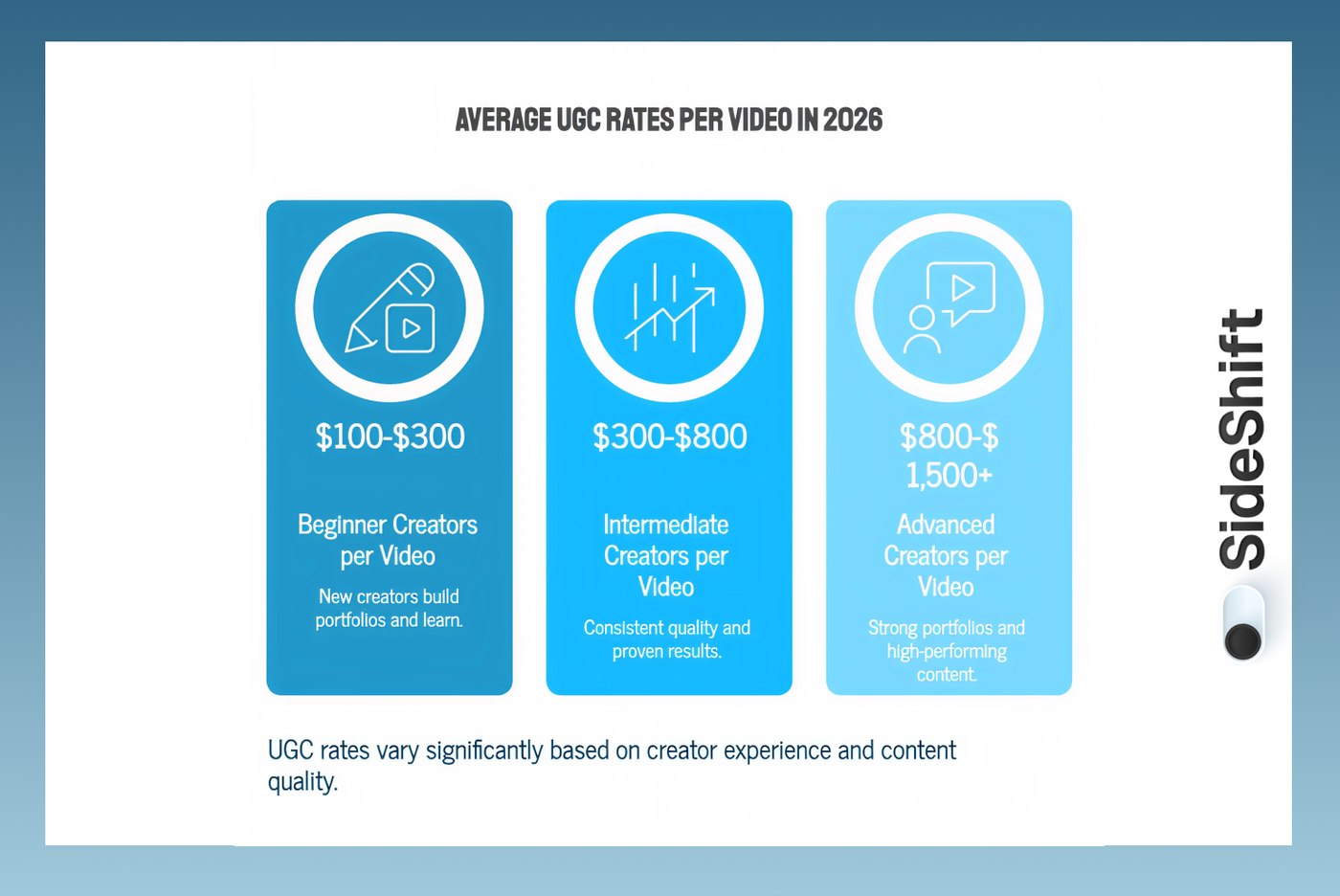
Typical UGC rates per video:
- Beginner creators: $100 to $300 per video
New creators often start here while building a portfolio and learning what brands expect. Rates may be lower at this stage, but this is where creators develop their style, filming process, and editing skills.
- Intermediate creators: $300 to $800 per video
At this level, creators usually have consistent quality and some proven results. They may have repeat clients and a better understanding of what performs on platforms like TikTok and Instagram. Their pricing reflects both reliability and improved production value.
- Advanced creators: $800 to $1,500+ per video
Experienced creators with strong portfolios and high-performing content can charge premium rates. These creators often specialize in direct-response or paid ad content and understand how to optimize for retention, engagement, and conversions.
Creators producing content for paid ads typically charge more due to the added value. If a brand is using your video to generate revenue, your pricing should reflect that. Usage rights, licensing length, and platform placement all play a role in how much you should charge. Many creators increase their base rate for ad usage or charge ongoing licensing fees.
Want to put this into practice?
SideShift connects you with vetted UGC creators who actually deliver. Start your free trial and post your first job in under 10 minutes.
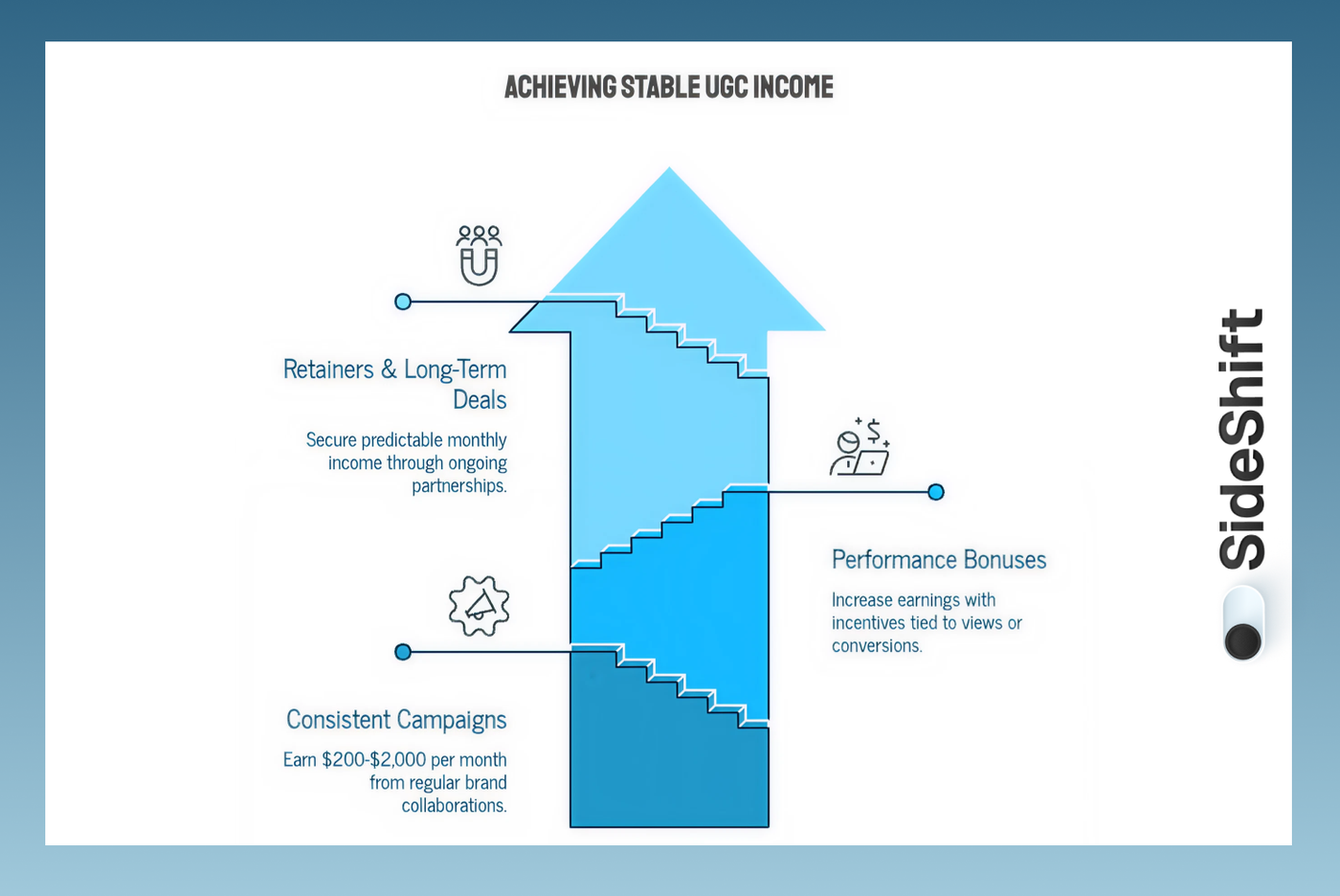
Creators working consistently with brands can earn:
- $200 to $2,000 per month from campaigns
This range depends on how many deals you close and the type of content you produce. Even a few consistent clients can create a stable income base.
- Additional performance bonuses based on views or conversions
Some brands offer incentives tied to performance, especially for paid ad content. This can significantly increase total earnings over time.
- Higher income through retainers or long-term deals
Retainers allow creators to move away from one-off projects and into a more predictable monthly income. Brands also benefit from consistent content and faster turnaround.
The biggest jump in earnings usually comes from consistency, not one-off deals. Creators who work with brands repeatedly, improve based on performance data, and streamline their production process tend to scale the fastest. Over time, this turns UGC into a more stable and repeatable income stream rather than unpredictable freelance work.
Common UGC Pricing Models
There is no single way to price UGC. Most creators use a mix of models depending on the brand and campaign.
1. Per Video Pricing
This is the most common pricing structure for UGC creators. You charge a flat fee for each piece of content delivered, regardless of how the brand uses it. It is simple, clear, and easy to negotiate, especially early on.
Best use cases:
- One-off campaigns
- New brand relationships
- Testing your pricing
Example:
- $150 per video (beginner)
- $500 per video (intermediate)
2. Package Pricing
Package pricing allows creators to bundle multiple deliverables into a single offer. This increases the total deal size while giving brands a better overall value. It also helps you batch content and work more efficiently.
Best use cases:
- Brands needing multiple assets
- Increasing deal size per client
- Streamlining production
Example:
- 3 videos for $600
- 5 videos for $1,000
3. Monthly Retainers
Monthly retainers provide consistent, predictable income by locking in ongoing work with a brand. Instead of constantly finding new deals, you focus on delivering content at a set monthly rate.
Best use cases:
- Long-term brand partnerships
- Stable income goals
- High-volume content production
Example:
- $600 to $900 per month
- 8 to 20 videos per month, depending on scope
4. Performance-Based Models
Performance-based pricing ties part of your earnings to how well the content performs. This model is becoming more common in ad-driven UGC, where results directly impact revenue.
Best use cases:
- Paid ad content
- High-volume campaigns
- Brands focused on measurable ROI
Example:
- $300 base rate
- $1 to $4 per 1,000 views
This structure aligns incentives between you and the brand. It can significantly increase earnings if your content performs well, but income can vary more compared to fixed pricing models.
UGC Upsells and Additional Fees to Consider
Upsells are one of the easiest ways to increase your earnings without needing more clients. Instead of only charging for the base video, you offer add-ons that increase the value of each deal. Many brands expect these options, especially as they scale their content needs.
Want to put this into practice?
SideShift connects you with vetted UGC creators who actually deliver. Start your free trial and post your first job in under 10 minutes.
Usage Rights
This is one of the most common and important upsells. By default, your base rate should only include organic usage. If a brand wants to run your content as ads, that is a separate value layer since the content is being used to generate revenue. Usage rights are one of the most important factors in UGC pricing and one of the biggest areas where creators leave money on the table. How a brand uses your content directly impacts how much you should charge.
Organic use only
This typically means the brand is posting the content on its own social channels without paid promotion. In most cases, this is included in your base rate or comes with a small additional fee.
Paid ads usage
If a brand wants to run your content as ads, your pricing should increase significantly. A common benchmark is an additional 30% to 100% of your base rate depending on the scope, platforms, and duration of usage.
Whitelisting or long-term usage
Whitelisting, where brands run ads through your account or extended usage rights over multiple months, should come at a higher premium. The longer and broader the usage, the more you should charge.
Raw footage delivery
Providing raw clips allows brands to repurpose your content into multiple variations, ads, or edits. Since this gives them more flexibility and long-term value, it should always be priced as an add-on rather than included for free.
Additional hooks or variations
Brands often want multiple versions of the same UGC video with different hooks, angles, or messaging. This increases the chances of finding a high-performing ad. Instead of filming entirely new content, you can offer variations at a lower incremental cost while still increasing your total deal size.
Scriptwriting or concept development
If you are coming up with the creative direction, writing scripts, or developing concepts, that is a strategic service on top of content creation. Many creators undercharge here, but strong creative direction is often what drives performance.
Fast turnaround or rush delivery
Expedited delivery is another easy upsell. If a brand needs content within 24 to 48 hours, you can charge a premium for prioritizing their project over others in your pipeline.
How to Set Your UGC Rates (Step-by-Step)
Setting UGC rates can feel overwhelming, especially when you’re just starting. The key is to combine a clear understanding of your time, resources, and market value with a structured approach. Follow these six steps to price your content confidently and maximize your earning potential.
Step 1: Calculate Your Costs and Time
Before you assign a dollar amount to your work, understand exactly what goes into creating a high-converting social media video. Track every stage: ideation, filming, editing, and revisions.
Include all production costs such as:
- Creator Equipment (camera, lights, tripod)
- Editing software or subscriptions
- Props, styling, or location costs
- Any additional resources
Knowing your baseline ensures your rate covers your time and expenses while still leaving room for profit.
Want to put this into practice?
SideShift connects you with vetted UGC creators who actually deliver. Start your free trial and post your first job in under 10 minutes.
Step 2: Research Market Rates
Even if you have great content, it helps to understand what brands typically pay. In 2026, UGC videos range from $150-$212 per video, with a median of around $175.
- Beginner creators: $150-$200 per video
- Experienced creators: $300-$400+ per video
Market rates vary by industry, campaign type, and platform, so adjust your starting point based on your niche and experience.
Step 3: Define Your Deliverables
Clarity is essential for both you and the brand. Specify exactly what they receive with your content.
Ask yourself:
- Is this a single 30-second video or multiple hooks?
- Does the package include only the edited video or also raw footage?
- How many rounds of revisions are included?
The more precise you are, the easier it is to justify your rates and avoid scope creep.
Step 4: Add Usage Rights and Extras
Usage rights significantly impact your pricing. Brands may want to use your content across paid ads or request exclusivity. Adjust your fees accordingly:
- Paid ad use or whitelisting: Add 30%-50% of your base fee
- Exclusivity: Charge more if the brand requires you not to work with competitors
- Other extras: Fast turnaround, multiple variations, or scriptwriting
These add-ons ensure you’re compensated fairly for additional value provided to the brand.
Step 5: Create Packages
Bundling content can increase your earnings and simplify negotiations. Instead of charging per video, offer packages that give brands more content for a slightly higher rate.
Example package: 3 videos for $500-$800 instead of $175-$200 each
Packages make it easier to manage production and give brands a sense of value, helping you secure larger deals.
Step 6: Test and Adjust
Your initial rates are just a starting point. Complete a few campaigns, collect feedback, and analyze performance metrics.
- Track which videos perform best and which clients are happy to pay more
- Adjust rates gradually as your portfolio and results grow
- Consider adding performance bonuses tied to views or conversions
Over time, this approach lets you increase your rates sustainably while building long-term relationships with brands.
Scale Your UGC Income with SideShift
One of the biggest challenges for UGC creators is finding consistent, high-quality brand deals. SideShift solves this by connecting you directly with brands that are actively hiring creators. From applying to campaigns to managing deliverables and getting paid, SideShift streamlines the entire process so you can focus on creating without chasing invoices or negotiating contracts.
Typical earnings for creators on SideShift range from $200-$2,000 per month, plus performance bonuses of $1-$4 per 1,000 views.
Instead of relying on one-off deals, you can grow your income through multiple campaigns, retainers, and performance-based bonuses, turning your content into a consistent revenue stream with SideShift.
Apply to campaigns today and start building a sustainable, high-earning UGC career.
Join SideShift for free today.
FAQs
1. How do I determine how much to charge for UGC?
Start with market benchmarks, then adjust based on your experience, content quality, and results. Test pricing and increase as demand grows.
2. What should new UGC creators keep in mind when charging for their work?
Want to put this into practice?
SideShift connects you with vetted UGC creators who actually deliver. Start your free trial and post your first job in under 10 minutes.
Focus on gaining experience and building a portfolio first. Start with competitive rates, then increase as you improve and gain proof of performance.
3. How often should I review and adjust my rates for creating UGC?
Review your rates every few months or after major improvements in performance, demand, or client quality.
4. Do UGC creators charge separately for usage rights?
Yes. Usage rights, especially for paid ads, are often priced separately and can significantly increase total earnings.
5. Can you negotiate UGC rates with brands?
Yes. Most UGC pricing is flexible. Strong communication and clear value make it easier to negotiate higher rates.