
How to Work With Gen Z UGC Creators in 2026
Work with Gen Z UGC creators using clear briefs, fast feedback, and scalable content systems that improve performance and drive conversions.
Table of Contents
Gen Z UGC Creators: Why They're Different and How Brands Can Work With Them
Gen Z UGC creators are reshaping how brands approach content, advertising, and growth. They are not operating within the same playbook as traditional influencers, and that difference shows up in how they create, how audiences engage, and how content performs across platforms.
Brands that approach Gen Z creators with outdated influencer strategies often struggle to see meaningful results. The expectations are different, the pace is faster, and the content style is rooted in authenticity over polish. Success comes from adapting to this new model rather than trying to force it into older frameworks.
At scale, this shift becomes even more important. High-performing brands treat UGC as an ongoing engine powered by many creators, not a one-off campaign.
This guide explores what makes Gen Z UGC creators different, how to collaborate with them effectively, and how to build a repeatable system that drives results over time.
Understanding the Gen Z Content Mindset
Gen Z creators approach content with a fundamentally different perspective. They prioritize relatability, speed, and cultural relevance over production value. Content is designed to feel native to the platform, not like an advertisement.
This mindset is shaped by the platforms they grew up using. Short-form video has trained creators to capture attention quickly, deliver value immediately, and keep viewers engaged through storytelling that feels natural and unscripted.
Key traits of the Gen Z creator mindset
- Content is created for the feed, not for the brand
- Authenticity consistently outperforms polish
- Trends are embraced, adapted, and iterated quickly
- Speed matters more than perfection
- Audience trust is built through consistency, not one viral moment
For brands, understanding this mindset is critical. Creative control needs to be balanced with creative freedom. The best results often come when creators are given direction without being over-managed.
Reaching Gen Z Through Creator-Led Content
Gen Z audiences respond to short-form content that feels like it belongs in their daily scroll. Traditional ads often struggle to hold attention because they interrupt rather than blend into the experience.
Creator-led content solves this by integrating products into real-life scenarios. Instead of presenting a polished message, creators show how a product fits into their routine, which builds trust and relatability.
This approach is especially effective for platforms where discovery happens through content rather than search. When viewers see someone they relate to using a product, the path to conversion becomes much shorter.
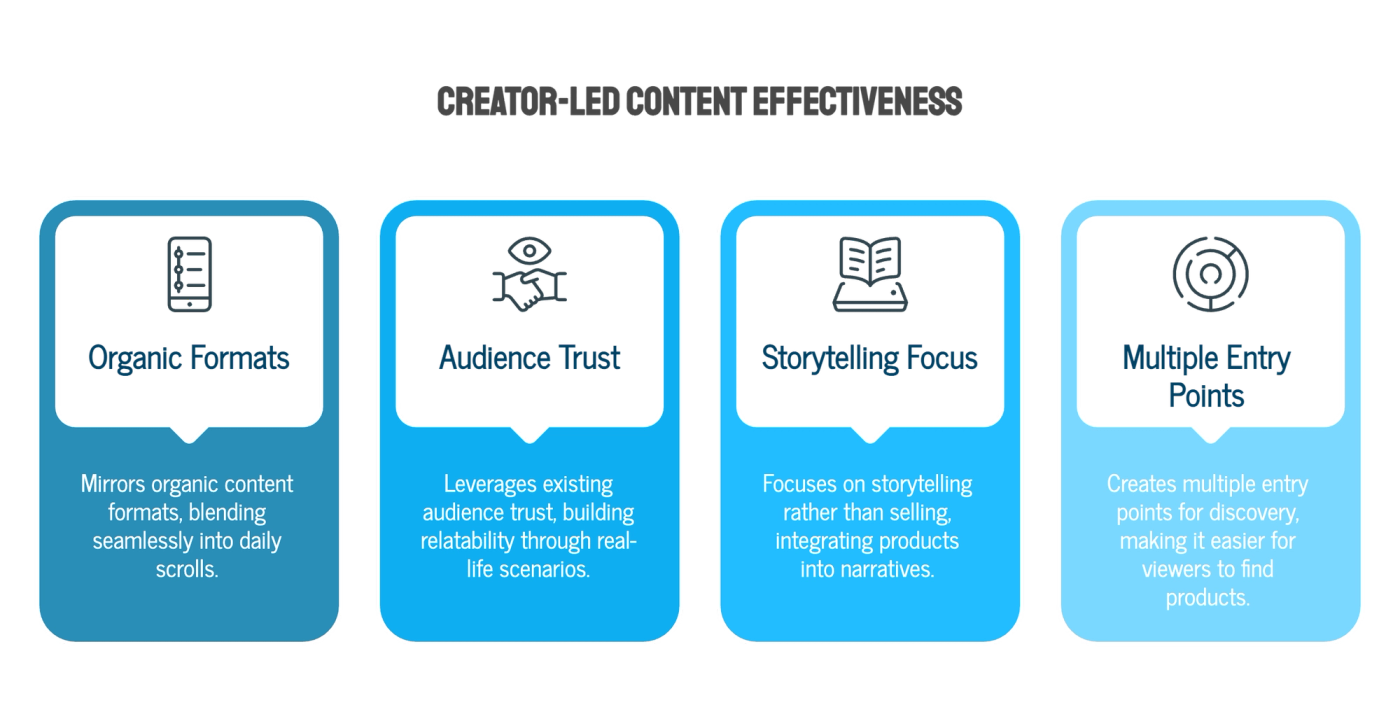
What makes creator-led content effective
- It mirrors organic content formats
- It leverages existing audience trust
- It focuses on storytelling rather than selling
- It creates multiple entry points for discovery
Brands that lean into this model often see stronger engagement and higher conversion rates because the content aligns with how people naturally consume media.
How Gen Z Creates and Consumes Content
Gen Z operates in a fast-moving content ecosystem where trends evolve daily. Creators are constantly experimenting with formats, hooks, and storytelling styles to stay relevant.
Consumption patterns reflect this behavior. Audiences scroll quickly, make decisions fast, and engage with content that captures attention within seconds with compelling audio and visuals.
Want to put this into practice?
SideShift connects you with vetted UGC creators who actually deliver. Start your free trial and post your first job in under 10 minutes.
Content behaviors that define Gen Z
- Short attention spans demand strong hooks
- Visual storytelling drives engagement
- Social proof influences purchasing decisions
- Repetition across creators reinforces credibility
This creates an opportunity for brands to scale impact by working with multiple creators at once. When audiences see similar messages from different voices, it strengthens trust and increases the likelihood of conversion.
How to Collaborate Effectively With Gen Z Creators
Effective collaboration with Gen Z creators requires a shift in how brands structure partnerships. The goal is to create an environment where creators can produce content that feels authentic while still aligning with brand objectives.
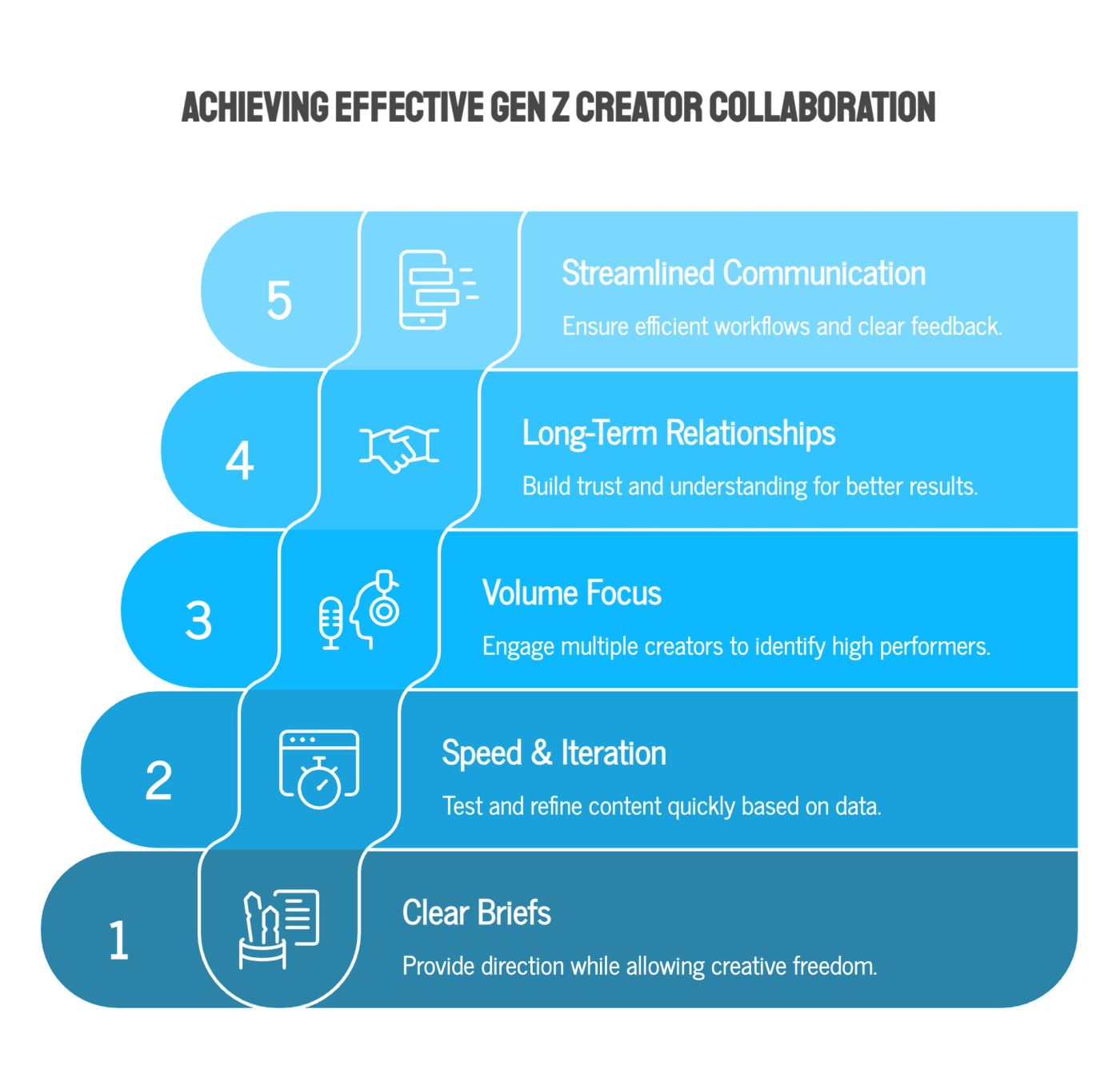
1. Set clear but flexible briefs
Provide direction on messaging, key points, and goals while leaving room for creators to interpret the content in their own style. Overly rigid briefs often lead to content that feels forced.
2. Prioritize speed and iteration
Gen Z creators thrive in fast-paced environments. Campaigns perform better when brands test multiple variations quickly and refine based on performance data.
3. Focus on volume over single outcomes
Instead of relying on one creator or one piece of content, run campaigns with multiple creators. This increases the chances of identifying high-performing content early.
4. Build long-term relationships
Consistent collaboration leads to better results over time. Creators who understand a brand can produce more effective content with less direction.
5. Streamline communication
Efficient workflows reduce friction and allow creators to focus on producing content. Clear timelines, quick feedback, and organized processes make a significant difference.
Benefits of Collaborating with Gen Z Creators
- Native access to Gen Z attention
Gen Z spends most of their time inside content feeds, not traditional brand touchpoints. Creators already understand how to capture and hold that attention in a way brands typically cannot replicate internally.
- Cultural relevance in real time
Gen Z creators are deeply embedded in internet culture. They participate in trends as they happen, which allows brands to stay relevant without forcing themselves into conversations too late.
- Meeting audiences where they already are
Instead of trying to pull users into a funnel, UGC brings the product directly into the environments where Gen Z already spends time. This reduces friction between discovery and action.
- Higher trust through peer-driven influence
Gen Z places more trust in people than in brands. Seeing a product used by someone relatable creates a stronger connection than traditional brand messaging.
- Rapid creative testing at scale
Working with multiple creators allows brands to test different hooks, formats, and messages simultaneously. This creates a continuous feedback loop that improves performance over time.
- Content that adapts to platform behavior
Gen Z creators intuitively design content for each platform’s algorithm and user behavior. This increases the likelihood of reach and engagement without requiring heavy optimization from the brand.
- More diverse perspectives and storytelling
A network of creators brings different voices, styles, and experiences. This diversity helps brands connect with a wider audience and avoid repetitive or stale content.
Want to put this into practice?
SideShift connects you with vetted UGC creators who actually deliver. Start your free trial and post your first job in under 10 minutes.
- Stronger alignment with purchase behavior
Gen Z often discovers products through content rather than search. UGC aligns directly with this behavior by embedding products into content experiences rather than separating them.
Challenges of Collaborating with Gen Z Creators
- Keeping up with the speed of content cycles
Trends move quickly, and content that feels relevant today can feel outdated within days. Brands need workflows that allow for fast execution and iteration.
- Balancing authenticity with brand messaging
Gen Z audiences are quick to recognize content that feels overly scripted. Brands need to guide creators to maintain brand consistency without stripping away the authenticity that makes the content effective. Finding this balance is a main challenge for brands collaborating with any social media content creator.
- Managing high creator volume
Scaling UGC means working with many creators at once. Without proper systems, communication, approvals, and tracking can become fragmented.
- Maintaining consistency across diverse creators
While diversity is a strength, it can also lead to inconsistent messaging or brand representation if not managed properly.
- Identifying what actually drives performance
Not all content performs equally. Brands need clear performance tracking to understand which creators, formats, and messages are working.
- Avoiding trend-chasing without strategy
Jumping on every trend can dilute brand identity. The challenge is participating in culture in a way that still aligns with long-term positioning.
- Creator fatigue and content saturation
As more brands invest in UGC, audiences are exposed to more sponsored content. Standing out requires diverse and original creative, not just more volume.
- Internal misalignment on expectations
Teams that are used to traditional marketing may expect polished outputs and predictable timelines. UGC requires a mindset shift toward experimentation and iteration.
Connect with Gen Z UGC Creators on SideShift
Working with Gen Z UGC creators becomes significantly easier when the right infrastructure is in place. SideShift is designed to help brands recruit, manage, and scale creator partnerships without the operational complexity that typically comes with it. Instead of relying on manual processes, brands can run structured campaigns, track performance, and build a network of creators efficiently.
With access to a large pool of over 700,000 Gen Z creators, brands can test content at scale, identify top performers, and continuously optimize their strategy. This approach turns creator collaborations into a consistent growth engine rather than a series of disconnected campaigns.
The ability to centralize workflows, streamline communication, and measure results allows teams to focus on what matters most, producing content that drives engagement and conversions.
Building a scalable UGC strategy requires more than finding creators. It requires a system that supports growth, iteration, and performance tracking over time.
Scale your content engine with SideShift and create a model where both brands and creators succeed together.
Join SideShift for free today.
FAQs
1. What are Gen Z UGC creators?
Gen Z UGC creators are content creators who produce user-generated content for brands, typically focused on short-form video and platform-native storytelling.
2. How do brands find Gen Z UGC creators?
Brands can find creators through marketplaces like SideShift, social platforms, or direct outreach, but scalable systems perform better than manual sourcing.
Want to put this into practice?
SideShift connects you with vetted UGC creators who actually deliver. Start your free trial and post your first job in under 10 minutes.
3. How many UGC creators should a brand work with?
Most brands should work with multiple creators simultaneously to test different styles and identify top performers.
4. What makes UGC creators different from influencers?
UGC creators focus on content production rather than audience size, which makes them more scalable and cost-effective for brands.
5. How can brands improve UGC performance?
Brands can improve results by increasing content volume, iterating quickly, and using performance data to refine their strategy.