
Gen Z Marketing: How to Reach the Next Generation
Gen Z marketing works when brands prioritize creator content, fast testing, and platform-native storytelling that drives engagement and conversions.
Table of Contents
Gen Z Marketing: How to Reach the Next Generation of Consumers
Gen Z has completely reshaped how brands earn attention. Traditional ads feel invasive or invisible, polished campaigns feel out of touch, and follower count matters less than ever. What actually works now is content that blends in, moves fast, and feels native to the platforms Gen Z spends time on: TikTok, Instagram, Facebook, and YouTube.
Brands running high-volume UGC campaigns now consistently outperform those relying on one-off influencer posts or static ads. The difference comes down to how Gen Z consumes content and how platforms distribute it.
This guide breaks down what gen z marketing looks like today, why old strategies fall short, and how to build a system that helps your brand build real relationships with the next generation of consumers.
Why Gen Z Doesn’t Respond to Legacy Marketing Tactics
Gen Z grew up in an environment where they’ve been exposed to thousands of ads per day. As a result, they’ve developed an almost instinctive ability to filter out anything that feels like traditional advertising.
Highly produced commercials, overly scripted influencer posts, and brand-first messaging tend to fail because they interrupt rather than integrate into the content experience.
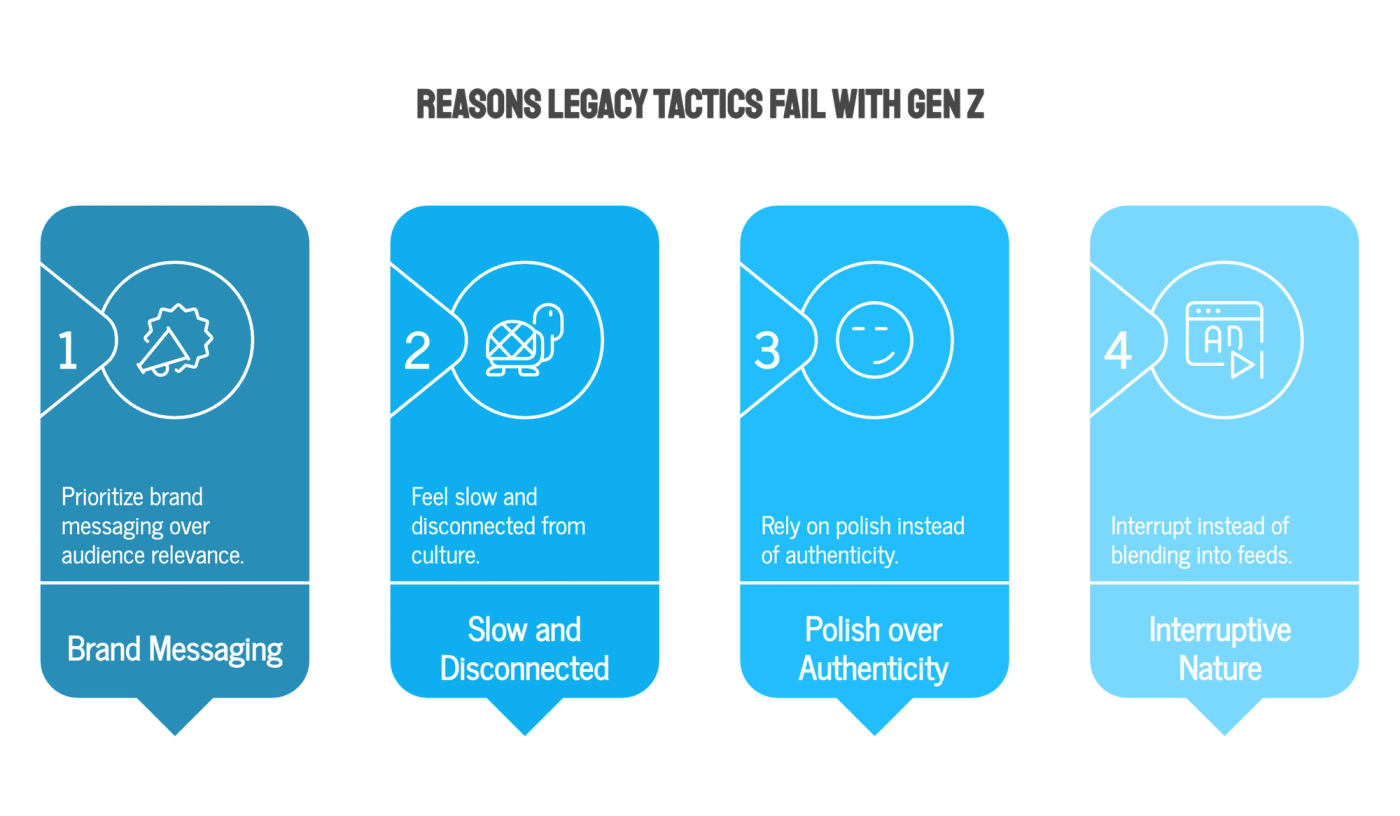
A few reasons legacy tactics fail to resonate with Gen Z:
- They prioritize brand messaging over audience relevance
- They feel slow and disconnected from culture
- They rely on polish instead of authenticity
- They interrupt instead of blending into feeds
For Gen Z, attention is earned by relevance and relatability.
The Shift From Influencer Marketing to Content Volume
Instead of paying a single creator for a one-off post, brands now collaborate with multiple creators to produce dozens or even hundreds of pieces of content. The focus has shifted to distribution through platform algorithms rather than reaching a large audience.
Platforms like TikTok and Instagram prioritize content that performs well, not just content from accounts with big follower counts. A video from a smaller creator can outperform a celebrity post if it connects with viewers.
The brands that succeed approach content as a system. They produce high volumes, test different ideas, and refine their approach quickly based on what resonates.
- Focus on volume rather than aiming for one viral hit
- Launch and test content regularly rather than chasing perfection
- Use feedback to improve each round instead of relying on one-time campaigns
Proven Strategies That Capture Gen Z Attention
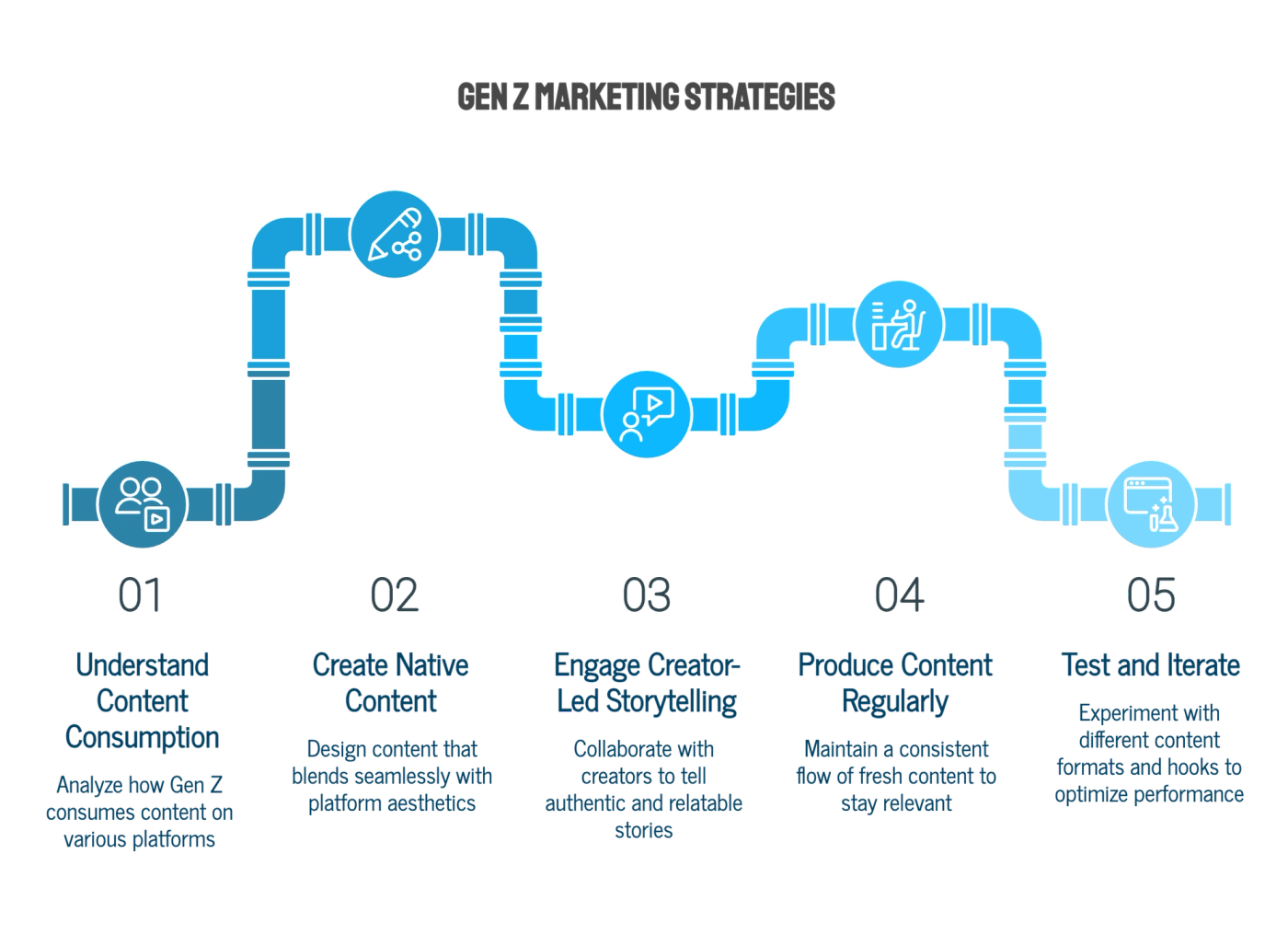
Capturing Gen Z’s attention is about understanding how they consume content and designing for the platforms they spend time on. Brands that perform well focus on three main strategies.
Native Content Wins
Content that feels like it belongs on the platform gets noticed. That means using the formats, trends, and styles native to each platform rather than repurposing polished ads from other channels. When content blends into the feed, viewers are more likely to engage naturally.
Creator-Led Storytelling
Gen Z trusts real people over brands. When creators lead the storytelling, content feels authentic, personal, and relatable. Instead of scripting every detail, brands guide creators with key messages and allow them to bring their own voice and style.
Want to put this into practice?
SideShift connects you with vetted UGC creators who actually deliver. Start your free trial and post your first job in under 10 minutes.
Speed and Iteration Drive Results
Trends move fast, and content that works today may be outdated tomorrow. High-performing brands produce content regularly, test multiple hooks and formats, and iterate based on performance.
How to Build a Gen Z Content Engine
To succeed with Gen Z, brands need to think beyond campaigns and focus on building a system for consistent content creation. A content engine for Gen Z combines three key elements:
1. Creator Pipeline
Continuously work with a diverse pool of creators to keep ideas fresh and content authentic.
2. Content Volume
Produce content at scale. More content gives you more opportunities to learn what resonates and reach audiences through platform algorithms.
3. Feedback Loop
Analyze performance, iterate quickly, and adjust creative based on what works. A strong feedback loop ensures content improves over time rather than relying on guesswork.
When these pieces work together, your brand can maintain relevance, stay on-trend, and build long-term connections with Gen Z audiences.
Common Gen Z Marketing Mistakes
Many brands fail not because they lack resources, but because they approach Gen Z with the wrong mindset. This audience doesn’t respond to generic campaigns or traditional advertising tactics.
Some of the most common mistakes include:
- Overthinking content instead of publishing quickly
Gen Z attention spans are short, and trends move fast. Brands that spend weeks perfecting one post often miss the moment. Rapid testing, even with imperfect content, can outperform polished but slow campaigns.
- Prioritizing aesthetics over authenticity
Highly produced content can feel staged and distant. Gen Z values realness. Videos that show unfiltered experiences, honest reviews, and genuine moments perform better than content that’s overly polished or scripted.
- Treating creators like ad placements instead of collaborators
If creators are told exactly what to say and how to act, their content loses authenticity. Brands need to provide direction, not a script, and let creators bring their unique voice to the content.
- Ignoring platform-native behaviors and trends
Each platform has its own culture. What works on TikTok might fail on Instagram or YouTube. Brands that ignore native behaviors risk producing content that feels out of place and gets buried in the feed.
- Trying too hard to appear “cool” or “relatable”
Gen Z can instantly spot forced attempts to “fit in.” Instead of trying to imitate their culture, brands should focus on being genuine, transparent, and aligned with the values they claim to support.
- Skipping engagement opportunities
Posting content isn’t enough. Gen Z engages with brands through comments, DMs, and trends. Ignoring these touchpoints limits relationship-building.
- Underestimating micro and nano creators
Big names aren’t always necessary. Smaller creators often have higher engagement and credibility within niche communities.
- Failing to iterate
Gen Z tastes change rapidly. Brands that don’t review performance and adapt risk repeating the same mistakes.
The key takeaway is that authenticity and responsiveness matter more than perfection. Brands that move fast, listen to their audience, and let creators lead have the best chance of earning attention and building lasting relationships with Gen Z.
Want to put this into practice?
SideShift connects you with vetted UGC creators who actually deliver. Start your free trial and post your first job in under 10 minutes.
How UGC Powers Gen Z Engagement
User-generated content is at the heart of successful Gen Z marketing because it delivers what this audience values most: authenticity, relatability, and content that feels native to the platforms they use. Unlike polished ads, UGC shows real people sharing real experiences, which resonates far more than scripted campaigns ever could.
When brands work with multiple creators, they produce a continuous stream of diverse, native content that feels organic in feeds and reaches audiences through algorithmic distribution rather than follower counts. The result is higher engagement, stronger trust, and a presence that feels like part of Gen Z culture instead of an intrusive ad.
UGC also gives brands the freedom to experiment at scale. Different formats, trends, and creator voices can be tested simultaneously, and insights from performance can guide the next round of content. Over time, this approach builds a content engine that reliably produces posts that resonate with audiences, instead of relying on sporadic viral hits or one-off campaigns.
Reach Gen Z through SideShift
SideShift makes scaling UGC campaigns simple. The platform connects brands with creators, helps manage campaigns end-to-end, tracks performance, and enables rapid iteration so you can stay relevant with Gen Z audiences.
With access to over 800,000 Gen Z content creators ready to produce videos, photos, and other authentic content, brands can consistently populate feeds with material that performs. SideShift takes the friction out of creator collaboration, letting your team focus on strategy, experimentation, and growth.
Start building your Gen Z content engine today. Connect with creators, produce authentic UGC at scale, and reach the next generation of consumers all from one platform.
Join SideShift for free today and start scaling your Gen Z campaigns.
FAQs
1. What is gen z marketing?
Gen z marketing focuses on reaching audiences born roughly between 1997 and 2012 using platform-native content, creator-led storytelling, and high-volume distribution strategies.
2. Why is UGC important for Gen Z?
User-generated content feels more authentic and relatable, which aligns with how Gen Z evaluates content. It also allows brands to produce content at scale.
3. How often should brands post to reach Gen Z?
Consistency matters more than frequency alone, but high-performing brands often post daily or run continuous content pipelines to stay relevant.
4. Do follower counts still matter in Gen Z marketing?
Follower count matters less than content performance. Algorithms prioritize engagement and watch time, which allows smaller creators to compete.
5. How can brands scale Gen Z marketing efforts?
Brands can scale by working with multiple creators, producing high volumes of content, and using performance data to refine and expand what works.