
How to Find Education Influencers on Social Media
Finding the right education influencers takes more than a search bar. Here's how brands and creators can tap into the edu content space strategically.
Table of Contents
How to Find Education Influencers on Social Media
The education content space is one of the most engaged, loyal, and fast-growing niches on social media right now. From college study TikToks racking up millions of views to YouTube channels that outperform traditional classroom engagement and e-learning, education influencers have built audiences that actually pay attention. For brands in the edtech, higher ed, tutoring, and learning tool space, that attention is worth a lot.
This guide breaks down where education influencers live online, what makes them worth a partnership, and how to find and work with the right ones for your brand efficiently.
How Education Creators Build Highly Engaged Audiences
As online learning habits continue to grow and evolve with AI, creators who teach specific skills, subjects, or career paths are building audiences of niche-curious people that return repeatedly rather than consume content casually.
Recent research indicates that 90% of students use the internet on a regular basis, and around 75% of young people use social media as a tool for e-learning.
That repeat engagement is what makes education creators commercially valuable. Unlike entertainment audiences that often scroll passively, education audiences usually arrive with intent. They’re trying to solve a problem, improve a skill, prepare for an exam, advance their career, or help their children learn more effectively. The relationship becomes utility-driven rather than purely attention-driven, and the value is long lasting, not one-off.
This creates stronger audience trust and longer-term retention. Followers may return multiple times per week for tutorials, study resources, recommendations, or ongoing guidance. For brands, that means education creators often influence higher-consideration decisions, especially in categories like software, productivity tools, online courses, tutoring platforms, finance, career development, and consumer tech.
Because the audience is actively seeking improvement, education creators tend to generate deeper engagement signals than many broader lifestyle niches. Their influence is built on credibility, consistency, and repeat value delivery rather than short-term virality alone.
Education Influencer Distribution Across Social Platforms
Finding the right education influencers for your brand campaign starts with understanding where different types of education content naturally perform best. Every platform attracts different audience behavior, content formats, and creator styles.
A coding educator building long-form tutorials on YouTube serves a very different audience than a study-motivation creator posting quick productivity tips on TikTok or Instagram Reels.
For brands, this matters because the platform often determines not only the creator format, but also audience intent, engagement depth, and conversion potential. The best way to find education influencers is to search platform ecosystems strategically instead of treating “education creators” as one category.
The creators driving strong engagement on TikTok may not be the same ones influencing purchasing decisions on LinkedIn or YouTube. Mapping how education talent is distributed across social platforms helps brands identify where to source influencers based on campaign goals, audience age, product type, and content style.
TikTok
TikTok is where education content found its Gen Z audience, and the platform rewarded it generously. Once known primarily for its dance challenges and viral memes, it has evolved into a powerful platform for educational content.
Want to put this into practice?
SideShift connects you with vetted UGC creators who actually deliver. Start your free trial and post your first job in under 10 minutes.
Education influencers on TikTok break down complex topics into short, easily digestible clips that are both informative and entertaining, covering a vast range of topics from science experiments and history lessons to language learning and study tips.
The key insight here is that TikTok's education audience doesn't separate entertainment from learning. The best edu creators on the platform are both, and brands that try to force traditional messaging into that format tend to miss. The content that converts is content that feels native.
YouTube
If TikTok is where someone first encounters an edu creator, YouTube is often where they go deeper. The platform has 2.85 billion monthly active users globally and the largest social media advertising audience, and within education, it dominates the long-form space. Channels dedicated to academic prep, coding tutorials, language learning, and university advice regularly build audiences in the hundreds of thousands to millions.
YouTube education influencers tend to attract a higher-intent audience than most platforms. A viewer who watches a 20-minute SAT prep video or a 45-minute deep dive into Python isn't casually passing through. That intentionality is extremely valuable for edtech brands, tutoring services, and educational tools because the audience is already in a “I want to learn and improve” mindset when they encounter brand partnerships.
For brands, YouTube also offers the most versatile UGC integration, from dedicated reviews to organic product mentions mid-tutorial to sponsored segments that, when done well, feel like natural recommendations rather than ads.
Instagram's education presence trends toward study aesthetics, academic motivation, career development, and higher education content. Reels now command a huge share of attention, shopping is a central behavior, and Gen Z actively uses the platform for customer care.
For education brands specifically, Instagram functions as a credibility layer. A creator partnership that performs on TikTok will often see its second wave of engagement when repurposed to Instagram Reels.
The platform also hosts a strong community of education creators focused on study-with-me content, student productivity, and academic journeys, content that resonates with high-school and college-aged audiences making real decisions about tools, courses, and resources.
LinkedIn is worth a separate mention for brands in the edtech, professional development, and corporate training space. Nearly 70% of LinkedIn users engage with brand content at least once a week, and 24% of LinkedIn users mainly want brands to share educational product content.
Education-focused thought leaders on LinkedIn, including instructors, learning & development professionals, and corporate educators, carry significant influence over purchasing decisions for B2B education products.
Creator Tier Breakdown for Education Brand Campaigns
Once you've identified the right platforms, the next decision is creator size. Education influencers operate very differently at each tier, from small niche tutors with deeply engaged audiences to large-scale educational channels built for mass reach or UGC creators that earn media value for your product.
Choosing the right tier depends on whether the goal is awareness, credibility, content production, or conversions.
Nano Influencers (<10K Followers)
Want to put this into practice?
SideShift connects you with vetted UGC creators who actually deliver. Start your free trial and post your first job in under 10 minutes.
Nano education creators are often students, tutors, teachers, graduate researchers, or subject-specific UGC creators serving tightly focused communities. Their audiences are smaller, but typically far more concentrated around a specific academic interest, certification path, or learning goal.
For education brands, nano influencers are especially valuable for grassroots campaigns, UGC generation, product testing, and hyper-targeted, high-volume outreach. A creator with 6,000 followers focused entirely on nursing school study strategies can often outperform a much larger general education creator when promoting a medical study app or tutoring platform.
Because these creators maintain close audience relationships, their recommendations tend to feel highly authentic and community-driven. They're also usually more affordable and flexible, making them ideal for brands running multi-creator campaigns at scale.
Micro Influencers (10K–100K Followers)
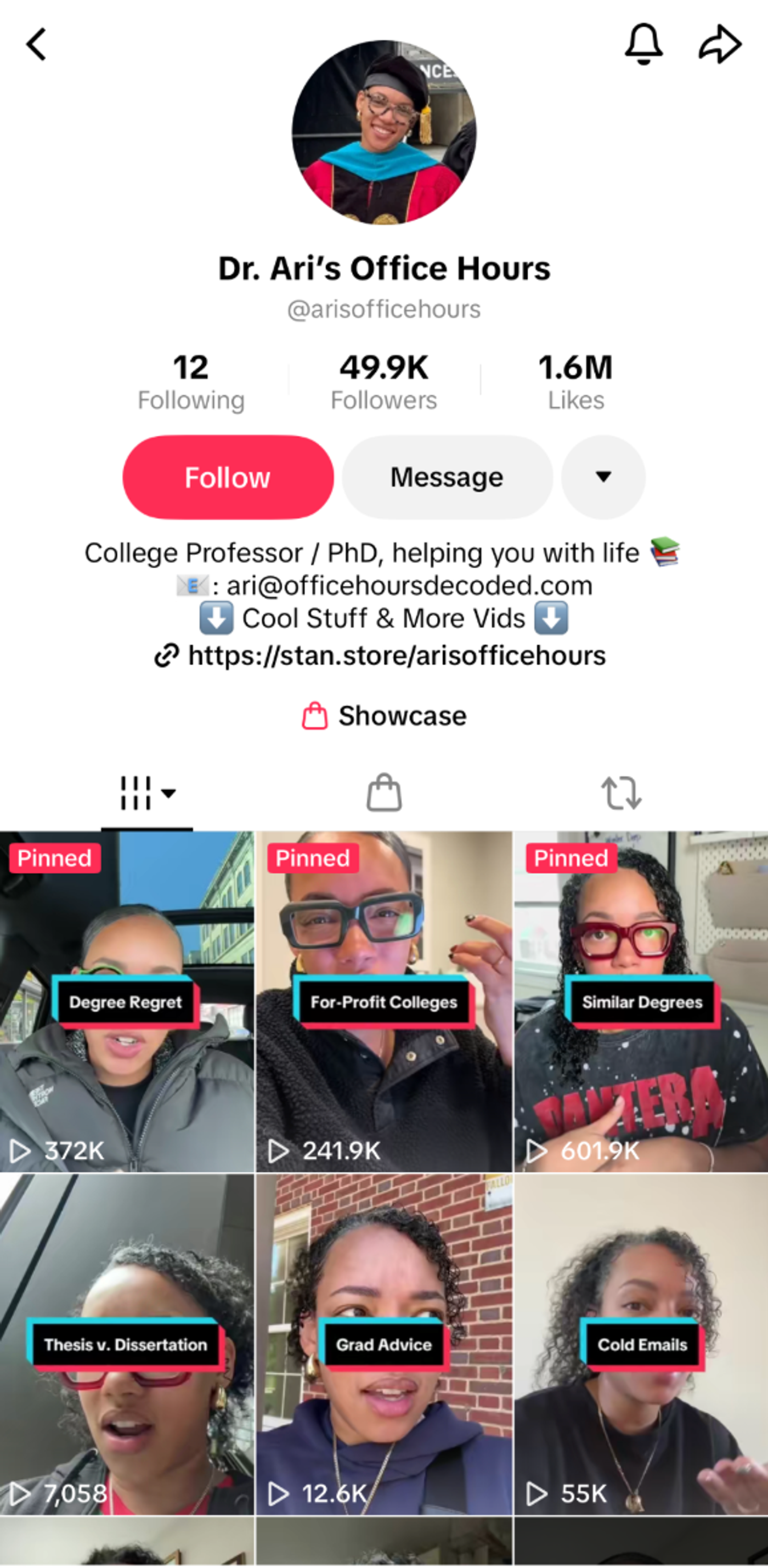
Micro education influencers combine niche authority with enough audience scale to drive meaningful reach. This tier is often the sweet spot for education campaigns because creators still maintain strong audience trust while producing more polished, consistent content.
Many micro creators specialize in areas like test prep, coding education, language learning, academic productivity, career development, or professional certifications. Their audiences are usually highly intentional, meaning followers actively seek advice, resources, and product recommendations related to learning and self-improvement.
For brands, micro influencers frequently deliver some of the strongest ROI in education marketing. They tend to convert well, cost significantly less than larger creators, and are often open to long-term partnerships, affiliate relationships, and recurring UGC production.
Macro Influencers (100K–1M Followers)
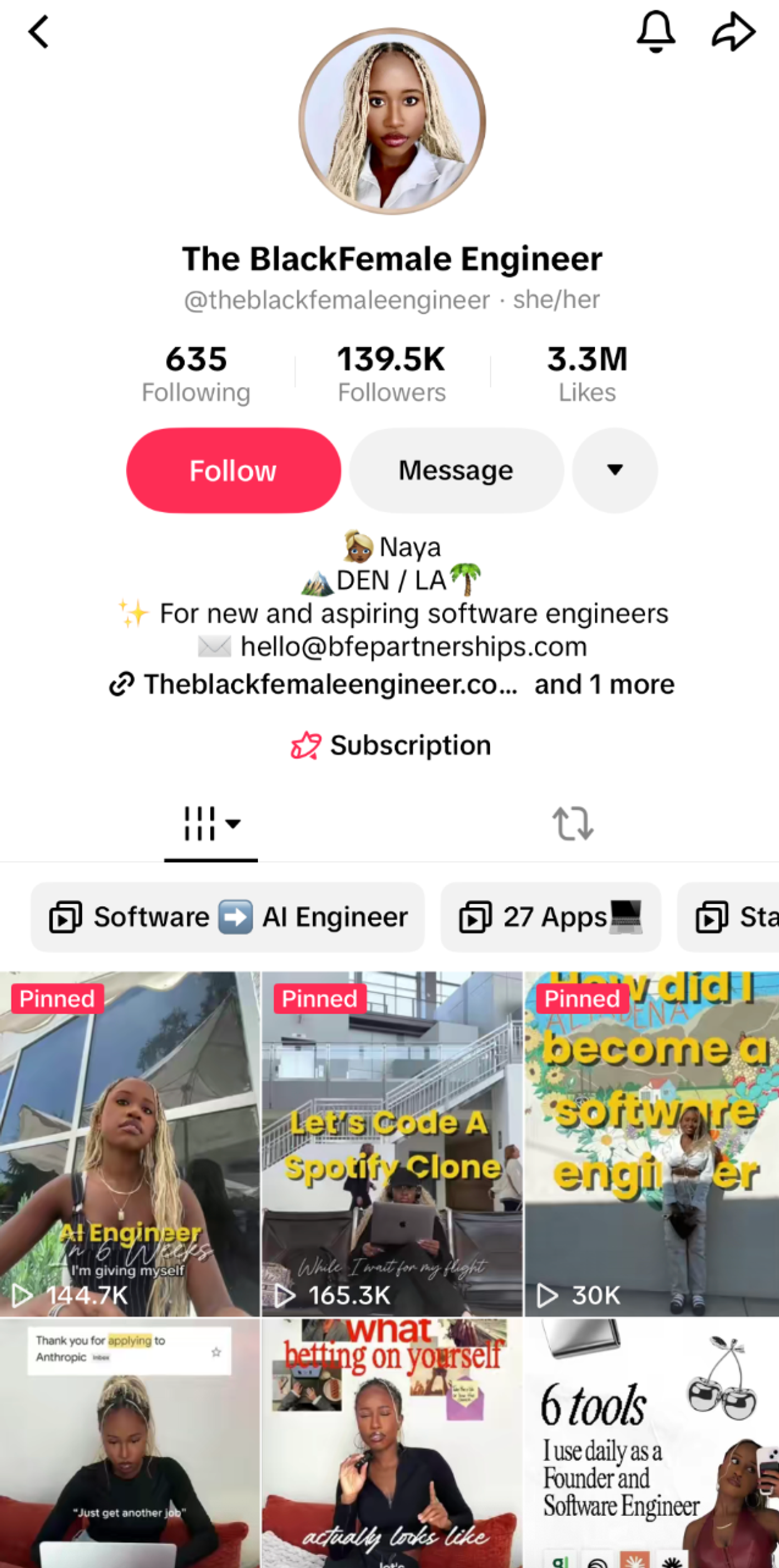
Macro education influencers provide broader reach while still maintaining a recognizable niche identity. These creators often operate highly developed content brands across YouTube, TikTok, Instagram, or LinkedIn, with stronger production quality and more established sponsorship experience.
This tier works well for education brands focused on awareness campaigns, larger product launches, or expanding into new audience segments. Macro creators can deliver significant visibility while still retaining some degree of subject-matter credibility within their category.
However, sponsorship costs, production timelines, and approval processes tend to increase substantially at this level. For many brands, macro influencers are most effective when paired with smaller creators who can reinforce trust and drive more targeted conversions.
Celebrity Influencers (1M+ Followers)
Celebrity-level education creators operate at massive scale and often function more like media brands than individual influencers. These creators may include large educational entertainment channels, major science communicators, or creators with mainstream recognition beyond the education niche itself.
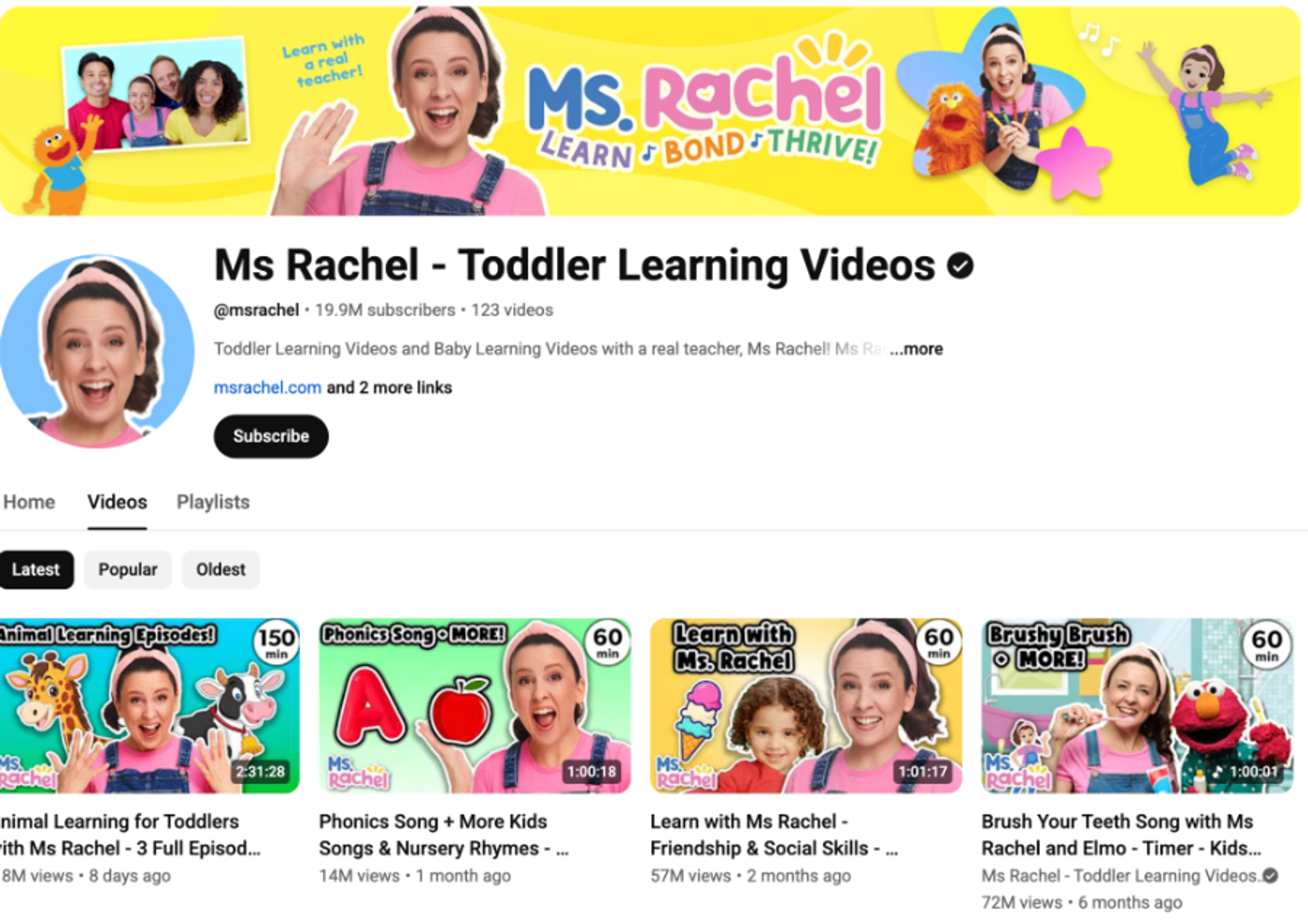
Partnerships at this level are typically used for major awareness pushes, large product launches, institutional credibility, or national campaigns. The reach can be enormous, but so are the budgets, timelines, and competitive pressures.
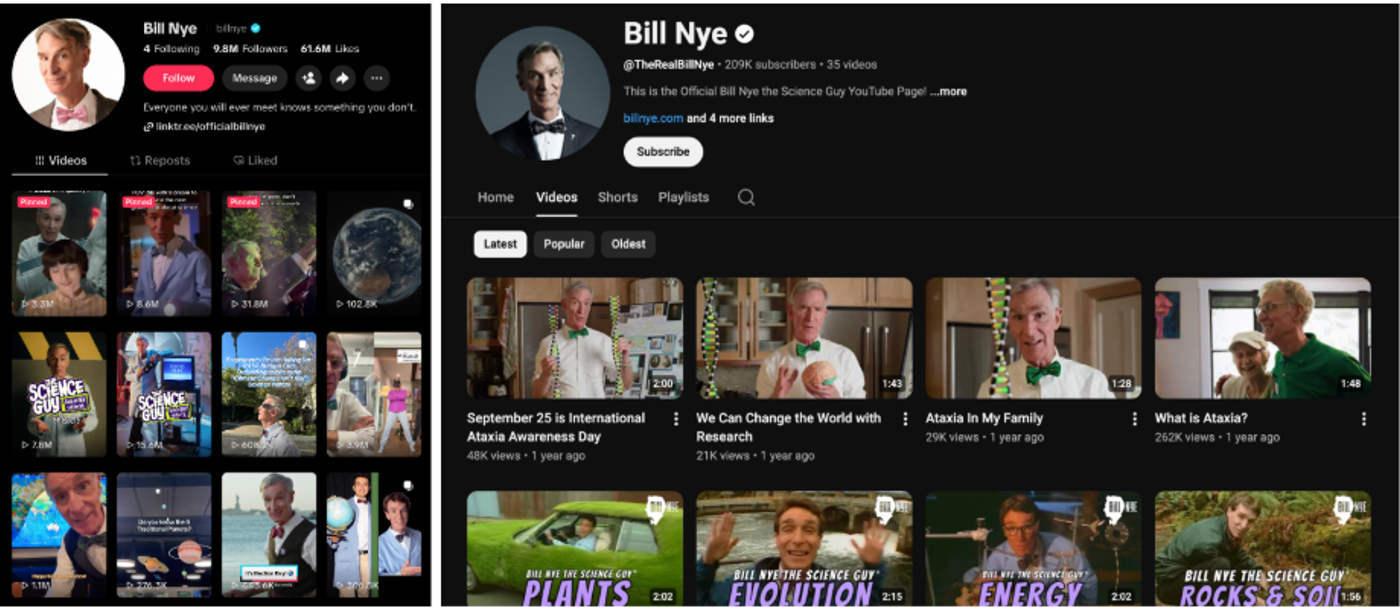
While celebrity education creators can generate substantial exposure, they’re not always the most efficient option for conversion-focused campaigns. In many education verticals, smaller creators with highly specific audiences continue to outperform larger creators on engagement quality, trust, and direct-response performance.
How to Find Education Influencers on Social Media
If you work in edtech, e-learning, or academic tools, you already know the challenge of converting a skeptical audience while your product requires trust, and generic influencer content rarely converts.
Want to put this into practice?
SideShift connects you with vetted UGC creators who actually deliver. Start your free trial and post your first job in under 10 minutes.
The strategies that work for a fashion brand don’t translate directly to the education niche on social media. To find influencers for educational brands, you need creators who have genuinely built credibility with students, educators, or lifelong learners.
This guide covers where to look, what to look for, and how to evaluate whether a creator is actually the right fit for your brand.
Search by Hashtag and Keyword on Platform
Start where your audience is. On TikTok, hashtags like #EduTok, #StudyTok, #LearnOnTikTok, #TeacherTok, and subject-specific tags like #MathTok or #ScienceTok surface active edu creators. On YouTube, search directly for the learning topic your brand relates to, then filter by subscriber count and recent upload activity. On Instagram, look for “study with me,” “educator,” or “[Subject] Creator” in bio searches.
The limitation here is manual effort. You can spend hours scrolling and still miss high-performing creators because their bios don't match your keyword. Platform search rewards the obvious, not the optimal.
Use Influencer Discovery Tools and Databases
Influencer discovery tools like SideShift help you connect with social media content creators faster and at scale.
On SideShift, you can filter by niche, audience demographics, engagement rate, and platform simultaneously. Rather than keyword-guessing, you can search specifically for creators whose audience skews toward a specific demographic with specific interests. The quality of your match improves dramatically when you can screen by actual audience data rather than bio keywords.
Additionally, SideShift allows brands to post campaign briefs where education creators can come to you directly rather than manually sourcing each individual profile. This shifts the process from outbound searching to inbound matching, reducing lead time and making campaign setup far more hands-off.
Instead of spending hours scrolling through hashtags, analyzing engagement manually, and vetting creators one by one, brands can centralize discovery, filtering, and outreach in a single workflow. Over time, this not only improves efficiency but also increases match quality, since creators who actively apply to briefs are already signaling alignment with your niche, audience, and content expectations.
What to Look For When Evaluating an Education Creator
Once you have a list, the filtering criteria matters. A 500,000-follower account with 0.3% engagement is less valuable than a 5,000-follower account averaging 8% engagement, especially in education where community trust drives purchase intent.
Key evaluation points:
- Subject matter expertise (do they have a legitimate background in the topics they cover, and does their audience treat them as a credible source?)
- Engagement rate relative to follower size (not just raw numbers)
- Content consistency (how recently and regularly do they post?)
- Audience-brand alignment (does their audience match your buyer persona by age, interest, and platform behavior?)
- Content tone (does their voice match how your brand wants to show up?)
- Past brand partnerships (do they disclose properly, and have collaborations felt authentic?)
How Education Brands Can Work With Influencers and UGC Creators
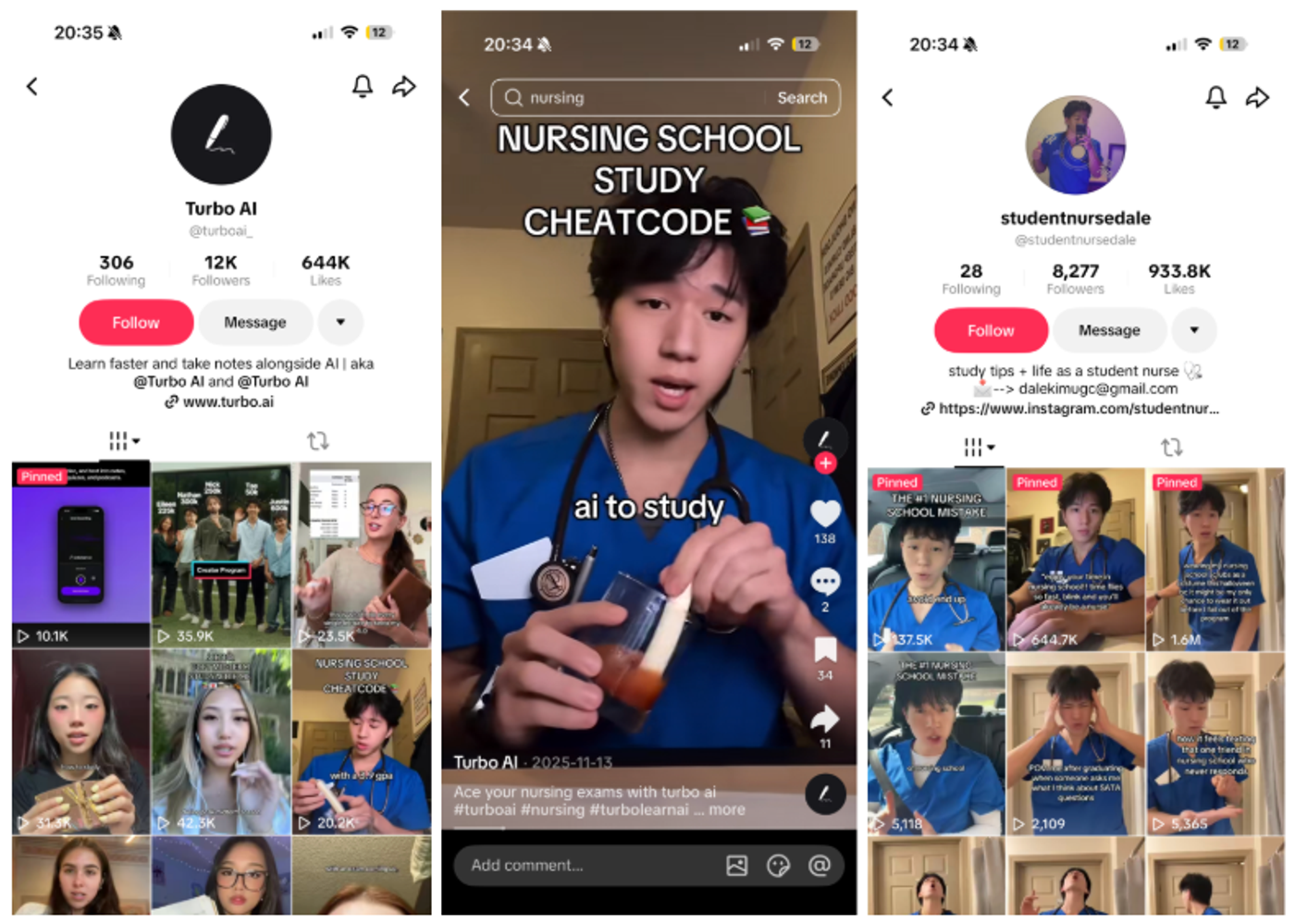
User-generated content is where many education brands are finding some of their strongest returns. In education influencer marketing, UGC typically means partnering with creators to produce authentic, platform-native content that brands can later reuse across paid social ads, landing pages, email campaigns, and brand-owned organic social channels.
Want to put this into practice?
SideShift connects you with vetted UGC creators who actually deliver. Start your free trial and post your first job in under 10 minutes.
In the example above, @studentnursedale created a UGC-style video for @TurboAI’s TikTok campaign. The content was initially published on the creator’s own profile, helping the campaign feel organic and audience-native while reaching the creators audience, while also giving TurboAI a brand-owned asset they could redistribute across their own channels to their existing audience as social proof.
This dual-use structure is a major reason UGC for education brands has become one of the highest-leverage content strategies in the category. A single creator partnership can generate both audience reach and reusable creative assets.
Looking at TurboAI’s broader content strategy, the brand appears to work with multiple education creators across different audience sizes and academic niches. That kind of high-volume creator strategy allows education companies to reach students through trusted voices embedded in specific learning communities, whether that's nursing students, language learners, coding beginners, or exam-prep audiences.
Instead of relying on one large spokesperson, brands distribute credibility across many niche key opinion leaders whose audiences already trust their educational recommendations.
Ambassador and Long-Term Partnerships
Long-term ambassador programs, where creators consistently mention your brand over several months, allow the endorsement to feel natural and the message to compound. For education brands with longer sales cycles (a student evaluating a course subscription or a parent choosing a tutoring platform), this repeat exposure model accelerates trust-building in a way that a single sponsored post cannot.
Briefing Education Creators
The brief you give a creator shapes the output significantly. In education, the most effective content tends to be specific about the problem being solved, not just the product being promoted.
A strong brief for an education brand typically includes:
- The specific audience pain point the content should address (e.g., “struggling to stay organized during finals week” rather than “showcase our planner app”)
- The platform and format (TikTok video, Instagram Reel, YouTube integration)
- Key messages to hit, with flexibility for the creator's voice
- Any compliance requirements (disclosure language, academic accuracy standards)
- Content rights (whether you'll be repurposing the content for ads or whitelisting)
Connect with Education Influencers on SideShift
For education brands trying to cut through the slow, inconsistent process of finding and managing creator partnerships, SideShift changes the game entirely. Instead of spending weeks searching hashtags and DMing creators individually, SideShift connects brands with a network of over 800,000 Gen Z creators, many of whom are exactly the edu-native content creators this audience trusts.
For edtech companies, tutoring platforms, study tool apps, and higher education institutions, the ability to recruit education content creators at scale rather than one at a time means you can finally run the kind of multi-creator, high-volume UGC strategy that outperforms everything else.
You can manage briefs, contracts, content review, and payouts inside a single platform, cutting the operational overhead that makes influencer programs painful to run. And performance analytics mean you're not guessing which creators or content styles are converting. You're optimizing in real time.
Want to put this into practice?
SideShift connects you with vetted UGC creators who actually deliver. Start your free trial and post your first job in under 10 minutes.
FAQs
1. What is an education influencer?
An education influencer is a social media creator who builds an audience around learning-focused content. This includes teachers sharing classroom strategies, students documenting their academic journeys, subject matter experts breaking down complex topics, and professionals sharing career or skill-development advice. They exist across TikTok, YouTube, Instagram, and LinkedIn, and their audiences follow them specifically because of the value they provide in an educational context.
2. Which platforms are best for finding education influencers?
TikTok and YouTube are the two primary platforms for education content creators, with TikTok driving higher engagement rates among Gen Z audiences and YouTube serving higher-intent learners seeking in-depth content. Instagram is strong for study lifestyle and academic community content, while LinkedIn is the go-to platform for professional development and B2B education influencers.
3. What is a good engagement rate for an education influencer?
Nano influencers in the education space typically average 6 to 9% engagement rates, while micro influencers average around 3 to 5%. Anything above 3% is generally considered solid performance. The key is comparing engagement rate to follower count rather than looking at follower count alone, since smaller creators with highly engaged niche audiences often deliver better results for education brands than larger accounts with passive followers.
4. How much does it cost to work with education influencers?
Rates vary widely based on platform, follower count, content format, and exclusivity. Nano and micro education creators may charge anywhere from <$100 to $2,000 per post, while mid-tier creators typically range from $2,000 to $10,000 depending on deliverables. UGC-only creators, who produce content for brand use without publishing to their own channels, often charge lower rates and represent strong value for education brands building a content library.
5. What types of content work best for education brand partnerships?
Authentic, problem-solution content tends to outperform purely promotional posts. A creator showing how a study app helped them organize their semester schedule, or a teacher explaining how a new platform reduced their prep time, performs significantly better than straightforward product demos. Short-form video on TikTok and Instagram Reels drives the highest engagement, while YouTube integrations work well for longer consideration cycles and higher-ticket education products.