
What is Clipping? The Ultimate Instagram Growth Hack
Clipping is the fastest way to grow on Instagram and TikTok. Learn how to turn long-form videos into viral short clips that actually get seen.
Table of Contents
What is Clipping? The Ultimate Instagram Growth Hack
Clipping is the art of compression. On social media, brands are now hiring an army of small creators to edit and distribute short clips of their products and content, all in the name of reach and views. The act of condensing content into clips as a marketing strategy is not a new concept though. Movies have done it for decades with trailers. But on TikTok and Instagram, clipping has evolved into something bigger and more decentralized. What’s changed is ownership.
Today, anyone with basic editing skills and a small-to-midsize following can partner with brands to create and post clips on their behalf. The play is simple: find the most engaging, emotional, or thought-provoking moments from a video and edit them down into something that hooks people instantly. One well-crafted TikTok clip can pull millions of impressions and turn casual scrollers into fans overnight.
Brands used to keep clipping in-house, hiring editors and marketers to control every piece of content. But now, with platforms like SideShift, they’re decentralizing the process to tap into organic growth opportunities on social media.
What first started in the streaming and gaming community has exploded into a full-blown content economy - and a new creator class has emerged: clippers. And platforms like SideShift are giving them a home to network with brands, monetize and scale.
What Exactly Is Clipping and Why is Everyone Talking About it?
Clipping is content recycling at scale, but smarter. A clipper takes long-form content like podcasts, interviews, or livestreams and carves out the 10-30 seconds that hit hardest. These “micro-moments” are what fuel your TikToks, Reels, Shorts, or even viral LinkedIn videos.
Platforms like SideShift, CapCut, and Descript make it possible to produce 20 clips in the time it used to take to edit one vlog. That’s why creators, brands, and even solo founders now treat clipping as part of their growth stack - a system for turning long-form storytelling into endless streams of discoverable, shareable content.
In short, clipping is the art of extracting short, high-impact segments from long-form videos and repurposing them for social platforms. In 2025, it’s the best way to maximize reach, engagement, and visibility from a single piece of content.
How does clipping actually work?
Clipping is essentially information distillation. Taking a large piece of content and condensing it into its most valuable, attention-grabbing form.
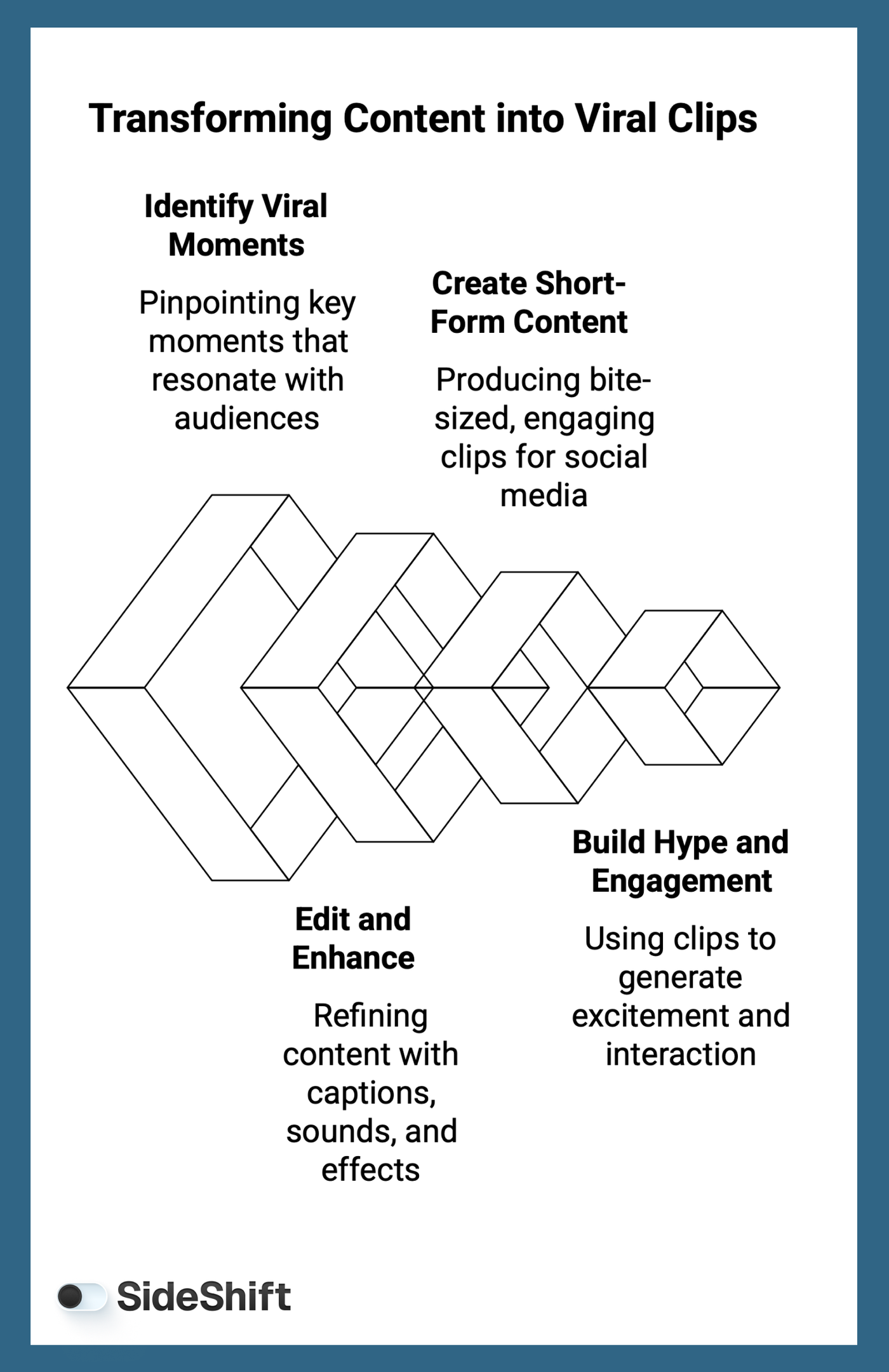
It starts with raw content, something brand owned and typically long-form. A 60-minute podcast, a founder interview, a livestream, or a YouTube video. Then you hunt for the moments that hit: a quote that makes you pause, a laugh that sticks, a spicy take that sparks conversation. From there, you trim, caption, resize, and add overlays, trending sounds, transitions, effects and subtitles that pop. The result? A bite-sized version crafted for virality.
But this clipping strategy isn’t limited to podcasts, interviews, or livestreams. Brands now apply the same concept to product marketing and launches. With access to video assets, clippers can turn them into shareable, engaging short-form content that sticks in viewers’ minds. Some brands even send product samples to UGC creators to interact with and feature in clips. Just like a podcaster teases a new episode, brands rely on clippers’ knowledge of TikTok trends to craft content that builds hype and drives engagement in a way that feels natural, authentic, and never forced. It’s stealth marketing at its finest.
Want to put this into practice?
SideShift connects you with vetted UGC creators who actually deliver. Start your free trial and post your first job in under 10 minutes.
Why Is Clipping the New Growth Hack?
Clipping works because attention spans are short and feeds move fast. According to YouTube data, 85% of viewers watch videos at faster-than-real-time speeds, which means long-form content can easily lose attention and get ignored. A 15–30 second clip cuts straight to the point, highlighting only the moments people actually want to see, often with entertaining edits that grab attention instantly.
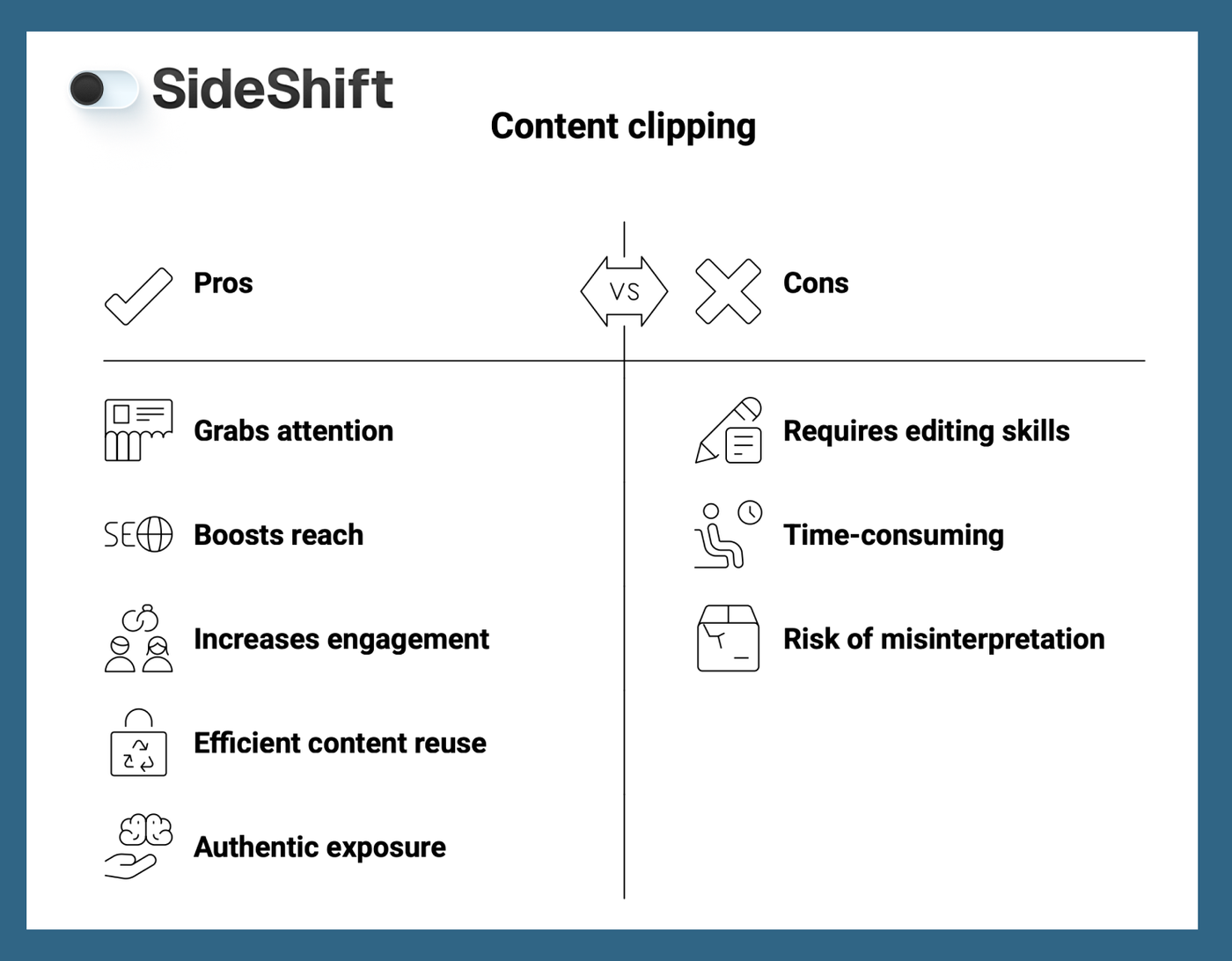
It’s also about efficiency at scale. Instead of producing new videos every day, you can extract dozens of high-impact clips from a single podcast, livestream, or product demo. Each clip acts like a mini-ad for your content, building momentum, boosting reach, and giving the algorithm more reasons to push your content to new viewers.
Clipping turns one piece of content into multiple growth opportunities. That’s why creators, brands, and businesses treat it as more than just an editing trick, it’s a full-on strategy for virality. And when brands mobilize an army of creators and empower them to create and post on their own accounts on behalf of the brand, reach and engagement scale exponentially, creating authentic, decentralized exposure that feels organic rather than promotional.
Why the Algorithm Rewards Clipped Content
Instagram and TikTok don’t care how much effort went into your video, they care how long people watch. Clipped content is designed to hook instantly and keep viewers engaged. Virally optimized clips generate watch time to completion, spark quick engagement through likes, shares, and comments, and get discovered faster in Reels or the FYP. The more people rewatch or share a clip, the more the algorithm amplifies it.
Examples of Clipping for Podcasts on TikTok and Instagram
Clipping has become the #1 content marketing strategy for podcasts. Most viral clips are 20-90 seconds of a 1-3 hour conversation. That’s less than 1% of the total content, but this strategy drives 90% of the episode’s reach, sometimes generating over 17 million views in brand-owned social media value for a single episode (Call Her Daddy ft. Kim Kardashian). Here are a few examples of successful, brand owned podcast clips used to promote a new episode on TikTok:
Clipping Comedy for Viral Moments
Jake Shane Podcast ft. FINNEASWatch on TikTok →
Clipping Controversial Topics for Intrigue
Alex Cooper — Call Her Daddy ft. Kim KardashianWatch on TikTok →
Watch on Instagram
Clipping Information Bites for Value
Mel Robbins Podcast ft. Dr. Ellen LangerWatch on TikTok →
Each of these clipping examples taps a different trigger: emotion, humor, curiosity, insight. You don’t need all of them. You just need one that sticks and inspires action in the form of comment, like, share, save, or so much as to inspire them to watch the full length of the podcast or follow the brand account.
Want to put this into practice?
SideShift connects you with vetted UGC creators who actually deliver. Start your free trial and post your first job in under 10 minutes.
Brand Owned vs Creator Owned Clipping
All of the previous examples highlight brand-owned clipping strategies, where the brand controls the content, the edit, the clip, and the distribution. But you don’t need Hollywood-level editing skills or a massive following to get in on this. TikTok has leveled the playing field, allowing creators to monetize clipping without huge resources.
Many brands and creator teams now hire freelance clippers to generate and distribute viral clips on their own accounts. This decentralized approach enables high-volume content production without overloading internal teams, delivering reach and views with low risk and high reward.
Examples of creator owned clipping channels that amplify reach:
This strategy, sometimes called clip farming, gives brands access to broader audiences and viral potential without overextending internal teams, making it a cost-effective growth tactic.
How to Start Clipping on Instagram and Tik Tok
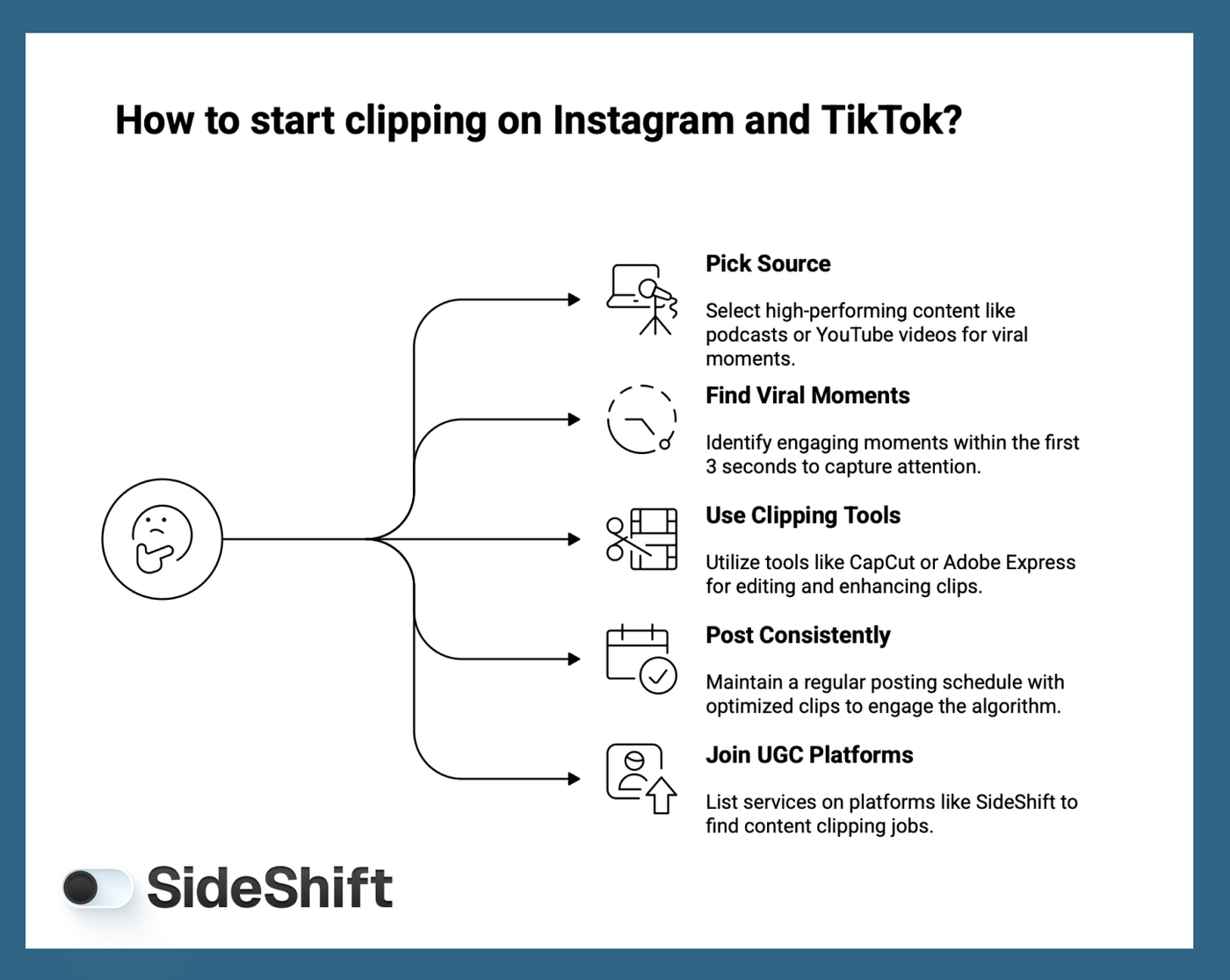
1. Pick Your Long-Form Source
Start with content that already performs well like podcasts, livestreams, YouTube videos, or interviews. You're looking for high-energy or emotionally charged moments that would make someone stop scrolling within three seconds.
2. Find the Viral Moments
The first 3 seconds of your clip are the most important part to consider for going viral. Scan through your footage and highlight the parts that spark a reaction like a bold statement, a laugh, or a punchy insight. These moments are your “hooks.”
3. Leverage Content Clipping Tools
Use free or low-cost tools like CapCut to add effects, overlay relevant visuals, trim, caption, and reformat your clips. You can also experiment with Adobe Express’s AI Video Clip tool for fast, smart edits that maintain quality. iMovie, Canva and platform native app editors are also great when getting started.
4. Post Consistently and Optimize
Upload your clips in vertical format (9:16), keep them under 30 seconds, and add engaging captions or trending sounds. Consistency is key, so posting 3-5 times a week helps TikTok’s algorithm start pushing your content to the right audience. Warm your account and engage with similar content. Watch videos to completion and like, comment and share to indicate to the algorithm the kind of community you’re looking to build and be part of.
5. Join UGC Platforms Like SideShift to Get Hired
Once you’ve built a mini portfolio with clip edits, list your services on UGC platforms like SideShift and apply for content clipping opportunities posted by brands. 90% of content creator jobs on SideShift are filled in under 3 days.
How to earn money from clipping
As a creator
Clipping has opened a whole new lane for creators to monetize their editing skills and social reach. On SideShift, you can get paid directly by brands per clip, per campaign, or even on a hybrid commission structure tied to performance. The better your clips perform, the more leverage you have to negotiate higher rates or unlock TikTok Creator Fund bonuses.
Want to put this into practice?
SideShift connects you with vetted UGC creators who actually deliver. Start your free trial and post your first job in under 10 minutes.
The smartest creators also treat clipping as a portfolio builder. Every viral clip you produce, even if it doesn’t immediately earn cash, builds proof of concept. Brands value creators who can turn long-form content into high-performing short-form assets because it directly translates to visibility and conversions. Strong performance compounds your reputation, unlocking higher-tier collaborations and recurring partnerships over time.
Another path is to start your own clip account. You can grow a social channel using clips as the main content — and there’s no need to show your face. Once you reach a certain level of engagement, opportunities open up for sponsorships, affiliate marketing, digital products, or even selling the channel outright.
As a brand
Attention, reach and visibility are the currency of social media. Every podcast, livestream, or interview you’ve already recorded can become dozens of short-form videos that feed your social channels for months. On SideShift, you can partner with experienced clippers or micro-creators to transform that backlog into consistent visibility and engagement on social media without oversaturating your brand account.
Each clip builds brand awareness, boosts earned media value, and fuels momentum without extra ad spend. All of these small, well-edited moments stack into massive organic reach and translate to more views and more shares driving traffic to your products, services, or website, create new leads, and increase the potential for conversions.
Final Thoughts
Whether you’re livestreaming, promoting a new podcast episode or YouTube series, launching an app, or selling a product, clipping can supercharge your reach, engagement, and overall content ROI. By turning long-form content into bite-sized, highly shareable moments, you give your audience more ways to discover, interact with, and remember your brand.
Clipping also maximizes existing content. One podcast episode or product demo can generate dozens of clips, each designed to perform on TikTok, Instagram, YouTube Shorts, or other social platforms. This isn’t just content recycling; it’s a strategic way to compound visibility and build momentum over time.
SideShift connects you with talented creators who are ready to clip, edit, and distribute authentic content for you. Whether you want to maintain brand control or tap into decentralized content strategies like clip farming, SideShift gives you the network and tools to scale your social strategy, drive organic growth, and turn every piece of content into a potential revenue-generating asset.
Scale your content army with SideShift today, where brands and UGC creators win together.
FAQs
1. What does “clipping” mean in social media?
Clipping is the process of taking short, high-impact segments from long form videos like podcasts, livestreams, or interviews, and repurposing them into short-form content for platforms like Instagram, TikTok, and YouTube Shorts.
2. What tools are best for clipping?
CapCut, Canva, Descript, and Adobe Express are good for quick edits, captions, and resizing. UGC Platforms like SideShift also connect creators with paid clipping opportunities and make the workflow easier.
3. How can I make money from clipping?
Want to put this into practice?
SideShift connects you with vetted UGC creators who actually deliver. Start your free trial and post your first job in under 10 minutes.
You can get paid by brands or creators to produce clips, earn through affiliate deals, or grow your own audience for monetization. Platforms like SideShift make it easy to connect with clients who need short-form content fast.
4. Is social media clipping legal?
It depends on ownership and usage rights. You can freely clip your own content, but clipping others’ videos requires permission unless it falls under fair use or an official collaboration.
5.What's the best platform for posting clipped content?
TikTok, Instagram Reels, and YouTube Shorts dominate short-form discovery.