
Brand Consistency: How to Build a Recognizable Brand
Brand consistency builds trust, recognition, and loyalty. Align messaging, visuals, and voice across channels to create a brand customers instantly recognize.
Table of Contents
Brand Consistency: How to Build a Recognizable Brand
Think about how quickly you can spot an Apple ad or recognize a Nike campaign just by its tone and visuals. That level of recognition isn’t accidental. It’s the result of intentional brand consistency.
Aligning your voice, visuals, and messaging across every touchpoint ensures your organization and the values it represents remain instantly recognizable. Consistent branding builds trust, loyalty, and long-term consumer confidence. This includes your visual identity, messaging, tone, and the complete customer experience across all marketing channels.
In today’s creator-driven economy, brands often work with external contributors, UGC creators, and social media influencers. While this approach scales content and drives engagement, it can also dilute your brand voice if not managed carefully. The challenge many business owners face is how to embrace the creator economy without losing control of the messaging.
The answer lies in creating a cohesive brand identity that is recognizable, valuable, and impactful, even when hundreds of creators are producing content on your behalf in a high-volume UGC campaign.
Let’s break down how to build a consistent brand that customers immediately trust, while still scaling in the modern creator-driven landscape.
What is Brand Consistency?
Brand consistency means keeping your messaging, visuals, tone, and overall positioning aligned across every platform and customer interaction. It’s about making sure your audience instantly recognizes your brand and understands the values it represents, no matter where they encounter it.
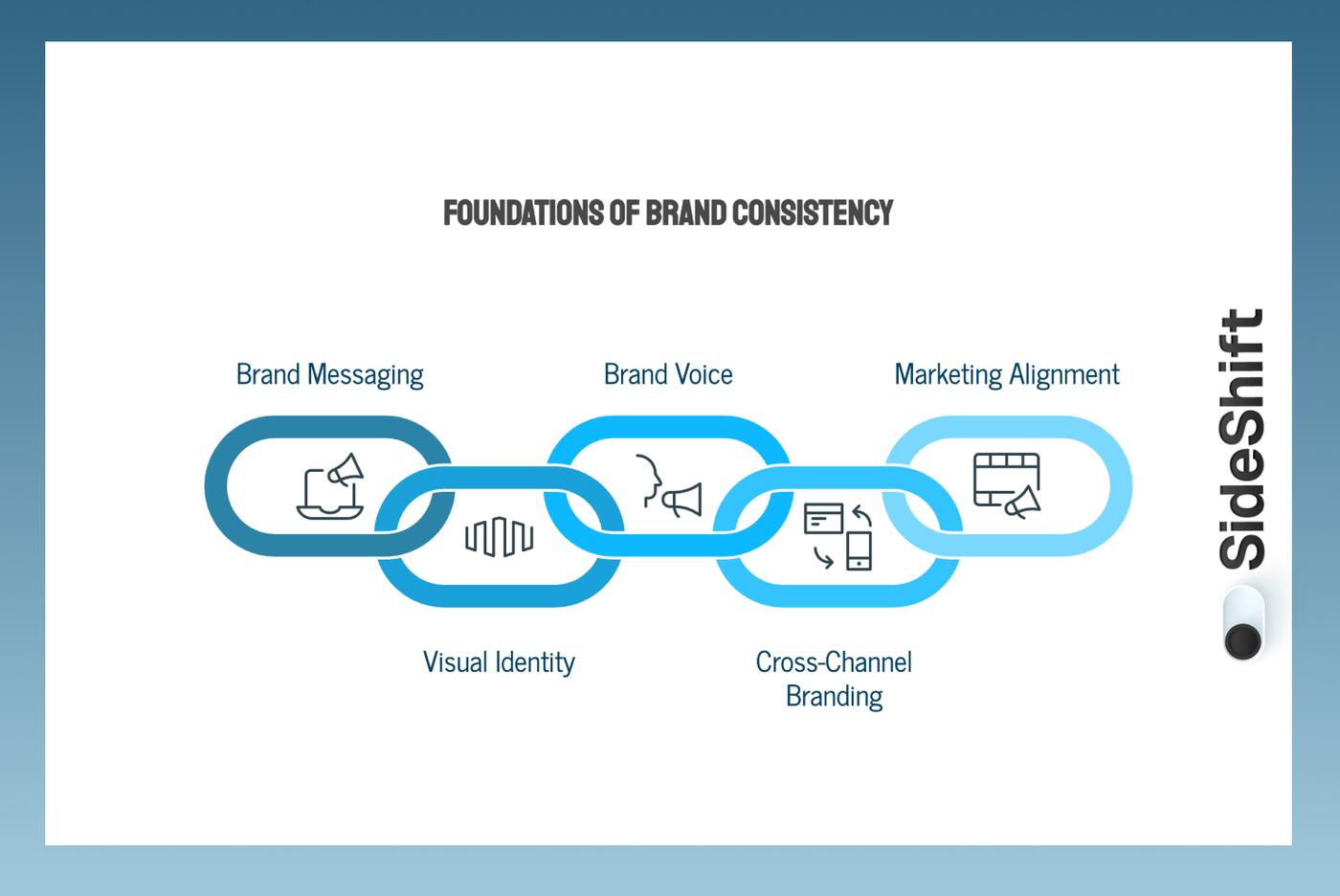
Key elements of brand consistency include:
- Consistent brand messaging across campaigns and channels
- Visual brand consistency, from logos to color palettes
- Brand voice guidelines that define tone and personality
- Cross-channel branding that ensures every touchpoint feels unified
- Marketing brand alignment so campaigns reinforce the same story
When these elements work together, you create a smooth, cohesive brand experience. When they don’t, customers sense inconsistency and friction, which erodes trust and weakens loyalty.
Why Brand Consistency Matters
Think about it this way: if your Instagram, email campaigns, and website all used different logos, tones, colors, or even promoted entirely different products, would your audience recognize them as the same brand? Probably not. Without alignment, each channel feels disconnected, and your brand loses its power to build trust and recognition.
Studies show that consistent branding across channels can increase revenue by up to 23%, significantly boost brand recognition, and make customers more likely to purchase.
Brand consistency isn’t just an aesthetic preference; there really is economic value to it as well. Every touchpoint should reinforce the same story, values, and identity, or you risk losing both trust and revenue.
The Core Pillars of Brand Consistency
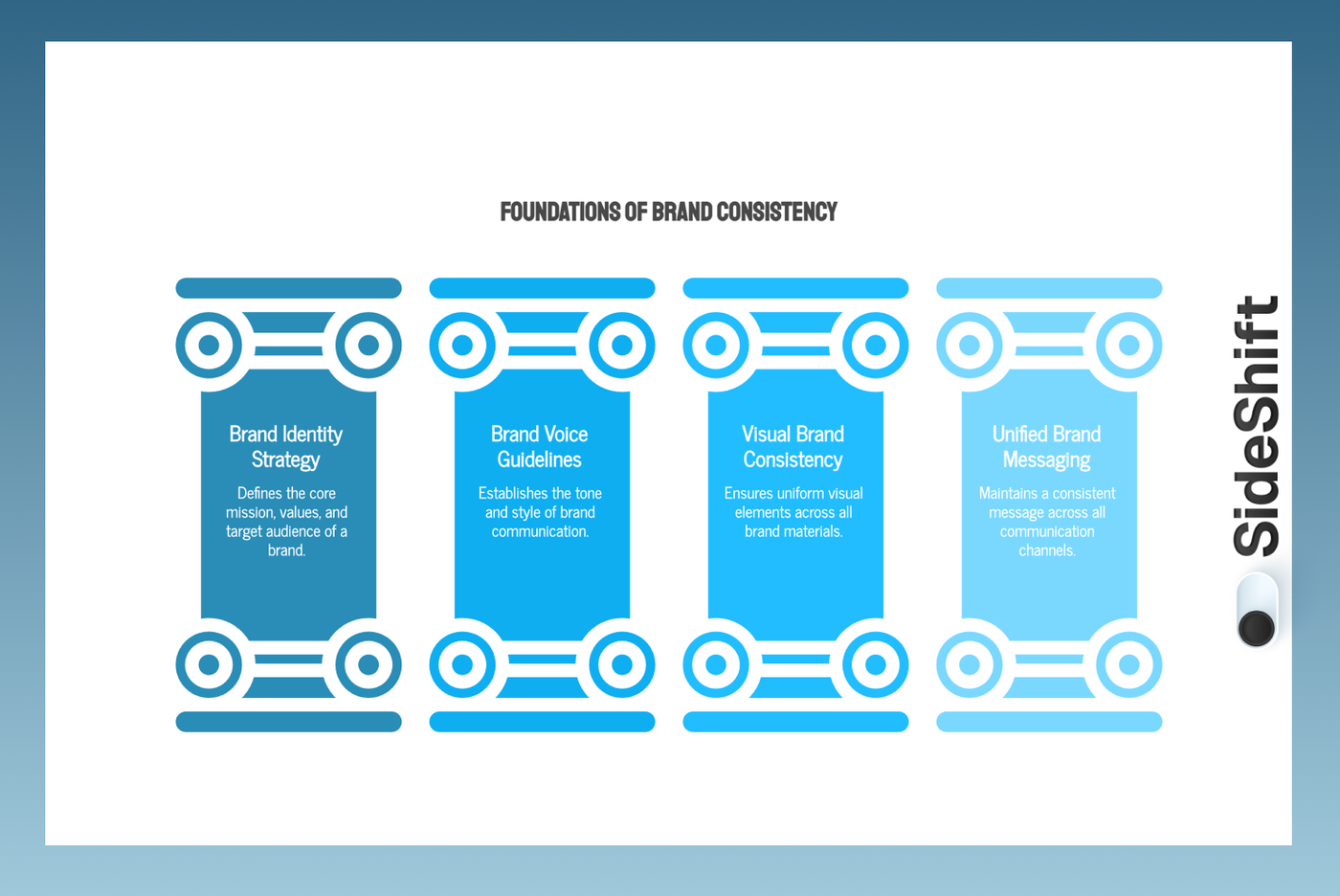
1. Brand Identity Strategy
Your brand identity strategy is the foundation of all consistent branding. It defines:
- Mission
- Values
- Positioning
- Target audience
- Emotional tone
Before scaling content, you need clarity here. Ask yourself:
- What problem do we solve?
- Who are we for?
- What do we want to be known for?
- What do we not want to be?
Without a clear positioning, your messaging feels scattered, and audiences struggle to recognize your brand across channels.
Want to put this into practice?
SideShift connects you with vetted UGC creators who actually deliver. Start your free trial and post your first job in under 10 minutes.
2. Brand Voice Guidelines
Your brand voice is the personality of your brand expressed through words, tone, and style. It shapes how your audience perceives you and sets the tone for every piece of content.
Clear voice guidelines are especially important when working with multiple UGC creators. Without them, content can drift off-brand, causing confusion and weakening recognition. On SideShift, brands provide creators with content briefs that balance clear guidance with creative freedom, ensuring messaging feels authentic while staying on-task.
A strong brand voice guide typically includes:
- Tone descriptors (e.g., confident, playful, authoritative)
- Words to use and avoid
- Example captions
- Do/Don’t messaging
Example:
- A fintech brand might use direct, clarity-first language.
- A beauty brand could adopt an expressive, community-driven tone.
- Brands may flag certain phrases to avoid due to pop culture context or legal considerations.
3. Visual Brand Consistency
A brand’s visual identity is processed faster than text, so consistent visuals are critical. Elements to standardize include:
- Color palette
- Typography
- Logo usage
- Filters and editing style
- Layout patterns
Organize these components in a Brand Kit, so your team and future collaborators can easily access them.
Even in short-form UGC, maintaining visual consistency matters:
- Consistent intro hooks
- Repeated taglines
- On-screen text style
- Branded end cards
Strong visual consistency ensures your brand is immediately recognizable, no matter where content appears.
4. Unified Brand Messaging
Consistency isn’t the same as repetition. Use platform-native content with brand markers to reinforce your core message across channels.
While some brands hesitate to pursue a high-volume UGC strategy with multiple creators for fear of mixed messaging, this shouldn’t hold you back. The key is ensuring every creator aligns with your brand through clear, well-crafted briefs and selecting the right creators for your brand whose style matches your message. With the right guidance, multiple voices can amplify your message without diluting it, keeping your brand perception cohesive.
For example, if your positioning is “affordable luxury,” then your:
- Website copy
- Ad headlines
- Influencer scripts
- Email flows
should all reinforce that perception. When your messaging aligns, customers don’t have to “figure you out.” They already understand and trust your brand.
Brand Consistency in the Creator Economy Influencers & UGC
UGC is one of the most effective ways to connect with audiences, but scaling it introduces challenges. As you grow from 5 creators to 50, keeping your brand consistent across all content becomes increasingly important.
High-volume UGC strategies succeed when they combine structure with creative freedom. Key elements include:
- Selecting the right content creators
- Providing detailed content briefs
- Sharing clear visual guidelines
- Communicating defined tone frameworks
- Establishing performance feedback loops
On SideShift, brands can centralize this process by posting structured briefs, aligning creators on positioning, and iterating quickly with a detailed campaign analytics and management dashboard. You don’t want to stifle creativity from digital creators; you just want to guide it, ensuring every piece of content reinforces your brand.
7 Steps to Build and Maintain Brand Consistency
Getting brand consistency right early sets you up for long-term success. Your brand is more than visuals. Spend time building its personality, promise, and story. Invest time in defining it, aligning teams, and creating systems that maintain its identity as you scale.
Want to put this into practice?
SideShift connects you with vetted UGC creators who actually deliver. Start your free trial and post your first job in under 10 minutes.
1. Create a Detailed Brand Style Guide
Your style guide is your consistency operating system. It should include:
- Logo rules and placement
- Color hex codes and palettes
- Typography hierarchy
- Brand voice examples
- Messaging pillars
- Photography and visual direction
Make it easily accessible and review it quarterly. This ensures every team and creator knows the rules before they start creating.
2. Align Teams Around Positioning
Brand consistency starts internally. Marketing, sales, customer support, and social teams must speak the same language.
- Paid ads should reflect website messaging.
- Customer support tone should align with brand voice.
- Product pages, emails, and campaigns must reinforce the same positioning.
Internal alignment builds brand trust, which then carries through to every customer interaction.
3. Build Repeatable Content Frameworks
Stop reinventing the wheel for every piece of content. Develop repeatable frameworks that reinforce brand recognition and streamline creator output:
- Templates and content pillars
- Hook → Value → Proof → CTA
- Problem → Agitation → Solution
- Testimonial → Demonstration → Result
Consistent frameworks make your brand instantly recognizable and enable creators to produce content quickly while staying true to your identity.
4. Audit Your Cross-Channel Branding
Quarterly audits keep your brand consistent across platforms. Review key touchpoints:
- Social feeds & UGC
- Website copy & images
- Email tone & paid ads
- Packaging & in-person experiences
Check that visuals, messaging, and voice align with your brand pillars. Use simple scorecards or notes to track drift and share insights with creators and internal teams. Consistency builds recognition, trust, and a cohesive brand experience even across multiple channels and creators.
5. Align with Creators
Brand dilution often happens in high-volume UGC campaigns when creators aren’t clear on your guidelines. Give them:
- Example scripts and captions
- Approved phrases and messaging pillars
- Visual mood boards or successful content examples
- Positioning summaries
On SideShift, structured briefs help creators produce authentic content that still reinforces your brand, boosting recognition and conversion.
6. Use Data to Refine Messaging
Your audience, trends, and platforms evolve, so your messaging may need to transform too. Track performance to see what resonates and be willing to shift when things aren’t working.
Monitor KPIs like:
- Engagement rates and watch time
- Comment sentiment
- Conversion lift
When you spot underperforming content, don’t be afraid to tweak tone, format, or visuals. Similarly, double down on what works: replicate high-performing hooks, phrases, or storytelling angles across channels.
7. Protect Your Core Visual Signals
Even when experimenting with new content formats or creative angles, your signature visual elements should remain consistent. These are the cues that make your brand instantly recognizable to your audience, even in crowded feeds.
Key elements to maintain include:
- Brand colors: Stick to your primary palette to create immediate recognition.
- Consistent intro hooks or tags: Repeating familiar openings or identifiers builds familiarity across videos or posts.
- Recognizable on-screen style: Fonts, layouts, filters, and graphics that match your visual identity help your content stand out.
Want to put this into practice?
SideShift connects you with vetted UGC creators who actually deliver. Start your free trial and post your first job in under 10 minutes.
Keeping these core signals intact allows you to experiment without losing cohesion. Over time, audiences will come to recognize your style at a glance, whether it’s on TikTok, Instagram, email, or ads.
This approach ensures that scaling content doesn’t dilute your brand. Instead, every post, video, or story becomes a small reinforcement of your brand identity, turning familiarity into trust and recognition.
Scale your Brand Message with UGC through SideShift
Maintaining brand consistency doesn’t have to be a bottleneck as you scale. With SideShift, brands can connect with a network of UGC creators who understand your guidelines and produce authentic, branded content at volume. From structured briefs to visual cues and tone alignment, SideShift helps you iterate quickly, test messaging, and reinforce your brand identity across channels without losing creative freshness.
Build a consistent, recognizable brand with SideShift and turn every creator interaction into a growth opportunity.
Start your free trial on SideShift today.
FAQs
1. What is brand consistency in marketing?
Brand consistency means maintaining unified messaging, visuals, tone, and positioning across all touchpoints. When your brand feels cohesive, customers instantly recognize and trust your business, whether they encounter you on social media, email, your website, or in-store.
2. Why is maintaining brand consistency important?
Consistency builds trust, recognition, and loyalty. When messaging, visuals, and voice align across channels, your audience feels confident engaging with your brand. Inconsistent branding, on the other hand, creates friction and confusion.
3. How do you create a brand style guide?
Accessible, well-documented guides ensure all internal teams and creators stay aligned. A brand style guide is a document or folder that outlines your visual identity, messaging pillars, and voice. It should include:
- Logo usage and placement
- Color palettes and typography
- Tone descriptors and example captions
- Do/Don’t messaging rules
4. How does brand consistency impact customer trust?
When every interaction reflects the same brand promise and identity, customers know what to expect. This reduces uncertainty, reinforces credibility, and makes it more likely they’ll purchase, recommend, and stay loyal.
5. How can brands maintain consistency with multiple creators?
High-volume UGC campaigns succeed when creators have clear guidelines. Provide structured briefs, visual mood boards, example scripts, and performance feedback loops. Platforms like SideShift make it easy to centralize these processes, ensuring every creator produces content that reflects your brand’s identity while still feeling authentic.